
The Grelinette: the garden tool that changes everything
Published by Germie in Smart Garden the 05/11/2026 at 16:32

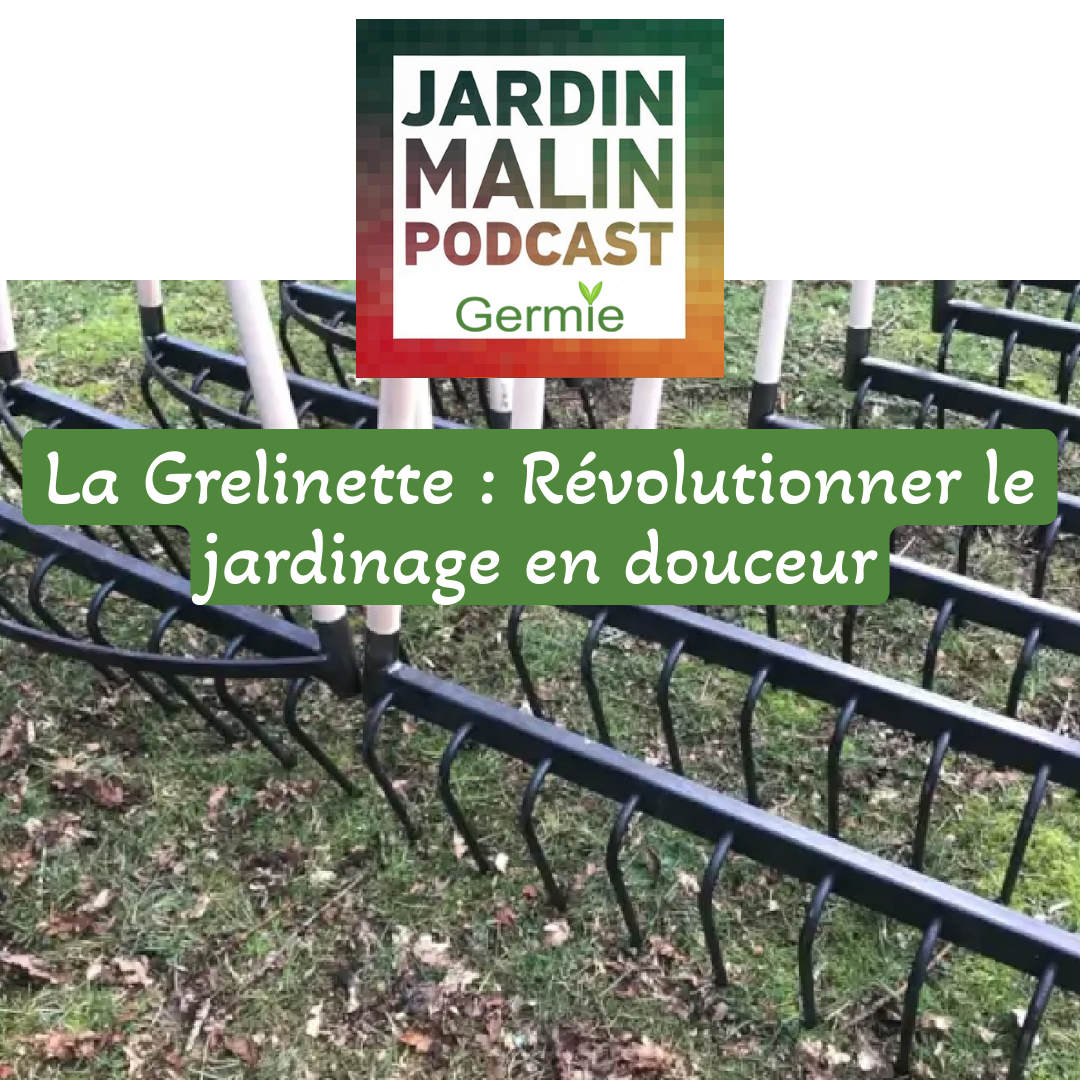
The broadfork (grelinette) is the signature tool of no-dig gardening: it loosens the soil without ever turning it over — and that "without turning" changes everything for your earthworms. Here is the correct 4-step motion, an honest comparison against the spade and the tiller, and the limit people often forget to mention.
What is it exactly?
Also sold under names like broadfork, aerator-spade or grelinette depending on the maker, it is an ergonomic tool with two handles and three, four or five tines. Bevelled at their tips and curved along their length, the tines sink into the soil under foot pressure, like a digging fork. Pulling both handles backwards produces a simple lift of the soil: it aerates without inverting.
- Specs: 3 to 5 tines 25 cm long and two handles — the second grip is the whole originality: it turns the spading motion into a lever.
- Working width: ~20-25 cm per pass for a 3-4-tine model, up to 30-50 cm for 5-tine models; American broadforks reach 24 inches of tines.
- Its exact role: a maintenance tool for an already-cultivated garden, replacing the spade — not a clearing tool.
The 4-step motion
- Plant: grip one handle in each hand and drive the tool into the soil in front of you, pressing the crossbar with your foot — like a digging fork.
- Tilt: pull both handles toward you in one motion — the tines lift and crack the clod without turning it.
- Let it fall back: the soil crumbles, air enters — the structure stays vertically oriented, the layers do not invert.
- Step back by one overlap step (~10 cm) and repeat — work backwards so you don't recompact.
Why "without turning": the earthworm numbers
Anecic worm burrows are the soil's real aeration system — and ploughing destroys them:
- 900 m of burrows per m²: untilled soils hold up to 150 vertical tubes per square metre — 900 m of burrows per m² over 1 m of depth, i.e. 5 m² of burrow surface per m² of soil. These vertical galleries reach 3 m in deep loess soils and up to 6 m in black earths.
- Durable aeration: unlike the short-lived loosening left by a tiller or hoe, these burrows are continuously maintained by the worms — durable aeration.
- Populations: 200–300 worms/m² under permanent meadow, up to 500 in extensive pasture, 120–250 in extensive cropping — classic ploughing inverts the soil layers entirely and slices part of the population.
- The broadfork spares this network: it lifts without inverting — the anecic worms' vertical burrows stay functional and the mycelium is not severed.
The honest comparison: broadfork vs spade vs tiller
| Broadfork | Spade / digging fork | Rotary tiller | |
|---|---|---|---|
| Inversion | No — simple lift | Yes, full layer inversion | Yes, + pulverised structure |
| Depth | 25-30 cm (tines) | 25-30 cm (blade) | limited to tine depth |
| Effort | Moderate — the double handle levers; cracks clods and aerates better than a spade | Exhausting | No force needed, but more tiring in repeated use |
| Effect on worms | Near zero — a few cut by the tines, the network survives | Cuts and buries part of the population | Destroys burrows and mycelium at the surface |
| Legitimate use | Annual maintenance of cultivated soil, before sowing/planting | Clearing, planting, heavy incorporation — occasional | A light surface pass, occasionally only |
When to use the broadfork
- The moment: in autumn to prepare beds for wintering, or in early spring before sowing — in place of the spade at annual maintenance.
- Soil moisture: work on drained soil — neither soaked (it compacts) nor brick-dry (tines won't sink). The right test: the earth crumbles under the tines without sticking.
- Frequency: once a year is enough in a mulched living soil — after several no-till years some passes become unnecessary.
- The reflex after the pass: mulch immediately — the surface litter gradually integrates into the soil thanks to the aeration created.
The honest limit — what people forget to say
The broadfork is a maintenance tool for an already-cultivated garden. On compacted waste ground, a lawn being converted, or virgin clay soil, it won't manage — you first need a digging-fork pass, a months-long silage tarp, or a first decompacting crop. And no tool is perfect in itself: repeated tiller use tips the balance the wrong way — the perfect tool only exists in the moderate use you make of it.
And for the rest of the garden?
Soil loosened without inversion keeps its pH and its microbial life — check your pH before the season. For planning your beds after the broadfork pass, the companion-planting guide gives the 4-bed rotation. And to start the seedlings that follow, the winter sowing calendar and the complete Germie seedling kit take over indoors.
By card and PayPal
For orders over €45
Our goal: 100% satisfaction
More information