
Corn salad (Valerianella locusta): sowing and harvesting lamb's lettuce
Published by Germie in Vegetables the 05/11/2026 at 16:33

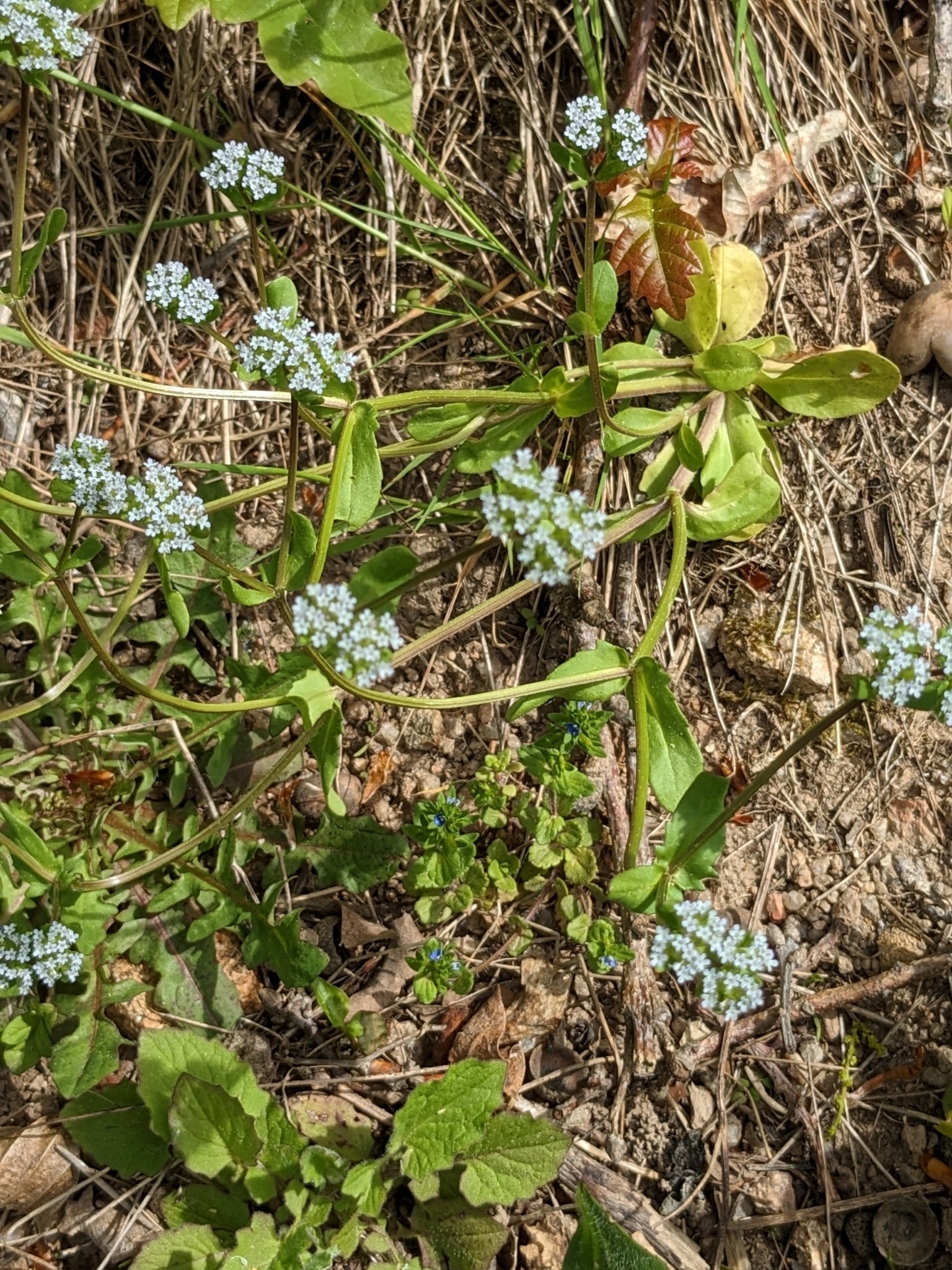
Corn salad is the only leaf vegetable that laughs at the calendar: it germinates and grows best in the cooling, shortening days of autumn, and it can be harvested even after a –29 °C night. Here is the complete growing sheet — sowing, densities, varieties and winter companionship.
Why mâche is the winter salad
- Record hardiness: it survives unprotected through winter temperatures of –29 °C. And as soon as the temperature inside the frame rises above freezing, mâche is ready to harvest — even after a –20 °C night.
- Its secret weapon: it grows an extensive network of very fine, sod-like roots that stabilise the soil and make it almost impervious to frost heaving.
- Its true season: it is sown in cold frames and tunnels from early September to early November — an exceptional winter salad precisely when little else is growing.
Sowing: dates and gesture
- The window: from July to September at the earliest, from 1 August to 15 October in three passes, or until early November under cover.
- Spring sowing? Possible but unwise: germination will be poor because this is a true winter crop — except very early, as soon as the ground can be worked.
- Depth: barely covered — about 6 mm of fine soil, or broadcast on the surface followed by light raking.
- The seedbed: prepare a flat, semi-firm bed by tamping lightly with the back of a rake — mâche likes a firm, level bed, not freshly loosened soil.
- In rows or broadcast: broadcasting is most common, but small furrows 20 cm apart, spaced 4–5 cm along the row, make weeding easier.
Temperature, germination, watering
- The warm-soil trap: mâche germinates poorly in warm soil and takes 10–14 days to emerge — hence late-season sowing. Its ideal germination range is 10–21 °C.
- Normal waiting: count 10 to 14 days, sometimes up to 20 — do not conclude failure too soon.
- Watering: generous, in a fine spray. Keep the soil cool and moist until the first leaves appear, through repeated waterings.
- No module sowing: mâche is sown in place — transplanting seedlings is not recommended.
Spacing and density
- In rows: seeds 2.5 cm apart in rows 10 cm apart; in intensive culture, rows 5 cm apart with seeds every 2.5 cm.
- The size ceiling: a mâche rosette rarely exceeds 10 cm across — hence the high densities.
- The family budget: to feed 4–6 people, count 300–350 plants on 3 m² in total, over several staggered sowings — historically about 100 g of seed per are.
- Thinning: from mid-August to mid-October, remove the weakest young plants.
Soil, exposure, companionship
- Soil: firm rather than loosened, free-draining and fertile — a dose of organic matter is enough. A firm, superficially gravelly or siliceous soil already suits it; ideal pH 6.5–7.
- Exposure: sun or part shade — part shade helps early August sowings.
- The cleverest trick: in autumn cold frames where lettuce, endive or radishes are still growing, sprinkle mâche seed between and beneath those crops. It germinates in their shade, and once they are harvested you have a lush bed of mâche for the whole winter.
- Its friends: carrot, cabbage, turnip, onion, leek — no known enemies. Lettuce and mâche also benefit from the shade of cabbage leaves.
- Its rotation: mâche is related to no other vegetable (Caprifoliaceae) — it slots in anywhere except right after a leaf crop. Plan a small nitrogen input after it (alfalfa meal, fish emulsion), as its root felt ties up nitrogen.
Winter: protection and limits
- The real limit: mâche withstands cold but not always wind, freezing rain and snow — in harsh climates, grow it in a cold frame or solar greenhouse.
- Under cover: under a frame or cover it performs best in winter; in regions with severe winters, protect it to harvest even in deep cold.
- Its listed enemies: only two diseases are established — powdery mildew (white mycelium on the leaves) and Sclerotinia (brown-grey collar rot). Slugs remain the real scourge of young plants in wet climates.
Harvest and varieties
- The gesture: cut the whole rosette at soil level when it is 5–10 cm across — smaller is a bit tastier and more tender. Harvest from September to March.
- Do not wait for more: no point hoping for a bigger rosette — 10 cm is its maximum.
- Autumn harvest (summer sowings): choose fast-growing varieties, often a bit cold-tender — 'À grosse graine', 'Jade', 'Trophy' (very hardy and disease-tolerant).
- Winter harvest (autumn sowings): choose cold-resistant varieties — 'Ronde Maraîchère', 'Verte de Cambrai' (exceptional frost tolerance), 'Coquille de Louviers', 'Vit' (firm, dark green).
- The seed: germination 6–8 days with seed aged 1–2 years, longevity 5 years; to re-sow, keep a few rosettes that will bolt in April–May.
And for your other seedlings?
Mâche prefers direct sowing — but for vegetables started indoors (peppers, eggplants, early tomatoes), the Germie mini-plug seed sprouter bridges the gap between seed and garden. And to extend harvests under cover, our winter indoor sowings take over from outdoor beds. Soil too acidic for mâche's 6.5–7 window? The pH guide gives the correction doses.
Growing calendar
| JAN | FEB | MAR | APR | MAY | JUN | JUL | AUG | SEP | OCT | NOV | DEC | |
|---|---|---|---|---|---|---|---|---|---|---|---|---|
| Sowing | ||||||||||||
| Harvest |
SECURE PAYMENT
By card and PayPal
By card and PayPal
FREE DELIVERY
For orders over €45
For orders over €45
CUSTOMER SERVICE
Our goal: 100% satisfaction
Our goal: 100% satisfaction
RETURNS
More information
More information