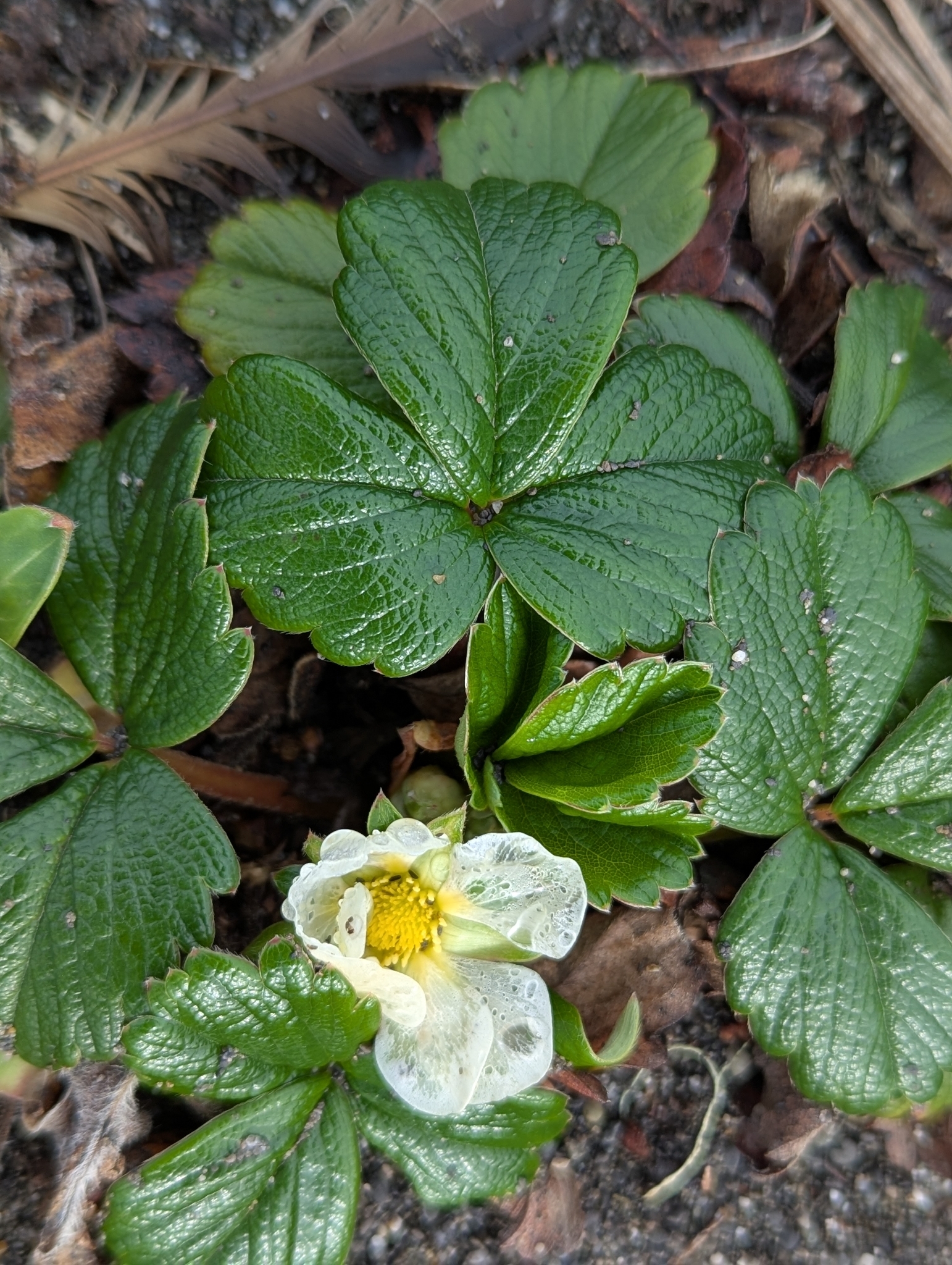
Strawberry (Fragaria): sowing, planting and harvest
Published by Germie in Vegetables the 04/10/2026 at 11:20

Strawberry: planting, growing and harvesting the most eagerly awaited fruit in the garden
The strawberry (Fragaria) is the undisputed star of spring: an easy, generous perennial that crops in its first year and rewards a well-prepared bed with weeks of fragrant fruit. June-bearing (one big harvest in spring) or everbearing (fruit from June to frost), it fits anywhere — open ground, raised beds or a pot on the windowsill.
Its little botanical secret: what you bite into isn't a fruit but the fleshy receptacle of the flower — a "false fruit". The real fruits are the achenes, the tiny dry seeds speckled on its surface. And while garden strawberries are mostly propagated by runners, alpine strawberries like 'Reine des Vallées' sow as easily as lettuce.
Contents
- Sowing, planting & harvest times
- A little history
- Growing strawberries
- Sowing alpine strawberries
- Planting strawberries
- Growing tips
- Runners and renewal
- Strawberry varieties
- Rotation and companions
- Pests and diseases
- Harvesting and storing
- In the kitchen
- Not to be confused with
- FAQ
Sowing, planting & harvest times
| JAN | FEB | MAR | APR | MAY | JUN | JUL | AUG | SEP | OCT | NOV | DEC | |
|---|---|---|---|---|---|---|---|---|---|---|---|---|
| Sowing in pots / under cover | ||||||||||||
| Planting | ||||||||||||
| Harvest |
Green: main period. Yellow: possible depending on climate (sow until April, plant until late August in mild regions or November if frost-free). Orange: June-bearing varieties crop once, in May-June; everbearing types fruit in flushes from June to October. September is the best planting month: plants root in before winter and crop the following spring.
A little strawberry history
- Latin name: Fragaria × ananassa for the garden strawberry; F. vesca for the wild woodland strawberry
- Family: Rosaceae
- Type: creeping herbaceous perennial producing runners
For centuries, only the wild strawberry (Fragaria vesca) was known — the small fragrant berry of European woodlands, gathered and cultivated since the Middle Ages. Everything changed in the 18th century: French navigator Amédée-François Frézier brought back plants of a large, pale-fruited strawberry from Chile in 1714 (Fragaria chiloensis). Crossed in Brittany, around Brest and Plougastel, with the Virginia strawberry (Fragaria virginiana) from North America, it produced the "pineapple" strawberry — Fragaria × ananassa — ancestor of nearly all modern varieties. Antoine de Jussieu fruited it at the Jardin des Plantes in Paris: the era of the big red strawberry had begun.
A useful reminder: "strawberry" actually refers to the flower's receptacle turned fleshy — the true fruits are the achenes visible on its surface. It's the only "fruit" that wears its seeds on the outside.
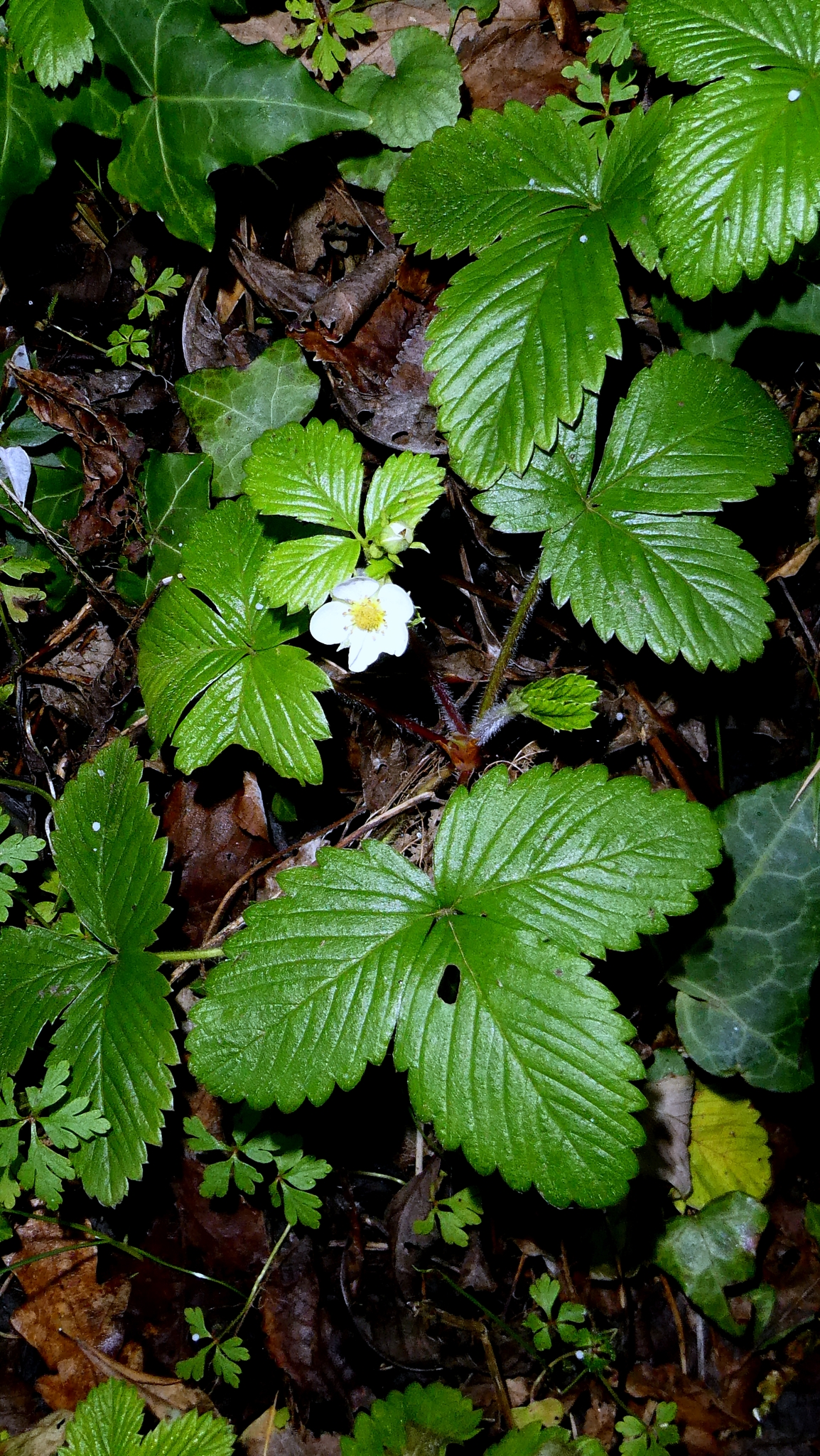
Growing strawberries
Quick facts
- Difficulty: easy — the most rewarding fruit in the garden for beginners
- Life cycle: perennial, productive for 3 to 4 years before renewal
- Height: 20 to 30 cm (up to 50 cm of foliage on large varieties)
- Exposure: full sun for large-fruited varieties; partial shade tolerated by small-fruited and alpine types
- Soil: cool, humus-rich, well drained; prefers slightly acidic — dislikes chalky and waterlogged ground
- Planting: autumn (September-November, ideal) or spring (March-April)
- Harvest: May to October depending on variety
- Water needs: regular, at the base, without wetting the foliage
Sowing alpine strawberries (and runnerless varieties)
When to sow? From February to April, in pots or trays, indoors or under a heated cover. The varieties grown from seed are those that don't produce runners: woodland and alpine strawberries like 'Reine des Vallées'.
How to sow?
- On the surface, on fine, free-draining compost: achenes are tiny and need light to germinate — firm down without covering.
- Keep the compost permanently moist: mist spray or capillary watering (water in the saucer) so the seeds aren't unearthed.
- Germination in 1 to 4 weeks at 20 °C — slow and erratic, which is normal: achenes sleep deeply. A cold spell (~4 °C for a few weeks) before sowing breaks part of the dormancy.
- Prick out at the 4-5 leaf stage, then plant out at the usual spacing.
Nurseryman's tip: collect your own seed by letting a ripe fruit dry, then rub it between your fingers over a container — the achenes fall free. Reserve this method for open-pollinated varieties — never for hybrids.
Planting strawberries
When to plant? In autumn, September to November — the prime season: warm soil allows good rooting and a crop the following spring. Spring planting (March-April) also works, especially in cold climates; pot-grown plants go in almost any time frost-free. September is the best compromise everywhere.
How to plant?
- Spacing: 30 cm between plants, 40 cm between rows (up to 60-80 cm in very fertile soil for vigorous varieties).
- The golden rule: the crown must sit level with the surface — neither buried (it would rot) nor exposed (the plant would dry out). Firm with the palm and water generously.
- In pots or planters: a container at least 20 cm deep with drainage holes and rich compost — strawberries love the balcony.
- Mulch immediately (straw, cocoa shells, coir): retains moisture, blocks weeds, deters slugs and above all keeps fruit clean, off the soil.
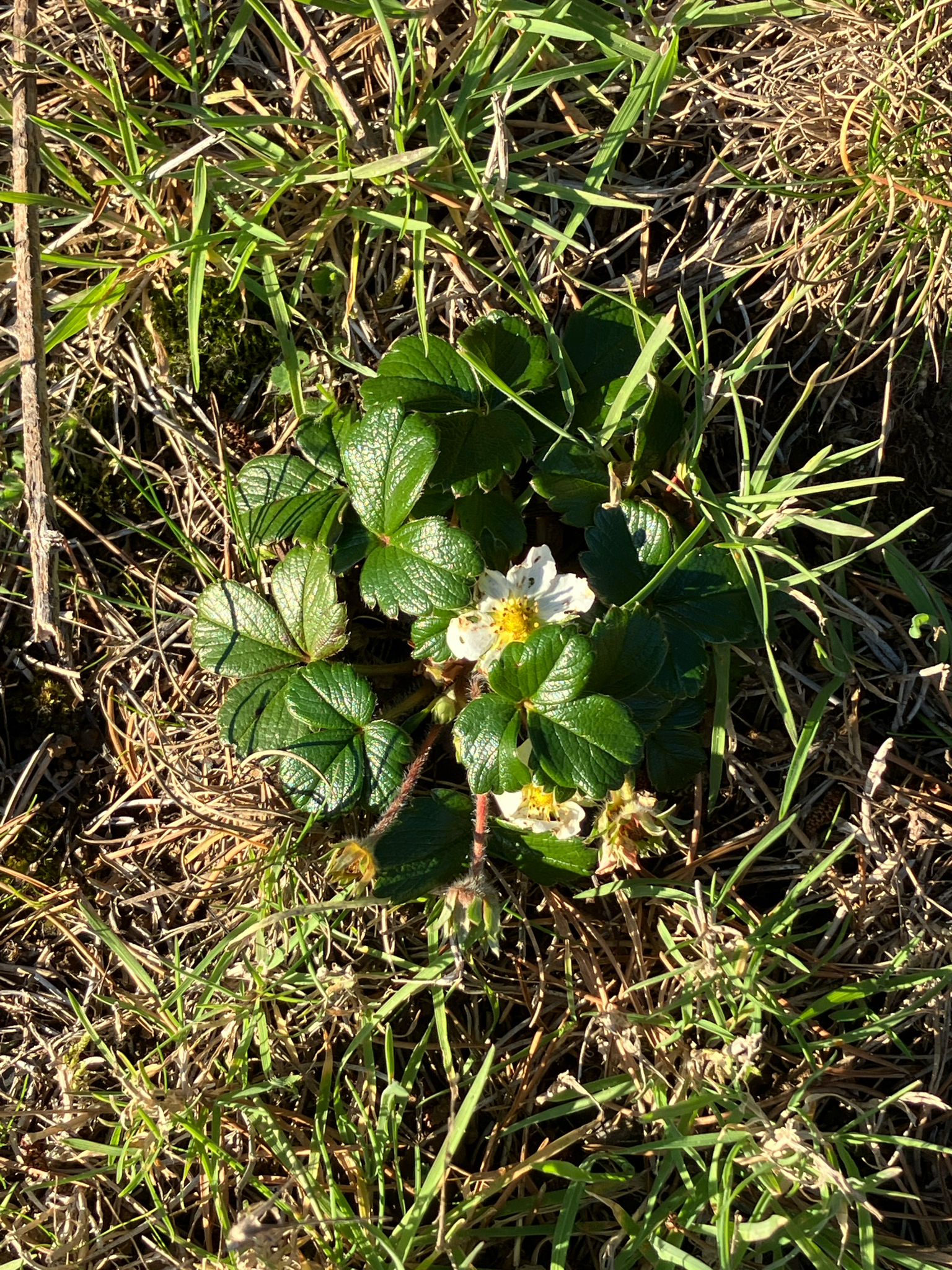
Growing tips
Soil. Strawberries like cool, rich, drained ground: amend with well-rotted manure or compost before planting, aerate with a broadfork while removing stones and weeds. They enjoy slightly acidic soils and dislike active lime and standing moisture — the woodland strawberry, used to forests, is content with humbler, fertile, light earth.
Water. Watering should be regular but measured, especially in flower and while fruit swells: juicy fruit needs water, but excess invites disease. Always at the base, never on the foliage — wet leaves open the door to fungal diseases (botrytis, powdery mildew). Mulching sharply reduces watering needs.
Seasonal jobs. Hoe or mulch to keep the bed clean; cut out dry or diseased leaves as you go; remove flowers in the planting year if you want stronger plants next year (a sacrifice gourmets negotiate gladly). At season's end, clean the bed: a mat of old leaves harbours disease and slugs.
Runners and renewing the strawberry bed
In summer, strawberry plants send out runners: long creeping stems that root into new plantlets. Two schools of thought: if you want fruit, remove them as they appear — they drain the mother plant and cut production. If you want to multiply your plants, keep only a few: detach the rooted young rosettes and replant them elsewhere.
Key point for longevity: a strawberry crops well for 3 to 4 years, then tires. Renew your bed by replanting the runners on a new patch — it's both your free propagation and your crop rotation.
Strawberry varieties: heirloom first
Two big behavioural families: June-bearing (one big crop, May-June) and everbearing (waves of fruit June to October — combine both for a bed that lasts all summer). Our selection keeps only heirloom, open-pollinated, reproducible varieties — seed and runners breed true to parent, unlike F1 hybrids.
- 'Gariguette': June-bearing, elongated redcurrant-red fruits of exceptional flavour — the chefs' favourite, cropping May-June.
- 'Reine des Vallées': everbearing alpine without runners, grown from seed — tiny elongated dark red fruits, intensely fragrant, June to October.
- 'Vicomtesse de Héricart de Thury': old June-bearing variety with large, tender, fruity berries (10-15 g).
- 'Mara des Bois': the benchmark for wild-strawberry perfume on large fruits.
- 'Ciflorette': very fragrant, loved for its woodland-strawberry taste.
- 'Ostara' and 'Rabunda': productive everbearers, perfect for jam.
- 'Golden Alpine': white alpine strawberry — the birds ignore it, a clever garden trick.
Worth knowing: F1 varieties sold in garden centres don't breed true from seed — always choose open-pollinated, reproducible varieties you can multiply yourself, year after year.
Rotation and companion planting
Rotation: like any perennial crop, the strawberry bed moves: replant your new plants in a different spot every 3-4 years, and avoid ground that has just carried other Rosaceae or verticillium-prone solanaceae.
Good neighbours: strawberries like the company of leeks, onions, spinach, lettuces and borage, which deter some pests. Borage also draws in pollinators at flowering time.
Pests and diseases
- Slugs and snails: enemy n°1 of ripe fruit — cocoa-shell or coir mulch, ash, traps, hand-picking.
- Birds: blackbirds and thrushes love ripe strawberries — netting laid before ripening (or white varieties they don't spot).
- Botrytis (grey mould): fruit rotting in damp conditions — clean mulch, ventilation, regular picking, watering at the base.
- Powdery mildew: white deposit on leaves and fruit — space plants out, avoid wetting foliage, remove affected leaves.
- Mites (red spider, tarsonemids) and aphids: on the aerial parts — water jet, black soap, biodiversity around the bed.
- Soil pests: wireworms, cockchafer grubs, mole crickets or vine weevils may attack roots — regular hoeing and rotation limit damage.
Good news: well grown — airy, mulched, watered at the base — strawberries are not very disease-prone. Most problems come from poorly managed moisture.
Harvesting and storing strawberries
Strawberries don't ripen after picking: harvest fully ripe and well coloured, early morning or in the evening — they'll keep better. Pick keeping the calyx and a bit of stalk so the fruit isn't bruised; regular picking every 1-2 days keeps the plant producing and prevents rot.
Storage: fragile, strawberries keep 2-3 days in the fridge in an open container, washed only just before eating. Beyond that: jams, coulis, syrup — or freeze on a tray before bagging, for winter desserts.
In the kitchen
On its own, the strawberry justifies the vegetable garden: eaten in the garden, it's incomparable. In jam, tart, fraisier cake, coulis or fruit salad — the alpine strawberry lifts everything with its unmatched perfume. Gourmets dare the pairing with pepper, basil or a dash of balsamic vinegar. And dried strawberry leaves make a mild tisane with a light woodland taste.
Nutrition-wise: low in calories, strawberries are rich in vitamin C — more than oranges by weight — plus polyphenols and gentle fibre.
Not to be confused with
Two imposters circulate in the garden. The mock strawberry (Potentilla indica, syn. Duchesnea indica) carpets borders with fake strawberries whose red fruits point skyward — edible but insipid: a real strawberry carries its fruit hanging, the imposter holds them upright. And the strawberry spinach (Blitum capitatum), a neighbouring vegetable with small clustered fruits that is neither spinach nor strawberry — its leaves can be cooked, but don't wait for strawberries.
Frequently asked questions
When should you plant strawberries?
In autumn, September to November, for a crop the following spring — September being the best compromise. Otherwise in spring (March-April), watering well at the start. Pot-grown plants go in almost any time frost-free.
What spacing for strawberries?
30 cm between plants and 40 cm between rows — up to 60-80 cm for very vigorous varieties in rich soil. In pots: minimum 20 cm depth per plant.
How long does a strawberry plant live and crop?
A strawberry crops well for 3 to 4 years; beyond that, yields drop. Simplest method: layer a few runners each year and renew the bed on a fresh spot.
Should you remove strawberry runners?
Yes if you want fruit: runners exhaust the mother plant — cut them as they appear. Keep only a few if you want to multiply your plants.
Do strawberries survive frost?
Yes, most varieties withstand cold winters (some to -25 °C). In cold climates, winter mulch protects the crown; damage mostly comes from spring frosts on the flowers — a fleece saves the crop.
Can you grow strawberries from seed?
Yes — alpine strawberries like 'Reine des Vallées' sow easily: on the surface of fine compost, at 20 °C, germination in 1 to 4 weeks, prick out at 4-5 leaves. F1 hybrid varieties, however, don't breed true from seed.
Why are my strawberries rotting on the plant?
That's botrytis, favoured by damp: mulch to keep fruit off the soil, water at the base without wetting foliage, air the rows and pick ripe fruit promptly.
The most rewarding fruit in the garden
A sunny corner, cool soil and a few well-spaced plants: strawberries thank you from year one — and every summer their runners offer you the next bed for free. To start your alpine strawberry sowings in mid-winter, our germination kits provide steady warmth and light; and the Gardiscan checks in seconds that your soil's pH suits them — strawberries like it acid.