
Radish (Raphanus sativus): the garden's fastest crop, from seed to plate in 3 weeks
Published by Germie in Vegetables the 05/11/2026 at 16:33

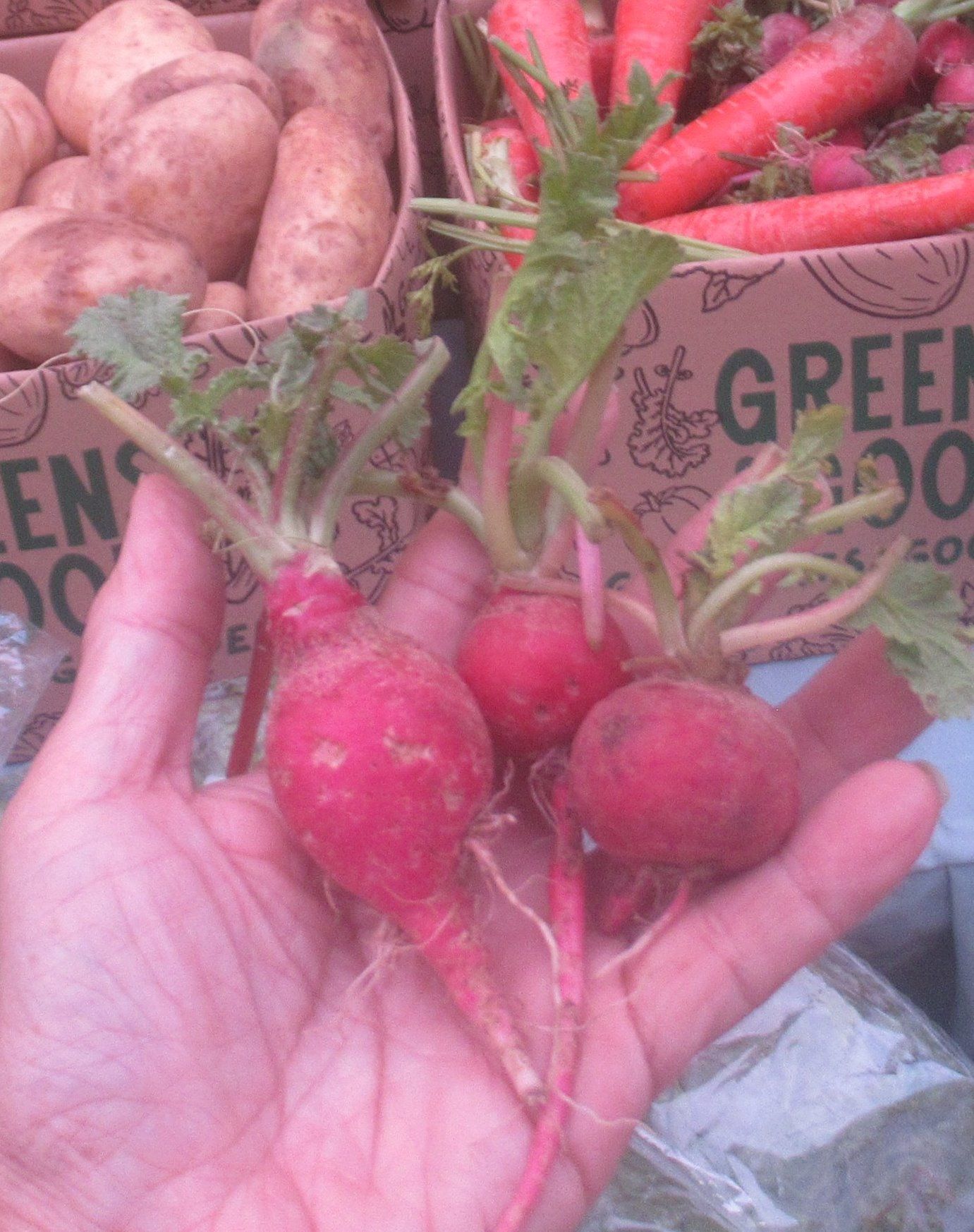
Radish (Raphanus sativus): the garden's fastest crop, from seed to plate in 3 weeks
The radish (Raphanus sativus) is the quickest vegetable in the garden: sown on a Monday, it can be crunched twenty days later — old market gardeners used to say twenty days, and don't forget it; twenty-five is too late. Round, long, turnip- or sausage-shaped, red, pink, white, two-tone, sometimes yellow, grey, green or purplish, they all share the same signature: crisp, juicy flesh with a peppery bite, thanks to a volatile sulphur compound called isothiocyanate.
It's also the perfect crop for beginners and children: it grows fast, anywhere, in the smallest spare patch, and its 3 mm seeds germinate in two to four days. And if you forget a few plants in the garden? All the better: radishes produce edible seed pods with a spicy kick — the English "rat's tail" radish — and pretty cross-shaped flowers loved by insects.
Contents
- Sowing & harvest calendar
- Identity card
- A thousand-year-old vegetable from Asia
- Sowing radishes
- Growing tips
- Harvesting at the right moment
- Varieties: summer rounds or winter giants
- Saving your own seed
- In the kitchen
- Pests and diseases
- Precautions and lookalikes
- Frequently asked questions
Sowing & harvest calendar
| JAN | FEB | MAR | APR | MAY | JUN | JUL | AUG | SEP | OCT | NOV | DEC | |
|---|---|---|---|---|---|---|---|---|---|---|---|---|
| Sowing summer radishes | ||||||||||||
| Sowing winter radishes | ||||||||||||
| Harvest |
Green: outdoor sowing. Summer radishes (round and long) are sown March to September in successive sowings; winter radishes, biennials, are sown in June-July. Orange: summer radishes are harvested 3-4 weeks after each sowing, April to November; pale yellow: winter radishes lifted before hard frosts store until April.
Identity card
- Latin name: Raphanus sativus (also classified Raphanus raphanistrum subsp. sativus)
- Family: Brassicaceae — the cabbage, turnip and mustard family
- Type: annual root vegetable (summer radishes) or biennial (winter radishes)
- Origin: south-western Asia or the eastern Mediterranean basin, possibly Iran; the greatest genetic diversity is found in China
- Cycle: a record breaker — 20 to 75 days from sowing to harvest depending on the variety; the fastest varieties mature in 21 days
- Hardiness: a cool-season crop (spring, autumn); the plant tolerates light frost but winter radishes are lifted before hard frosts
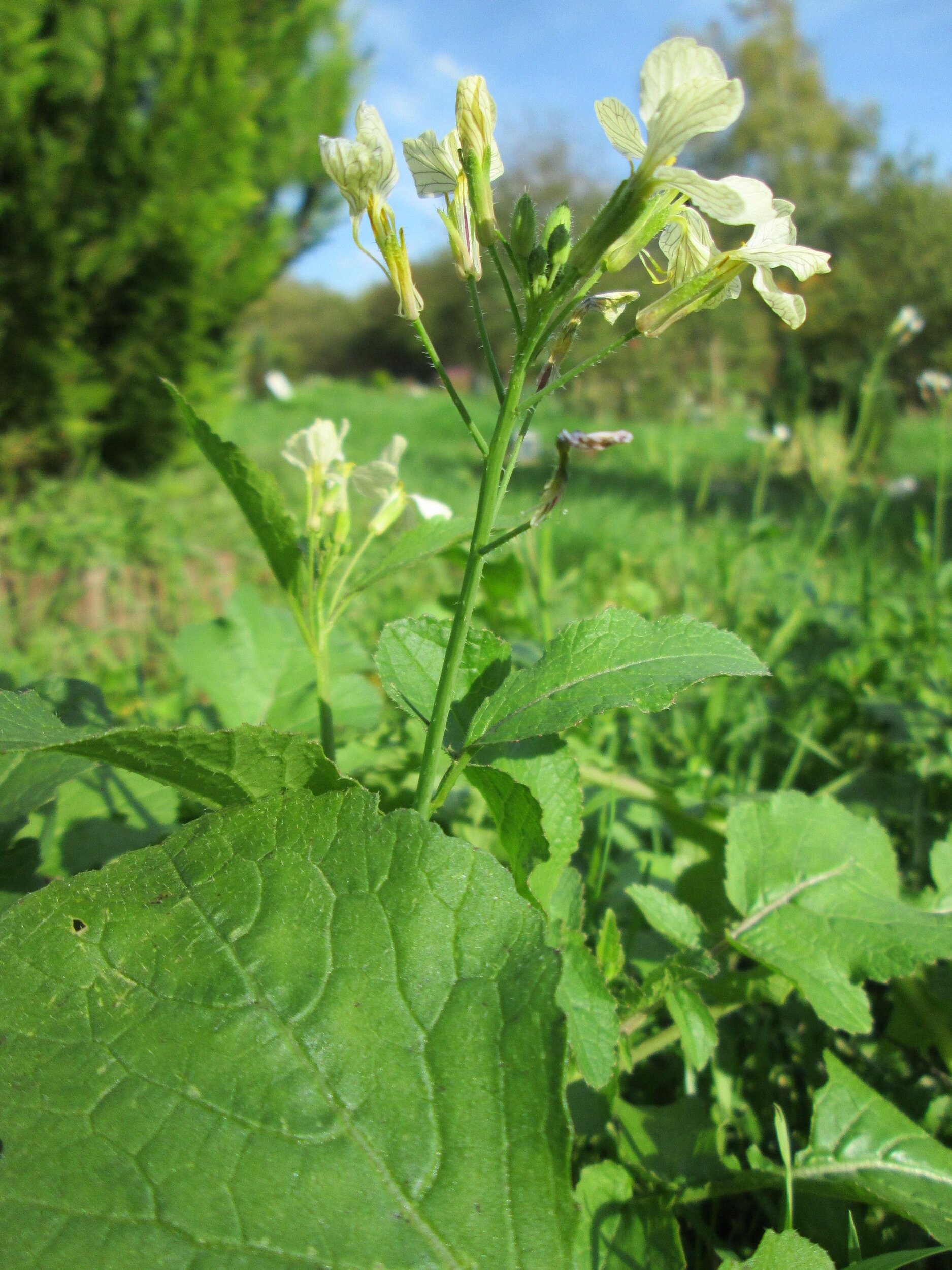
The plant. An annual or biennial herb with pinnate, partly divided leaves, the radish swells its hypocotyl and primary root into a crisp reservoir within weeks: round, tapering or cylindrical, with red or white skin and white flesh. When it bolts, it sends up a stem 0.6 to 1.5 m tall covered in small four-petalled cross-shaped flowers, white to dark pink depending on the variety — the classic Brassica signature.
Everything is edible. The root, raw or cooked, of course — but also the young leaves (eaten as a leafy vegetable in Asia) and the pods: every variety produces edible siliques, and some — the "rat's tail" radish — are grown only for these crisp, peppery pods.
A thousand-year-old vegetable from Asia
The radish has been cultivated for thousands of years: probably born in Western Asia — the region where its genetic diversity is richest, especially in China — it was grown in Europe many years before reaching America. In the nineteenth century, American variety seed circulated through the vast Shaker seed network, while the Old World had its own classics: the long red-and-white French Breakfast appeared around 1865.
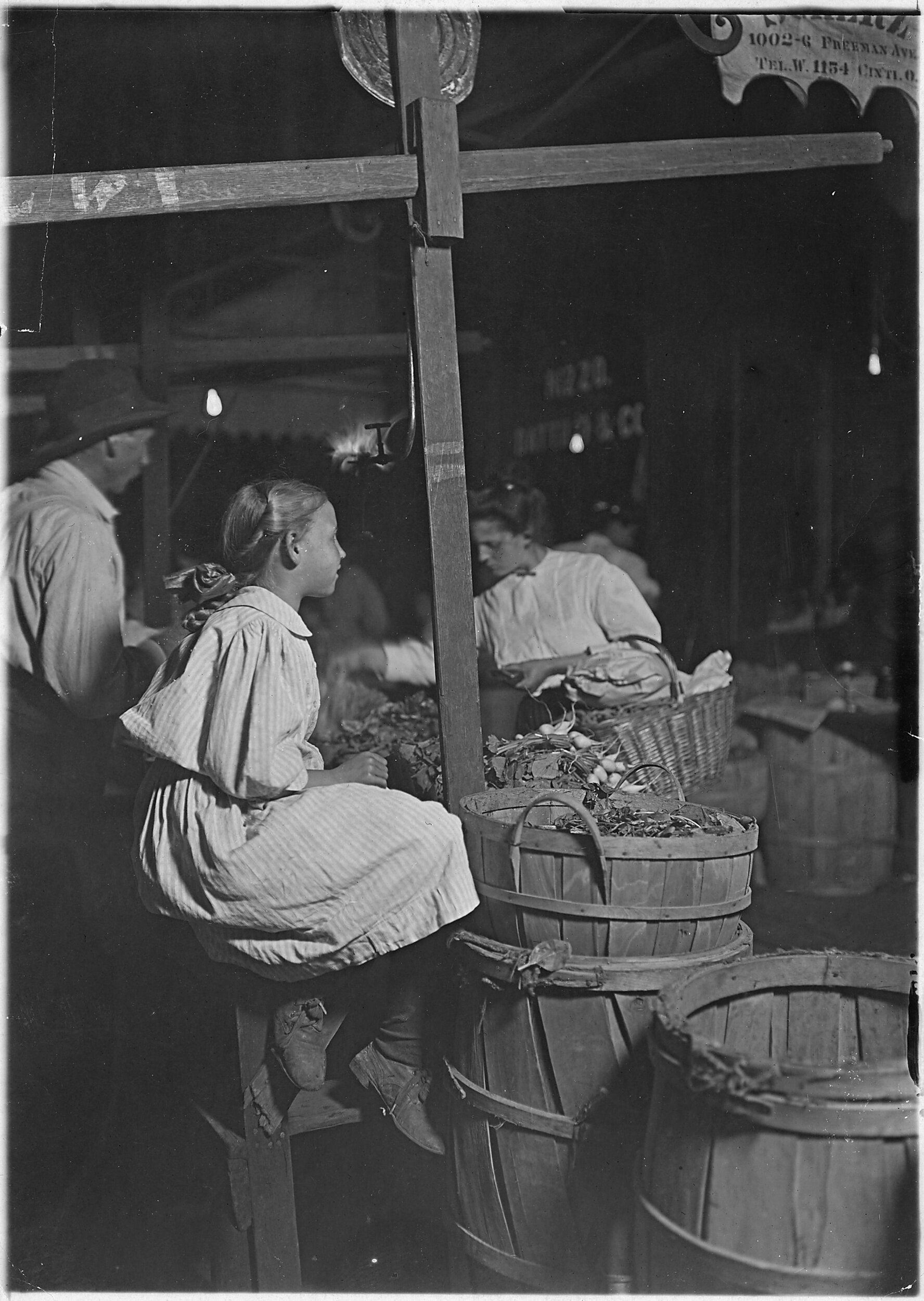
It's a market-stall vegetable: Lewis Hine's 1908 photograph from Cincinnati shows children crying Radishes! Penny a bunch! — bunches of radishes for a penny — until past 11 p.m. A truly popular vegetable, some varieties of which even had a medicinal reputation: the big black winter radish was boiled "to cure a cold" in eighteenth-century Pennsylvania.
Sowing radishes: the simplest of vegetables
When to sow?
- March to September for round and long summer radishes — in successive sowings every 3 to 4 weeks to stagger the harvest, since everything matures at once.
- June-July for winter radishes (black radishes, large winter radishes, daikon) — biennials that bulk up through autumn and are harvested from October onwards.
- Seed germinates between 7 and 32 °C (optimum ~29 °C): one of the few crops that sprouts fast even in cool spring soil.
- Never transplant: radishes are always sown in place, exactly where they will grow.
How to sow?
- In drills or broadcast, without over-densifying; the radish row often serves as a marker among slow crops.
- Depth: 2 mm for early round types, 1 to 2 cm for long varieties and summer, autumn and winter radishes.
- Rows 10 to 15 cm apart for common varieties, 30 to 40 cm for winter radishes; along the row, allow 5 cm between small plants, up to 15 cm for a daikon.
- Express germination: 2 days under cover, 4 days outdoors — keep the soil moist meanwhile.
Growing tips
- Light: full sun, but tolerates light shade — handy for tucking it under taller crops.
- Soil: moist, rich in organic matter and well-drained, preferably sandy, pH 6.5 to 7; it loves loose soil that lets the root swell freely.
- Water — the critical point: from sowing to harvest, a radish must never go thirsty. At the slightest shortage, roots turn dry, pithy and very hot; in hot weather, water daily and soak the soil deeply at least once a week.
- Feeding: go easy — too much nitrogen gives lush leaves and puny roots. A soil amended for a previous crop is enough.
- The golden rule: for a good radish, you have to grow it fast and harvest it fast — anything that slows it down (drought, lingering cold, competition) makes it woody and bitter.
- Companions: the champion catch crop, sown wherever a spot is free — between carrots, spinach, parsley or peas whose rows it marks, among lettuces, romaines and cauliflowers, even under tomatoes, peppers and cucumbers that take longer to mature.
- Family needs: count 500 to 800 quick radishes (about 100 per successive sowing) and 50 to 100 winter radishes in a single sowing for 4-6 people.
Harvesting at the right moment: radishes don't wait
- Pull as soon as the root reaches the size stated on the packet — 20 to 25 days for early varieties, about six weeks for summer types, nine weeks for winter radishes.
- A sowing is harvested in several passes, always taking the biggest first and letting the rest grow on.
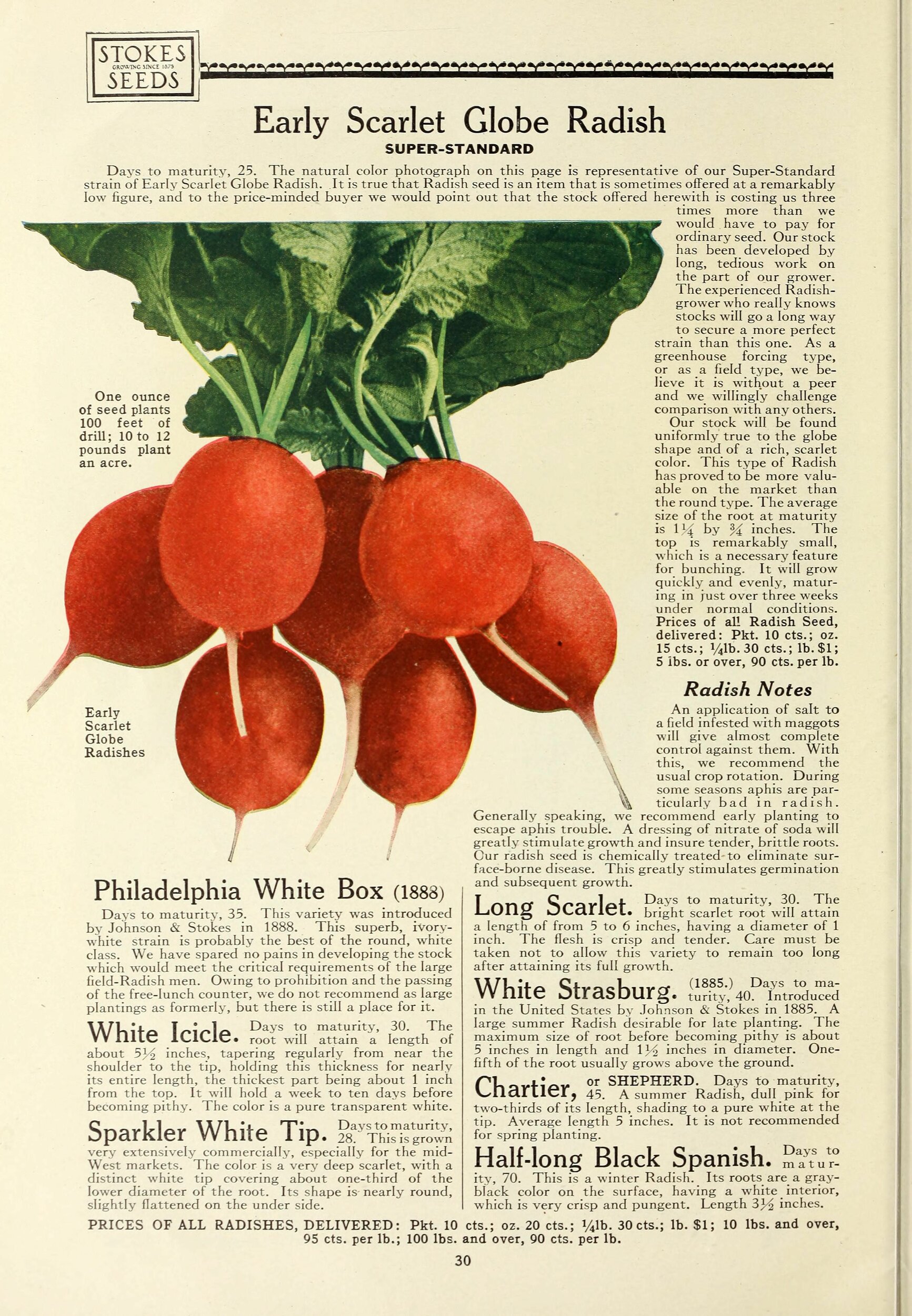
- Don't wait: past its prime, the root turns hollow, woody and bolts to seed — as old catalogues warned: Twenty days, and do not forget it; 25 is too late.
- Winter radishes: lift them before hard frosts; stored in a cool place they keep until April — true winter provisions.
- Pods are picked small and tender, before the silique hardens.
Varieties: spring rounds versus giant winter blacks
Radishes fall into two broad families: summer radishes, small, rounded, cylindrical or pointed, maturing in three to six weeks — and winter radishes, larger and turnip-like, needing around nine weeks and keeping for months.
- French Breakfast — the classic French long radish, red and white, crisp and snappy, dating from around 1865
- Early Scarlet Globe — a 25-day scarlet globe, the star of 1920s American seed catalogues
- White Icicle — a translucent white 14 cm tapering root, crisp and mild, ready in 30 days
- Sparkler White Tip — deep scarlet with a distinct white tip, the pretty two-tone market radish
- White Strasburg and Chartier (Shepherd) — the large summer varieties with white tips from the 1880s
- Black winter radish (Half-long Black Spanish, Schifferstadt Long Black types) — grey-black skin, white flesh, very crisp and pungent, keeps all winter; it used to be boiled as a home remedy
- Rat's tail — the exception: grown not for its root but for its fleshy siliques, on plants up to 1.5 m tall, eaten raw or pickled
Saving your own seed
Easy, since radishes set seed abundantly — but with a catch: it's a self-incompatible, insect-pollinated plant, and all varieties cross freely with each other. To keep a variety true, let only one bolt at a time, or isolate your seed plants.
The four-petalled cross-shaped flowers, white to dark pink, bloom in elongated clusters for weeks — flowering only stops with frost. Then watch the long-beaked indehiscent siliques, each holding 6 to 12 globular yellow or brown seeds of 3 mm: harvest as they dry. Pod-laden plants get top-heavy after rain — stake them against summer gusts. The plant itself tolerates light frost, but the pods stay tender — bring seed plants in before hard freezes.
In the kitchen: crisp, peppery, everywhere
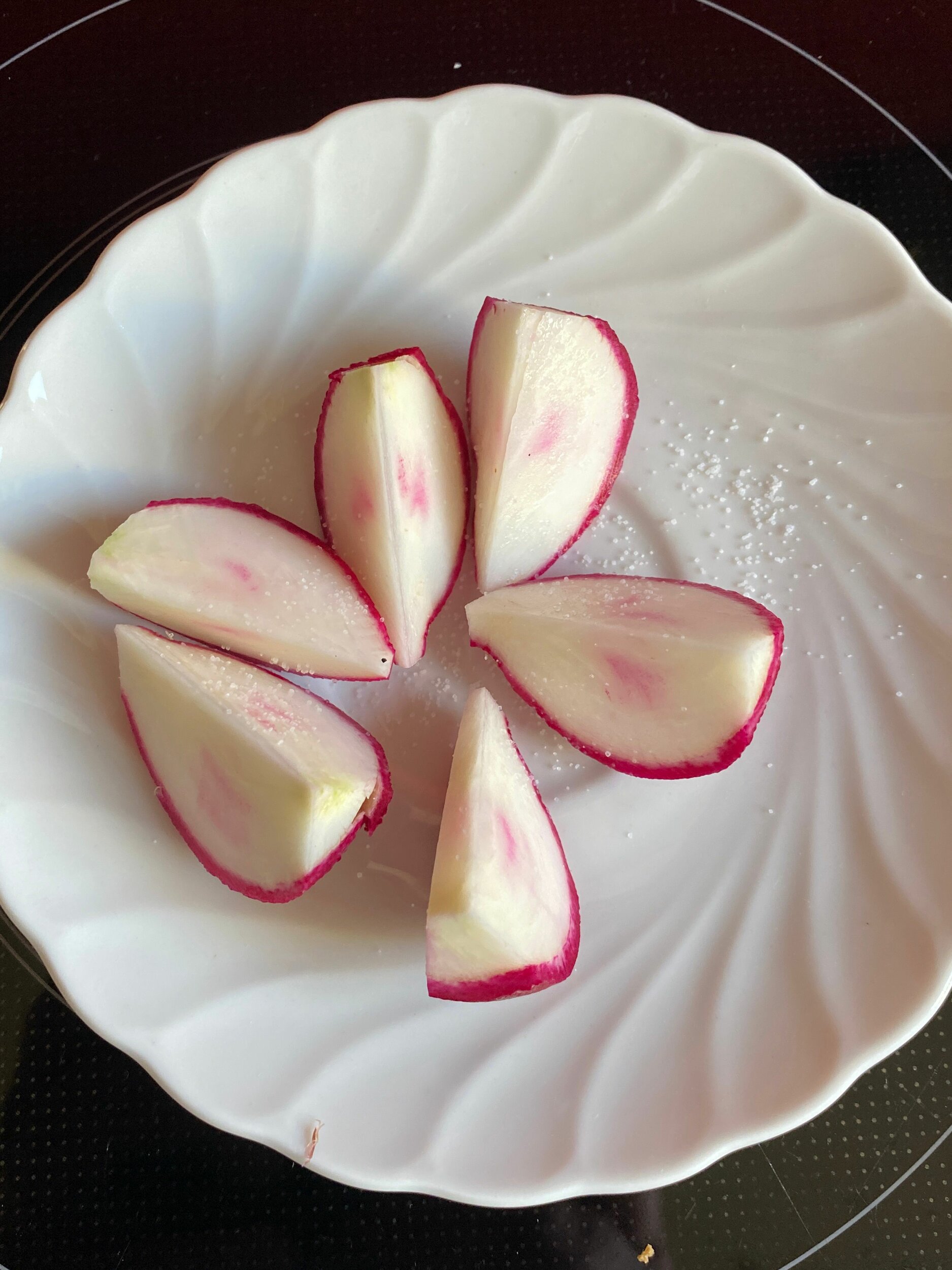
Raw first: radishes are eaten whole, sliced, diced or grated, tossed into green salads or pearl couscous, slipped into sandwiches — the dainty English finger sandwich tradition owes a lot to these crisp little roots — carpaccios and the classic butter-and-sea-salt board. Its juicy flesh, with a good deal of snap as old catalogues put it, balances rich foods beautifully.
Cooked, it changes character: mild varieties cook like baby turnips (braised, roasted, sautéed), and big winter radishes are boiled. Waste nothing: the tender tops cook as a leafy green — standard practice in Asia — and fresh or pickled pods make original spicy garnishes: the old English recipe salts them, then scalds them in hot vinegar spiced with peppercorns, mace and allspice. Sliced and marinated, radishes also keep as pickles.
Pests and diseases
- Flea beetles: the little hopping beetles that riddle leaves with holes — they love radishes. Good news: the plant usually outgrows the damage and still produces fine roots. If needed, insect mesh over the seed bed keeps them off.
- Cabbage root fly maggots: they can spoil roots — again, mesh applied at sowing is the simple fix.
- Aphids: the radish's strong smell tends to repel them — which is why it makes an excellent companion plant and sacrificial trap for other brassicas (cabbages, turnips) under flea-beetle attack.
Bottom line: the radish is one of the easiest vegetables in the garden — its only real enemies are time passing and the drought that turns it woody.
Precautions and lookalikes
Wild radish. Its cousin Raphanus raphanistrum — wild radish or jointed charlock — grows wild in European fields and wastelands; the cultivated radish is classified as its domesticated subspecies (R. raphanistrum subsp. sativus). Wild radish has yellow to white flowers and thin, non-fleshy roots — technically edible but tough, and not your garden radish.
In the garden: volunteer radish seedlings can flower anywhere — pull or eat unwanted seed plants before they mature to avoid surprise crosses with your seed varieties. And as always: never eat a plant you haven't identified with certainty — when in doubt, leave it.
Frequently asked questions
When should I sow radishes?
From March to September for summer varieties, in successive sowings every 3-4 weeks; in June-July for winter radishes that will keep into the following spring. Seed germinates from 7 °C, even in still-cool soil.
How deep should I sow radish seed?
Very shallow for small round types — 2 mm is enough; 1 to 2 cm for long varieties and winter radishes. Never transplant: it is always sown in place.
Why are my radishes hot or hollow?
Almost always lack of water: a thirsty radish concentrates its isothiocyanate and turns dry, pithy and very peppery. Water regularly — daily in hot weather — and harvest on time: past its prime, the root hollows out and bolts.
How long until I can harvest a radish?
20 to 25 days for early varieties — the fastest crop in the garden — about six weeks for summer radishes, nine weeks for big winter types. Always pull the biggest first, over several passes.
Can you eat radish leaves and pods?
Yes — everything is edible: young leaves cook as a leafy green (common in Asia), and tender pods are crunchy raw or pickled — the "rat's tail" variety is grown solely for its peppery pods.
Which plants grow well with radishes?
It's the ideal companion: its smell deters aphids and it acts as a sacrificial plant drawing flea beetles away from your cabbages. Sow it as a row marker among carrots, parsnips, spinach, parsley or peas, between lettuces and cauliflowers, or under tomatoes and cucumbers — it will be harvested before they need the space.
Want lightning-fast harvests? At Germie, our sprouting kits get your seeds off to a record start — and for perfectly drained, cool soil, the Gardiscan analyses your ground before the season.
By card and PayPal
For orders over €45
Our goal: 100% satisfaction
More information