
Growing Morelle de Balbis (litchi tomato): the complete guide
Published by Germie in Vegetables the 05/11/2026 at 16:33

Morelle de Balbis: the litchi tomato making its comeback in the vegetable garden
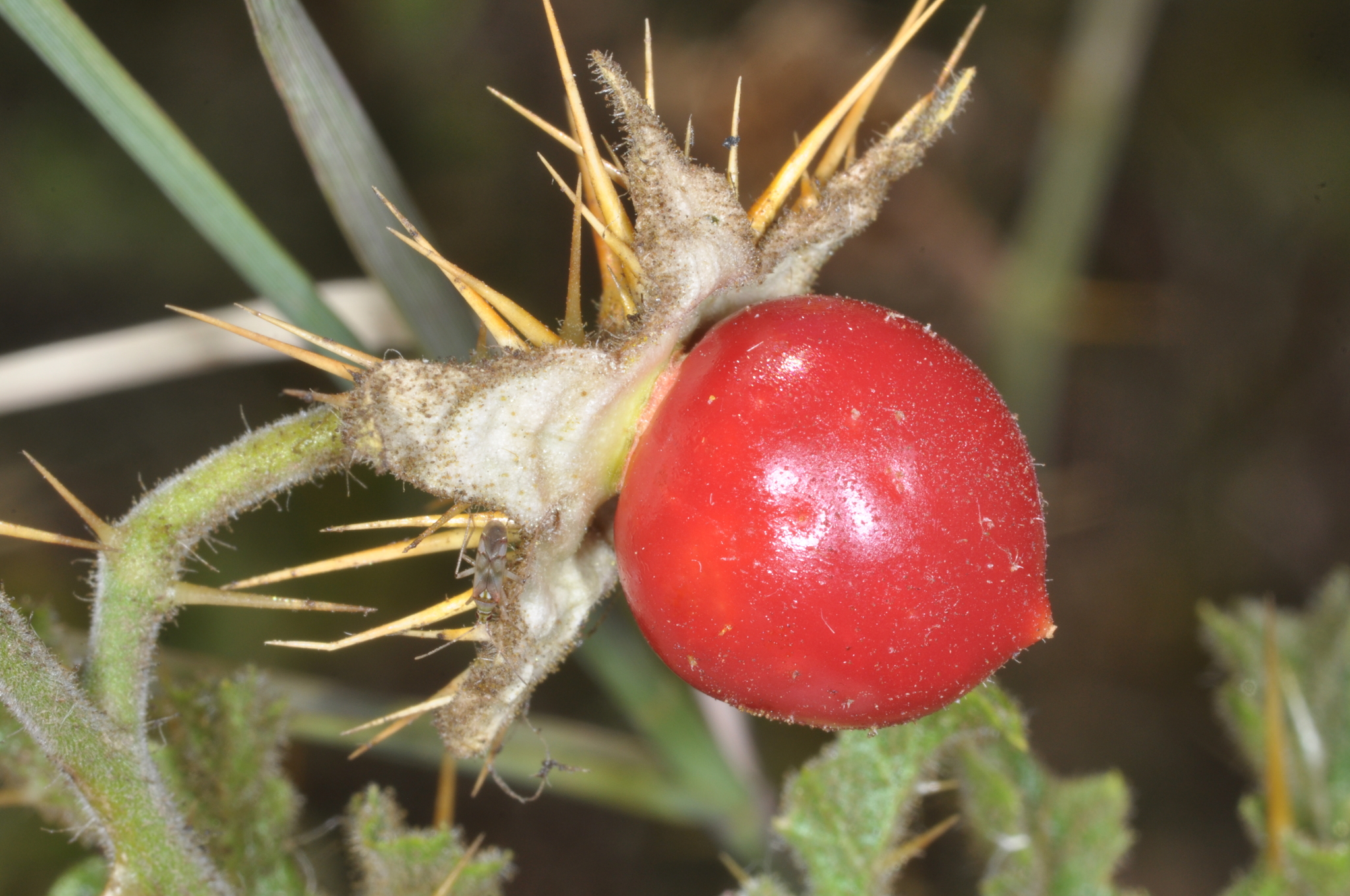
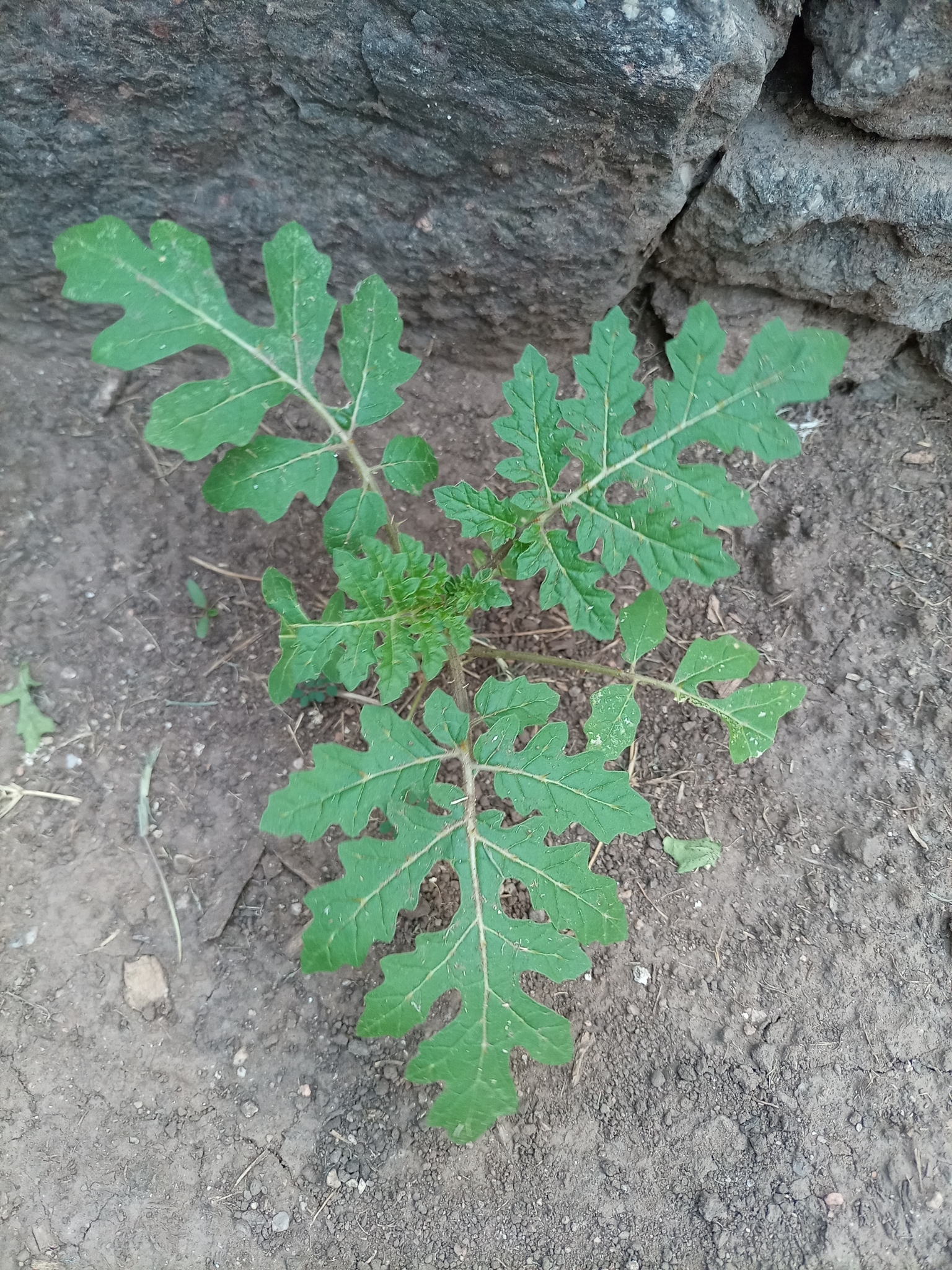
Morelle de Balbis (Solanum sisymbriifolium), also nicknamed the litchi tomato, is an unusual fruit vegetable. It produces clusters of fruits wrapped in a spiny husk, like that of the chestnut. The plant can exceed 1.50 m in height, with branching stems covered in impressive spines — gloves are essential for handling it. Its deeply cut green leaves, with pale veins that also bristle with spines, give it real ornamental value.
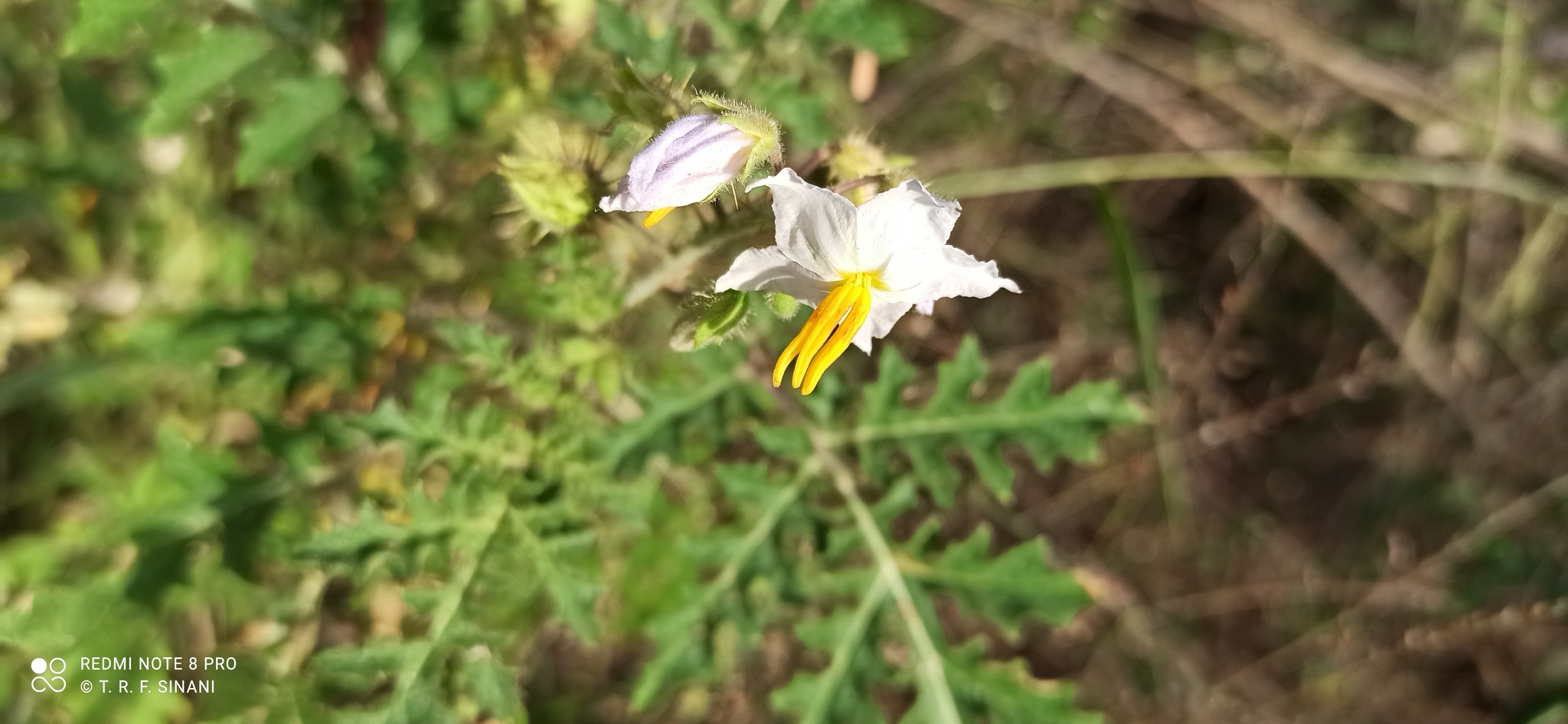
In summer, it produces clusters of white, blue or violet star-shaped flowers — larger than those of the potato or the aubergine, its cousins in the Solanaceae family. In autumn, its bright red fruits, released when the husk opens fully, offer a surprising flavour somewhere between litchi and red berries.
Contents
- Sowing & harvesting calendar
- A little history
- Etymology and nicknames
- Taste and nutritional value
- Subspecies and varieties
- How to grow Morelle de Balbis
- Growing tips
- Successful sowing
- Sowing tips
- Care and harvest
- Tips and tricks
- Crop rotation and companion plants
- Storage and uses
- Diseases and pests
Sowing & harvesting calendar
| JAN | FEB | MAR | APR | MAY | JUN | JUL | AUG | SEP | OCT | NOV | DEC | |
|---|---|---|---|---|---|---|---|---|---|---|---|---|
| Sowing | ||||||||||||
| Planting out | ||||||||||||
| Harvest |
Green: main period. Yellow: sowing possible as early as February in a heated propagator for a head start. Harvest until the first frosts.
A little history of Morelle de Balbis
- Latin name: Solanum sisymbriifolium
- Family: Solanaceae
- Order: Solanales
- Genus: Solanum
Native to South America — mainly Paraguay, Argentina, Uruguay and southern Brazil — Morelle de Balbis grows wild in open areas, even on poor or disturbed soils. It was scientifically described in the early 19th century and named after the Italian botanist Giovanni Battista Balbis.
Introduced to Europe in the 19th century, it was at first confined to botanical gardens and ornamental collections. Its armour of spines and the toxicity of its unripe fruits long hindered its spread. It was its value as a trap crop against potato cyst nematodes — and the novelty of its edible fruits — that earned it renewed interest, especially among permaculture and organic gardening enthusiasts.
Etymology and nicknames
The name "morelle" traditionally designates several species of the genus Solanum. "Balbis" honours Giovanni Battista Balbis (1765–1831), botanist and professor in Turin. The epithet sisymbriifolium means "with sisymbrium-like leaves", an allusion to its deeply cut foliage. Its nickname litchi tomato evokes the flavour of its fruit, whose sweet notes recall those of the litchi.
Taste and nutritional value
The fruits of Morelle de Balbis are eaten only when fully ripe, when the spiny husk opens completely and reveals a bright red berry. The flesh is translucent and juicy, with a highly distinctive aromatic profile: a blend of litchi, plum, raspberry and sometimes sweet cherry tomato. It can be enjoyed raw, cooked or in jams.
Nutritionally, these small berries provide vitamin C, fibre and antioxidant compounds. A healthy little fruit that deserves a place in autumn desserts — provided you never eat the green fruits or the other parts of the plant, which are toxic, as with most nightshades.
Anecdote
Long forgotten outside its native range, Morelle de Balbis was "rediscovered" by organic farmers not for its fruits but for its roots: planted in an infested plot, it attracts potato cyst nematodes whose larvae develop without being able to complete their life cycle. An ecological ally that rids the soil of these parasites without any treatment.
Main subspecies and varieties
Unlike tomatoes, there are no named varieties — gardeners grow the species Solanum sisymbriifolium itself, of which a few loosely differentiated regional variants exist. It should not be confused with its relatives such as Solanum caripense (tzimbalo) or horse nettle (Solanum carolinense), which is not edible — nor with black nightshade (Solanum nigrum), its toxic cousin.
How to grow Morelle de Balbis?
Technical information
- Difficulty: medium (2/3) — mainly because of the spines and the early sowing
- Density: 1 plant per m²
- Life cycle: annual in our climates, perennial in frost-free zones
- Propagation: by seed
- Pollination: self-pollinating
- Weight per 1,000 seeds: about 1.5 to 2 g
- Height: 1 to 1.80 m
Climate and soil
- Climate: a warm-climate plant, grown as an annual in temperate regions; fully frost-tender, it succumbs to the first frosts.
- Soil: it tolerates all soil types but prefers a loose, well-drained soil rich in organic matter. It likes consistent moisture, but not waterlogging.
- pH: neutral, but it tolerates slightly acidic or slightly calcareous soil. A Gardiscan-type soil analyzer lets you check pH and fertility before planting.
- Position: full sun is essential.
Growing tips
| Position | Full sun |
| Watering | Moderate; daily in summer |
| Soil | All soil types (ideally loose and enriched) |
| Foliage | Deciduous |
| Mature height | 150 cm |
| Spacing | 50 cm in all directions |
| Hardiness | Frost-tender — succumbs to the first frosts |
How to sow Morelle de Balbis successfully?
- Period: March to April in a heated propagator — you can sow as early as February in a heated greenhouse to gain a few weeks. The plant needs a long season to fruit: don't delay.
- Method: sow in pots or trays filled with good seed compost, a few seeds per pot.
- Germination temperature: 20 to 25 °C — a seedling kit with heating mat and LED lamp provides exactly the required conditions.
- Soaking: optional, but 24 hours in lukewarm water softens the seed coat and speeds up germination. No cold stratification is needed.
- Depth: surface-sown, barely covered — a depth equal to the size of the seed (2-3 mm of substrate).
- Germination time: about 7 days at 20 °C, up to 2-3 weeks in cooler conditions.
- Thinning: if several seeds germinate per pot, cut the extras at soil level to keep only the most vigorous seedling, without disturbing its roots.
- Pricking out: as soon as the seedling forms 2 true leaves, transplant it into an individual pot (a peat pot, for example) and keep the temperature around 20 °C.
Planting out in open ground: late May to early June, when plants are 10-15 cm tall, have been gradually hardened off and all risk of frost has passed. Allow 50 cm in all directions, in full sun, in enriched and loosened soil. Put the stake in place at planting time: plants reach 1.5 m and their fruit-laden branches are vulnerable to wind and heavy rain — and the spines make any later intervention an acrobatic feat.
Sowing tips
| Life cycle | Annual (perennial in frost-free zones) |
| Germination time | 7 days at 20 °C (7-21 days depending on conditions) |
| Germination temperature | 20 °C (20-25 °C) |
| Sowing method | In small clusters (a few seeds per pot) |
| Sowing depth | Equal to the size of the seed |
| Container | Pot or tray filled with seed compost |
Care and harvest
- Soil preparation: loosen and enrich with compost before planting.
- Watering: regular and moderate, throughout the growing season and especially in dry weather; a thick mulch, laid once the soil has warmed up, reduces the need for watering and keeps the soil moist.
- Staking: strongly recommended (up to 1.50 m with fruit-laden branches, vulnerable to wind and heavy rain).
- Tools: a watering can and pruning shears will do — and always thick gloves: stems, leaves and husks bristle with spines.
- Harvest: from mid-September to the first frosts, when fruits are deep red and the husk opens fully. One plant generally yields 30 to 50 fruits weighing 20 to 40 g each.
- Winter protection: none needed in our climates (grown as an annual); in frost-free zones it can overwinter without protection.
Tips and tricks
- Planted in a tight row, Morelle de Balbis forms an impenetrable defensive hedge that deters animals and passers-by.
- It is a highly effective trap crop against cyst nematodes: use it to clean up a plot before replanting potatoes.
- Save your own seeds: a fully ripe fruit contains many seeds — simply rinse and dry them to sow again the following year.
Crop rotation and companion plants
Like all Solanaceae, Morelle de Balbis is a heavy feeder and prone to the family's diseases: don't grow it in the same spot every year, avoid growing it near aubergines and potatoes, and avoid growing it after tomatoes or peppers.
It grows well alongside legumes (beans, peas) which enrich the soil with nitrogen, and with certain herbs, like basil, that help keep insects at bay. It is also very useful grown before a crop susceptible to cyst nematodes, as it cleanses the soil of them.
Storage and uses of the fruits
- Fresh: fruits are eaten fresh and keep for a few days at room temperature or in the refrigerator.
- Processing: jams, jellies and compotes extend the harvest and soften its tangy edge.
- Culinary: raw, in fruit salads, desserts and coulis, or cooked in tarts and chutneys.
- In the garden: defensive hedge and trap crop against nematodes.
Diseases and pests
Morelle de Balbis is resilient and rarely affected by disease: well-drained soil and proper crop rotation prevent most problems. Aphids sometimes appear on young shoots — a spray of water or diluted nettle tea is enough. Slugs can attack freshly transplanted young plants: protect them for the first few weeks.
Above all, remember its dual nature: delicious fruit once ripe, but everything else on the plant — leaves, stems, green fruits — is toxic. Never eat any plant unless you're certain of its identity, and keep it out of reach of children and animals.
Want to try it?
Morelle de Balbis needs very little: sowing in warmth in spring, a sunny spot, gloves and a little patience. In return, you'll harvest a fruit your fellow gardeners won't know — and you'll have cleansed your soil in the process. Discover our germination kits to give your seeds the best possible start.
Photos: © aacocucci, © Thomaz Ricardo Favreto Sinani, © Rony Ristow — CC BY licence, via iNaturalist.
By card and PayPal
For orders over €45
Our goal: 100% satisfaction
More information