
Head lettuce (Lactuca sativa var. capitata): sowing, growing and harvesting
Published by Germie in Vegetables the 05/11/2026 at 16:33

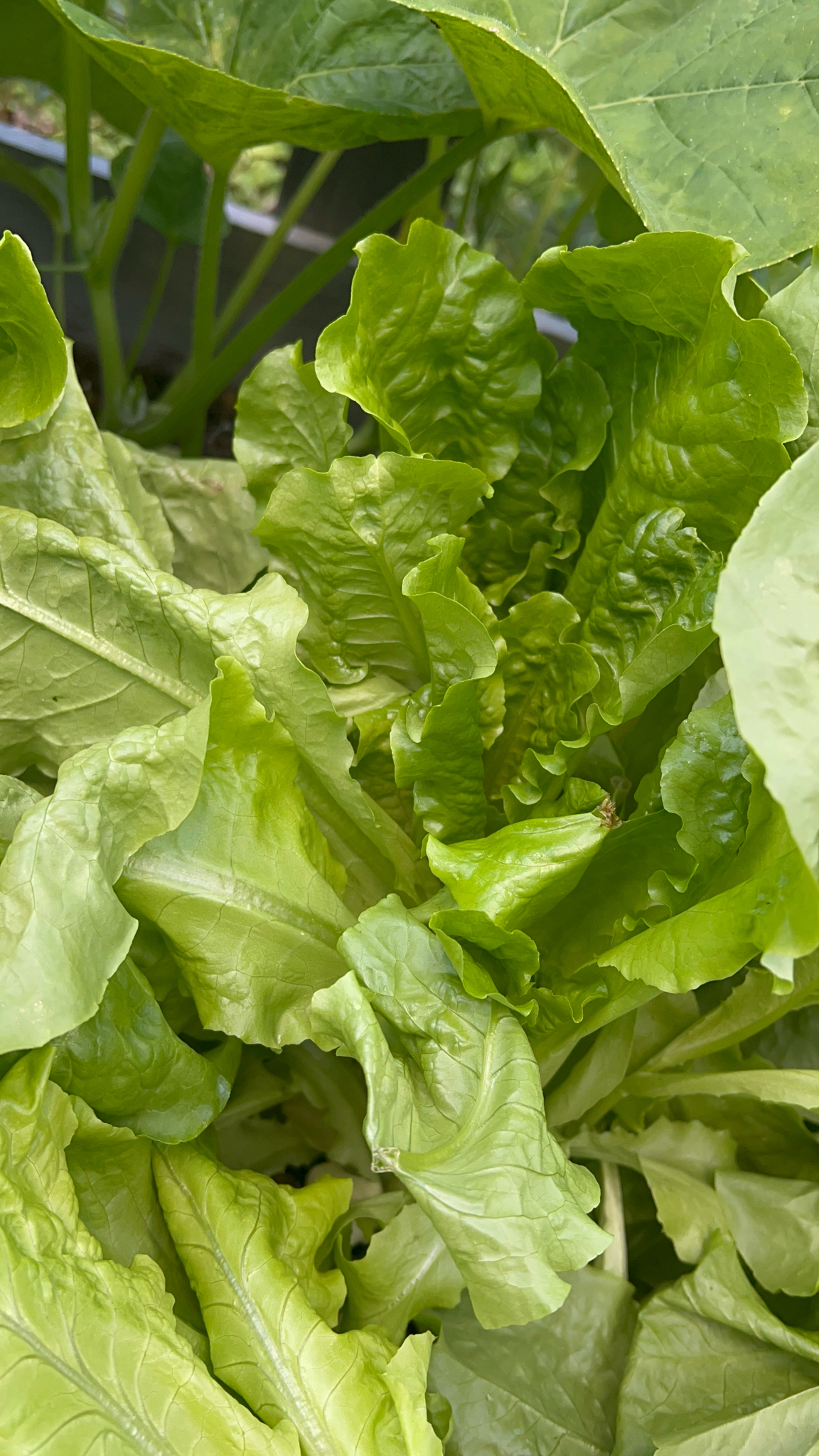
Head lettuce (Lactuca sativa var. capitata): sowing, growing and harvesting
Head lettuce (Lactuca sativa var. capitata) is the impatient gardener's salad: sown in February-March or in succession until autumn, it yields a tender head in 50 to 60 days — and with sowings staggered every 2-3 weeks, it feeds the table from spring to the first frosts. The undisputed queen of the vegetable garden, it is also one of the few seeds that refuses to germinate above 25 °C (77 °F): its biology is worth understanding to succeed.
Behind the name capitata lie two temperaments: butterhead, with soft, melting leaves, and Batavia/crisphead, crunchy and more heat-tolerant — two ways of making the same promise: a fresh salad nearly all year round.
Contents
- Sowing & harvest calendar
- Identity card
- From ancient Egypt to the Space Station
- Sowing lettuce: light and the thermometer
- Growing tips
- Harvesting the head
- Butterhead or Batavia: varieties
- Saving your own seed
- In the kitchen
- Pests and diseases
- Precautions and look-alikes
- FAQ
Sowing & harvest calendar
| JAN | FEB | MAR | APR | MAY | JUN | JUL | AUG | SEP | OCT | NOV | DEC | |
|---|---|---|---|---|---|---|---|---|---|---|---|---|
| Sowing under cover | ||||||||||||
| Direct sowing | ||||||||||||
| Harvest |
Dark green: main windows. Pale: winter sowings under cover (Aug-Sep, hardy varieties), early spring sowings (late March) and autumn sowings depending on zone. Orange: harvest May to November in steady succession; pale: winter varieties under protection and late harvests.
Identity card
- Latin name: Lactuca sativa var. capitata
- Other names: butterhead, Bibb, Boston lettuce, crisphead/Batavia lettuce; Fr.: laitue pommée, laitue beurre
- Family: Asteraceae (daisy family) — same family as dandelions and sunflowers, recognisable by its composite flower heads
- Type: cool-season annual; wild ancestor: Lactuca serriola, prickly lettuce with spiny midribs
- Origin: Mediterranean basin — cultivated since ancient Egypt, over 4,000 years ago
- Hardiness: varies by variety — most tolerate light frosts; winter types (Brune d'hiver) withstand markedly lower temperatures
The plant. A dense rosette of tender leaves that folds into a "head" in the capitata types: this compact heart distinguishes it from romaine (upright) or loose-leaf lettuces (open rosette). Two main types: butterhead — soft, smooth, melting leaves — and Batavia — blistered, crunchy foliage that bolts more slowly in summer. Its roots are shallow: it is thirsty but hates waterlogged soil.
The germination detail. Lettuce is temperature-sensitive: seeds germinate best between 10 and 20 °C (50-68 °F), enter thermal dormancy above ~25 °C (77 °F), and need light to emerge — barely covered with a millimetre of compost. This trio explains 90% of failed summer sowings.
From ancient Egypt to the Space Station
Lettuce is among the oldest cultivated vegetables. It appears on Egyptian tomb paintings from around 2700 BC — grown first for its seed oil reportedly, it quickly became a table plant of pharaohs and gods. The Romans adopted it (served at the end of meals for its supposed calming virtues — its latex, lactucarium, was thought soporific), and Charlemagne's capitulary De Villis already lists it among the royal garden's plants.
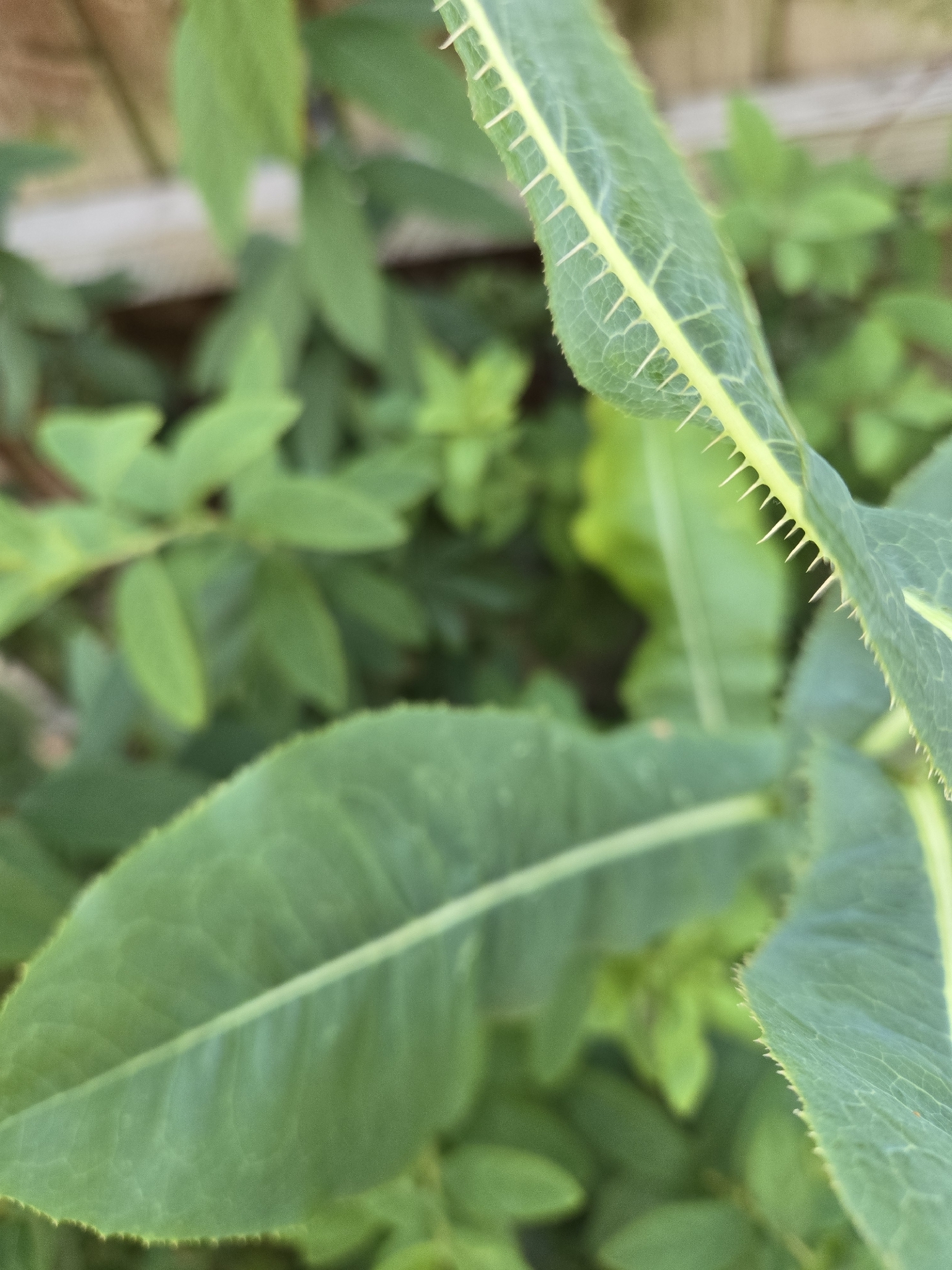
Its wild ancestor, prickly lettuce (Lactuca serriola), still grows in our wastelands: its spiny-midrib leaves remember the distance travelled — selection softened everything, down to our butterhead hearts. And the adventure goes on: in 2015, 'Outredgeous' lettuce became one of the first vegetables grown and eaten in space, in the Veggie module of the International Space Station — the salad is now a high-tech plant.
Sowing lettuce: light and the thermometer
When to sow?
- February-March in modules or trays, under cover or cold frame: the first heads, transplanted early April — the royal road of spring.
- Late March to September direct outside, in succession sowings every 2-3 weeks: this rhythm guarantees heads from spring to autumn without glut.
- August-September under cover for winter varieties (Brune d'hiver, Gotte d'or on a hotbed) — the cold-season lettuce.
- In summer, prefer Batavia (more tolerant) or switch to shaded sowing.
How to sow — the three non-negotiable rules:
- Light: seeds need light to germinate — sprinkle them on the firmed compost, barely 1 mm of covering (never more than 0.5 cm), and press with your palm.
- Temperature: 10-20 °C optimal; above 25 °C, thermal dormancy — the summer trick: 24-48 h in the fridge before sowing (the chill breaks dormancy), then sow in the evening for a cool-night germination.
- Moisture: keep the substrate steadily fresh, misted — a single dry spell kills the emergence.
Germination in 5-14 days (2 days at 20 °C, a week at 10 °C). Thin to 25-30 cm at 3-4 leaves — the thinnings eat well as young salad. Transplanting distance: 25-30 cm between plants, 30-35 cm between rows for full heads.
Growing tips
- Exposure: sun in spring-autumn; part shade or shade cloth in summer — scorching sun necroses the margins ("tipburn") and triggers bolting.
- Soil: cool, loose, rich in well-rotted humus — a dressing of mature compost a few weeks before sowing suffices; pH 6.2-6.8; sensitive to excess nitrogen (weakens tissues, attracts aphids).
- Water: regular and moderate — its shallow roots dry out fast; a light mulch keeps coolness and holds slugs at bay.
- Hardening off: before spring transplanting, bring plants out progressively over 3-5 days — hardened, they withstand down to ~-6 °C.
- Rotation: no lettuce two years running in the same spot; alternate with a distant family.
- Companions: radishes sown in the same drill (harvested before the lettuce fills the space); strawberries and tomatoes make good neighbours.
Harvesting the head
- Count 50 to 60 days from sowing in cool weather (less in summer) — the head is ready when it feels firm to the hand, dense and well-formed.
- Cut at the collar, at the base, early morning when leaves are cool — don't harvest beyond immediate needs: the head doesn't keep.
- Once cut, lettuce doesn't regrow — hence the value of succession sowing rather than one large batch.
- "Baby leaf" variant: some lettuces can be cut leaf by leaf and regrow 2-3 times — less practical for heading types, perfect for loose-leaf.
- At the first sign of a central flower stalk (bolting), harvest immediately — once up, bitterness follows fast.
Storage: whole, 2-3 days in the fridge crisper wrapped in a damp cloth — away from apples and bananas (ethylene browns it). Washed and spun, it keeps even less; wash at the last moment.
Butterhead or Batavia: varieties
The capitata group splits into two main families:
Butterheads — soft, melting leaves, the traditional French lettuce:
- Reine de Mai — ancestor of the early butterheads: tender, reliable, the spring classic
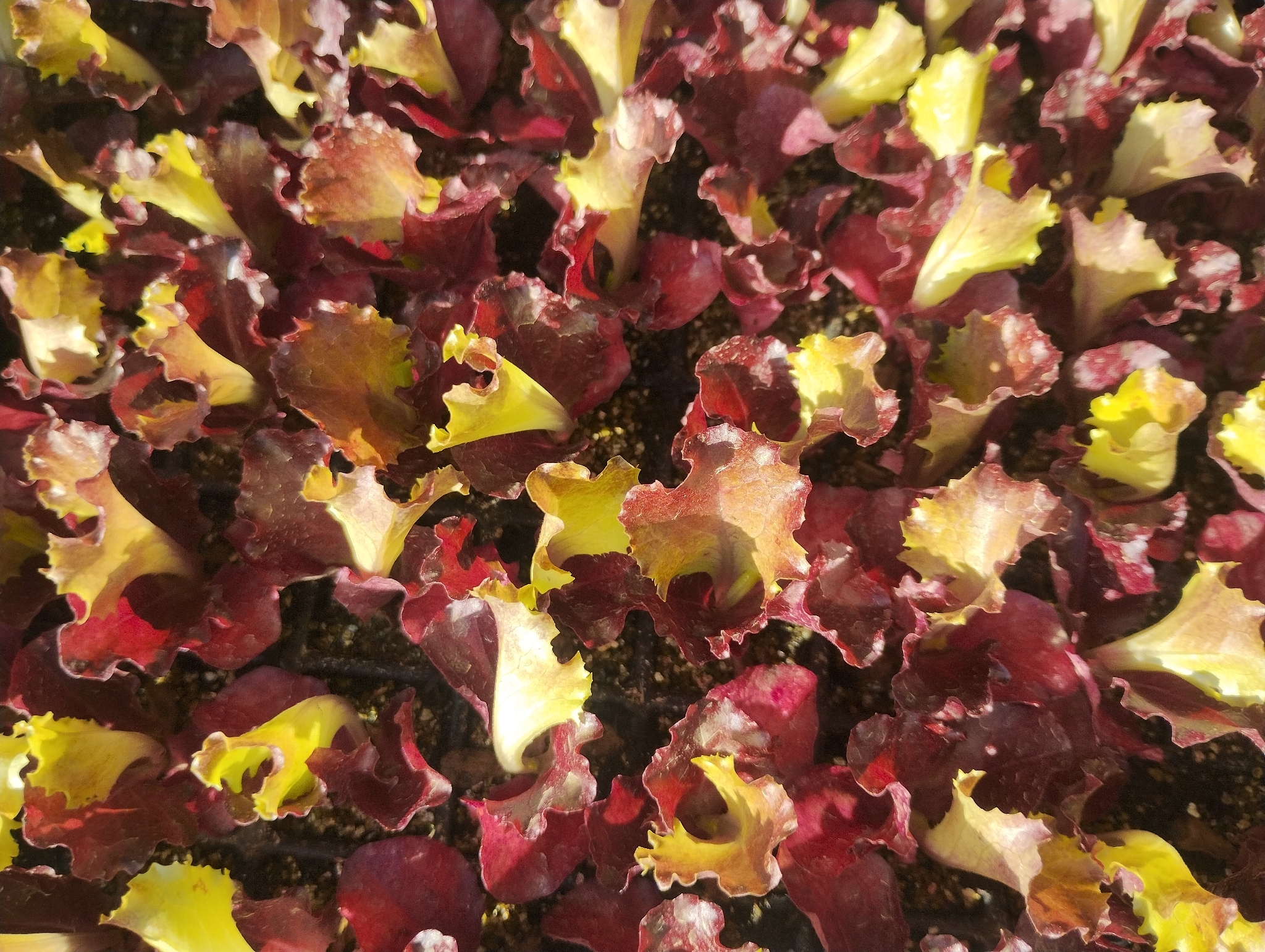
- Merveille des Quatre Saisons — russet-tinted foliage, suited to all four seasons: its name is no lie
- Appia — well-packed blond head, February-April sowing in trays
- Rougette de Montpellier — tinted butterhead, tender and decorative
- Suzan — firm, even head, prized by market gardeners
Batavias (crisphead) — blistered, crunchy foliage, more tolerant of heat and bolting:
- Grenobloise — the quintessential French Batavia: crunchy, open field
- Nevada — bright green, tolerant of summer heat
- Canasta — red-tinted foliage, crunchy and vigorous
- Iceberg (American crisphead type) — dense, very crunchy head, the burger star
Winter varieties — for August-September sowings under cover: Brune d'hiver (hardy, survives frosts) and Gotte d'or (on a hotbed from January-February).
Saving your own seed
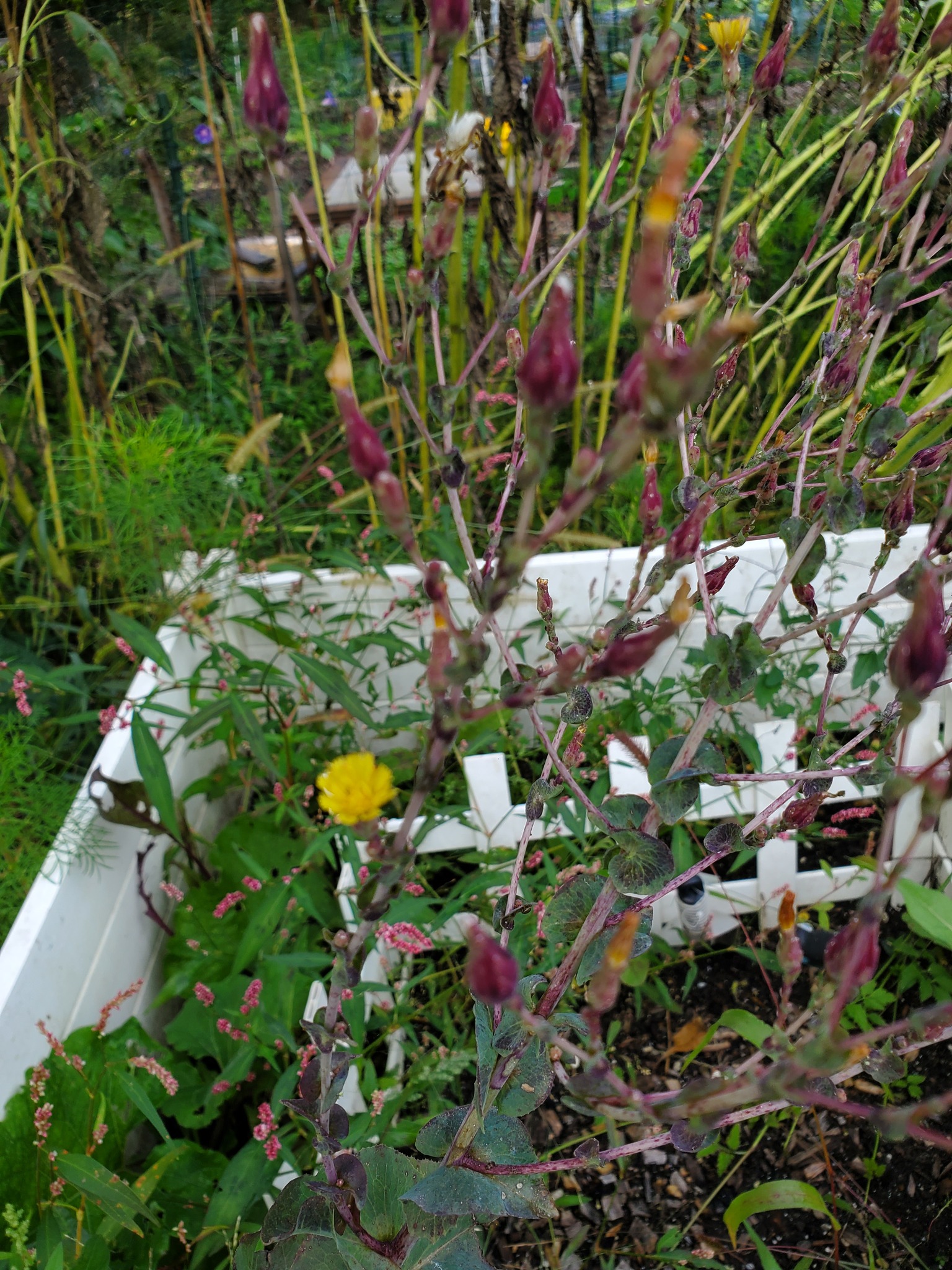
Lettuce is mostly self-pollinating — its small yellow flowers, grouped in composite heads, pollinate themselves before insects even visit. With 10-20 m of isolation between varieties, your harvest stays reasonably pure (some gardeners make do with a row of separation).
Choose a head true to type, let it bolt: it sends up a 60-100 cm flower stalk covered with dandelion-like yellow capitula. When the flowers turn to feathery pappus (the parachutes that scatter the seed), cut the stalks, dry them upside down over a tarp or bag, then thresh and sieve. Lettuce seed keeps its germination for 4 to 6 years in dry storage — it keeps easily, but skip the freezer.
In the kitchen: the leaf that's also eaten cooked
It shines raw — tender, melting leaves that hold vinaigrette without collapsing (butterhead), or crunchy and fleshy (Batavia). Finely shredded, it needs nothing but oil, salt and vinegar.
But lettuce cooks too: braised (lettuce braised in broth or cream — a forgotten French classic), in soups, or stewed with garden peas — the famous "petits pois à la française" where the head melts into the pot with onions and butter. Firm Batavia hearts even take the grill and the pan — a butter-seared half head is a table surprise.
Pests and diseases
- Slugs and snails: enemy number one — especially at transplanting and in damp weather; pick them off, bracken mulch or ashes, traps.
- Aphids: colonies on young leaves — favoured by nitrogen excess; water jet, plant teas, and above all well-rotted compost rather than rich manure.
- Downy mildew: yellow patches on the upper face, grey-lilac down beneath — a disease of cool, damp nights; ventilate, avoid late-day overhead watering.
- Sclerotinia (white collar rot): heads collapse — remove affected plants, space the rows.
- Tipburn: leaf margins brown in high heat — physiological, not a disease; shade and water steadily.
Precautions and look-alikes
Wild lettuce. Its cousin Lactuca serriola — prickly lettuce — grows on roadsides: the young rosette is technically edible, but the foliage quickly toughens and the midrib is spiny, the latex very bitter. Don't confuse it with the heading kind — and beware "wild lettuces" in general: Lactuca virosa, a close relative, has psychoactive properties.
⚠️ Blackened edges. If the head's margins brown, it isn't necessarily disease — it's tipburn, physiological (heat + thirst + poorly distributed calcium), or too-long storage near ethylene fruit. Cut away the affected part: the rest is edible.
FAQ
Why isn't my lettuce germinating?
In 9 cases out of 10: soil too warm (thermal dormancy above 25 °C) or seeds buried (they need light). Chill the seeds 24-48 h in the fridge, sow barely covered in the evening, and keep the bed cool.
When should I sow head lettuce?
From February-March in modules then direct from April to September, in succession every 2-3 weeks. Winter varieties are sown August-September under cover.
Why is my lettuce bolting?
Bolting comes with heat, long days and thirst — prefer tolerant varieties (Batavias) in summer, shade, water steadily and harvest young.
How long to harvest?
50 to 60 days from sowing for a firm head — cut at the collar early morning, just before eating: it doesn't keep.
Can lettuce freeze?
Standard varieties take a few degrees of frost; winter varieties (Brune d'hiver) survive markedly lower temperatures, especially under fleece or a frame.
Can you eat lettuce cooked?
Yes — braised, in soup, or stewed with garden peas. Cooking softens its bitterness and gives it a melting texture that surprises.
Want salads all summer? At Germie, our germination kits help your most capricious seedings — and to dial in the nitrogen on your salad bed, Gardiscan analyses your soil in depth.
By card and PayPal
For orders over €45
Our goal: 100% satisfaction
More information