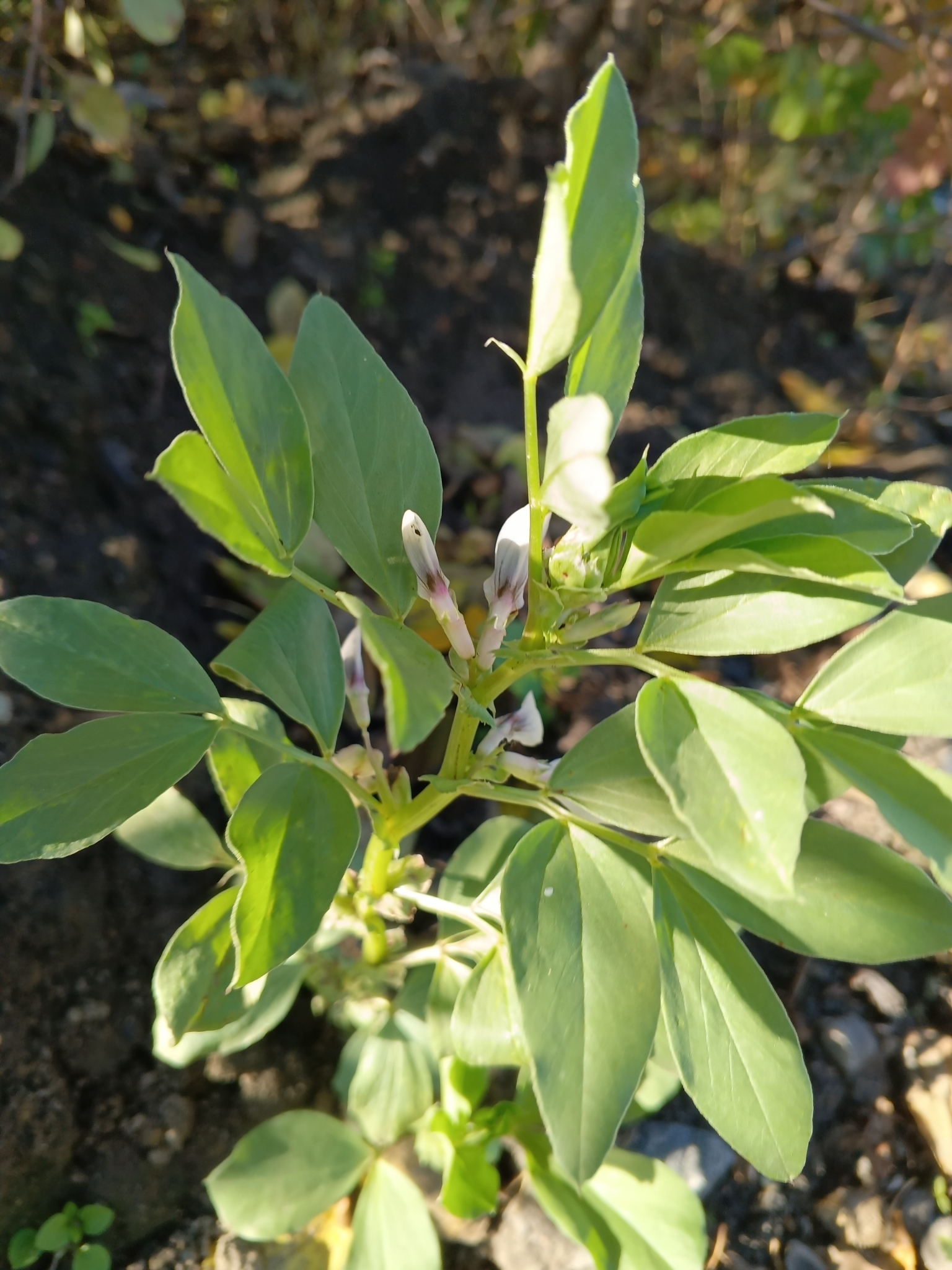
Broad bean (Vicia faba): sowing, growing and harvest
Published by Germie in Vegetables the 06/10/2026 at 10:08

Broad bean (Vicia faba): sowing, growing and harvesting the bean of the Ancients
The broad bean (Vicia faba) is the great elder of the vegetable garden: cultivated for millennia — so long that its wild ancestor is now extinct — it is the only "bean" the Greeks and Romans ever knew. When classical authors wrote about beans, they meant this one. This upright annual legume offers its large tender seeds for shelling in late spring, then dry keeper beans all summer.
Two faces for the gardener: a winter or earliest-spring crop, very hardy and almost maintenance-free, and a generous plant that fixes nitrogen from the air in its root nodules — it fertilises the soil for the next crop instead of depleting it.
Contents
- Sowing & harvest times
- ID card
- The bean of the Ancients
- Sowing broad beans
- Growing tips
- Harvesting: three stages, three uses
- Varieties: minor, equina, major
- Saving your own seed
- In the kitchen
- Pests and diseases
- Precautions and lookalikes
- FAQ
Sowing & harvest times
| JAN | FEB | MAR | APR | MAY | JUN | JUL | AUG | SEP | OCT | NOV | DEC | |
|---|---|---|---|---|---|---|---|---|---|---|---|---|
| Sowing in open ground | ||||||||||||
| Flowering | ||||||||||||
| Fresh / dry bean harvest |
Green: two sowing windows — October-November in mild climates for a very early crop (hardy varieties such as Aquadulce), and February-April everywhere once the soil reaches 5 °C; May possible for a late harvest. Blue: black-spotted white blossom. Orange: fresh broad beans late May-July; pale yellow: dry seed once pods blacken (July-August).
ID card
- Latin name: Vicia faba
- Other names: broad bean, fava bean, field bean, horse bean, Windsor bean
- Family: Fabaceae (legumes) — the pea and bean family
- Type: hardy cool-season annual
- Origin: Mediterranean region — cultivated for thousands of years
- Hardiness: -5 to -10 °C depending on variety and exposure; bitter winds tire it more than frost
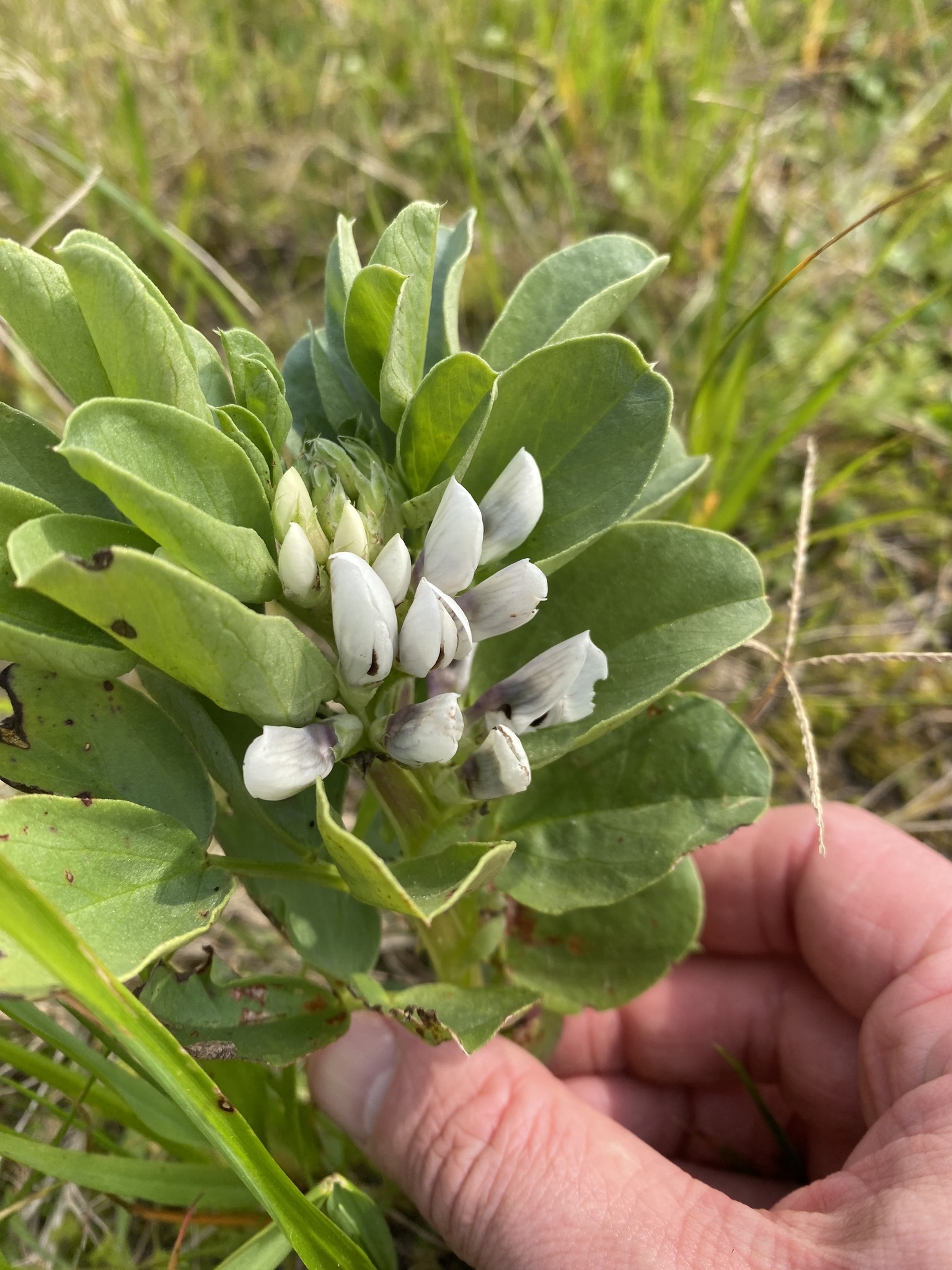
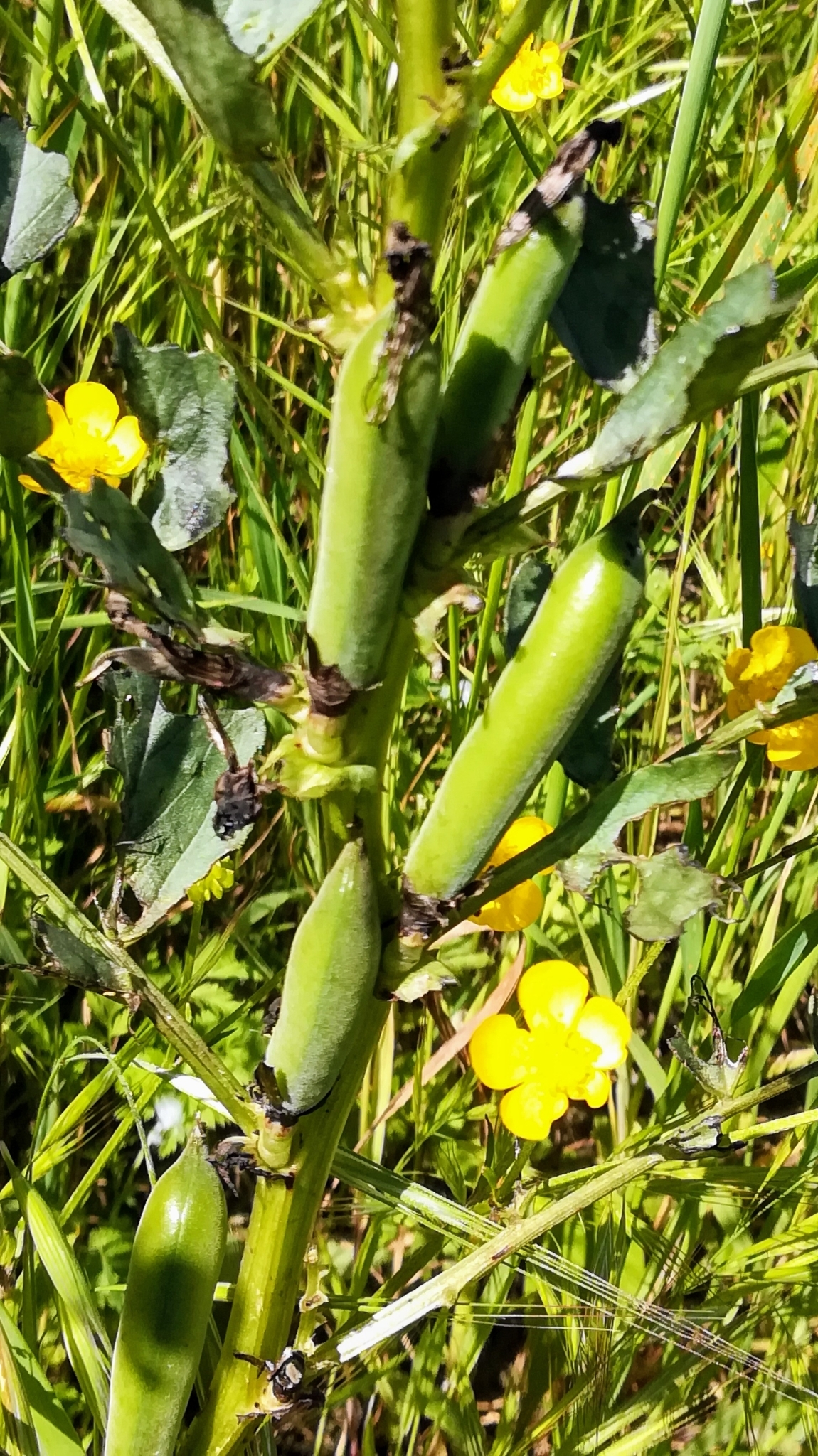
The plant. An upright annual 90 cm to 1.50 m (up to 2 m in some varieties), with a thick, angular, sparingly branched stem and alternate pinnate leaves of a handsome glaucous green. The white papilionaceous flowers marked with a black blotch, fragrant, open in clusters of 2 to 5 in the leaf axils — the broad bean's visual signature. They give rise to fleshy upright pods 5 to 15 cm long (far longer in the large-seeded varieties), holding 1 to 6 large flat kidney-shaped seeds.
The soil bonus. Like all legumes, the broad bean hosts nitrogen-fixing bacteria in its root nodules: it grows on soils poor in nitrogen and leaves the ground richer for the next crop — so much so that it is also grown as green manure.
The bean of the Ancients
Native to the Mediterranean basin, the broad bean has been cultivated for several thousand years — archaeology has found carbonised favas on ancient sites, seeds small as peas or lentils (the minor and equina varieties of the time). Its oldest known depiction is in the Dioscorides codex, copied in Constantinople between AD 500 and 511. The Roman recipe book of Apicius already has an entry for fabaciae virides — green fava beans.
The large modern favas (the megalosperma type) are much younger: they appear in the Iberian Peninsula around AD 800, under Moorish Spanish influence. The equina varieties — the field bean of the countryside — long fed the Celtic regions of Britain and north-west France, eaten dry in winter. The Windsors, also Spanish, reached England via Portugal in the 1300s. Finally the Agua Dulce selection, the most famous of the long-podded large favas, is a Vilmorin introduction (1885) bred from the "baba beans of Seville and Tarragona. For centuries, in the Near East and Morocco alike, farmers grew their favas mixed together in small plots — each field developing its own varietal signature".
Sowing broad beans: the early-season legume
When to sow?
- In autumn — October to November: for hardy varieties (Aquadulce Claudia first of all), in mild regions or well-drained ground. Germination before winter, plants that sit tight then burst away in spring → harvest from late May. Cover with a little straw if a hard winter threatens.
- In late winter and spring — February to April: the main window, everywhere. As soon as the soil reaches 5 °C, sow; ideally at the same time as peas and potatoes. The first February thaw is often the right moment.
- Autumn sowing in pots is possible for overwintering varieties: plant out when space frees up. But the broad bean prefers to be sown in place — it transplants poorly, like all large seeds.
How to sow?
- Directly in place, at stations: one seed every 20-25 cm along the row, 40-45 cm between rows.
- Depth 3 to 5 cm — large seeds like to lie well down in cool earth.
- Soil cool, deep, rather limy and well drained — the capital point, especially for overwintering: standing water kills more plants than frost.
- Germination in 8 to 12 days — no dormancy in this seed, only a thick seed coat; a few hours' soaking can speed things along.
- Go for staggered sowings: a first row in February, another in March-April naturally spreads the harvests — and early sowings often escape the black bean aphid.
Growing tips
- Exposure: full sun — it gives the best harvest.
- Soil: cool, deep, fertile and drained; tolerates nitrogen-poor soils thanks to its nodules.
- Water: regular but moderate needs; avoid excess — waterlogged soils favour disease.
- Support: tall plants laden with pods keel over in wind — ring the row with a cage of hazel brushwood or a taut line between stakes.
- Earthing up: lightly earth up young plants when they reach 15 cm — it steadies them against wind.
- Pinching out the tips: the broad bean grower's signature move. As soon as the first pods set, pinch out the tender shoot tips — these lush tips attract black bean aphid; removing them channels the plant's strength into the pods and cuts the aphid off at the source. Bonus: these tops are edible, raw or cooked.
- Rotation: leave at least 4 years before growing a legume on the same spot, and avoid following or preceding onion-family crops.
Harvesting: three stages, three uses
- The whole young pod: picked before the seeds form, eaten like a runner bean or mangetout — the way of the old kitchen gardens.
- The fresh "shelly" bean: the classic harvest from late May to July, when pods are well filled but still green and tender. Shell at the last moment.
- The dry seed: let the pods blacken on the plant, pull up the plants when they die back, dry the pods a few days under a ventilated shelter then thresh — pantry stock for the whole winter.
Worth knowing: each plant doesn't give tonnes — count on fine pods rather than kilos. A few metres of row will still feed a table generously, and fresh broad beans freeze very well once shelled.
Varieties: minor, equina, major
Garden varieties fall into three types:
- var. minor — small rounded lentil-like seeds, the historic "field beans" and the Roman fava of Apicius
- var. equina — midsize oblong pea-like seeds: the field/horse bean, also the "English bean", mealy and excellent for purées
- var. major — today's large flat seeds, the queens of the kitchen
Names to know: Aquadulce Claudia (the benchmark for autumn sowing, long pod), Agua Dulce (Vilmorin 1885, honey-coloured seed), Windsor (only 2 beans per pod — a "noble fava" with a flavour close to butternut), Martoc (authentic medieval variety), The Sutton (dwarf, for small spaces), Crimson Flowered (red flowers, a cultivar from 1777), Karmazyn (pale pink beans).
Saving your own seed
Easy and recommended: the broad bean is largely self-pollinating, but insects cause some crossing — if you grow several varieties, keep to one per season or isolate them (500 m in theory; an insect mesh does the job in a home garden).
Let the pods blacken on the plant, harvest them, spread them a few days under a ventilated shelter, then shell. Seed keeps 3 to 5 years dry — ample scope to rotate varieties year on year.
In the kitchen: from pod to flour
We eat the seeds — fresh (green) or dry — and incidentally the young pods and leafy tops. The universal custom: remove the outer skin, the little coat around each bean — it slips off in a second after blanching. Roman cooks puréed them, and so did early American cookbooks — serving beans in their skins was once judged rustic and vulgar.
A few ideas: fresh broad beans eaten raw with a pinch of salt, sautéed with bacon or garlic, as a houmous-style purée with the dry version — its natural marriage with puréed chickpeas was noted by old authors — or ground into bean flour for flatbreads and fritters. The dry bean also holds up beautifully in stews.
Pests and diseases
- Black bean aphid: enemy no. 1 — it colonises the tender shoot tips. The counter-move is pinching out the tips at pod set; early sowings are attacked less.
- Pea and bean weevil: notches leaf edges in spring — rarely serious on established plants.
- Slugs and mice: autumn and earliest-spring sowings are exposed — watch young plants.
- Chocolate spot (Botrytis fabae): small red-to-brown leaf spots in damp weather — encourage airy rows, drained soil and avoid overwatering.
- Rust and downy mildew: brown-orange pustules or downy growth under leaves — a 4-year rotation and not-too-dense sowing limit incidence.
Bottom line: the broad bean is a sturdy plant; most troubles come from excess moisture or heavy soil — both fixed by drainage.
Precautions and lookalikes
⚠️ The health point to know. Young fresh broad beans are traditionally eaten raw with a pinch of salt — without their skin, which is very tannic. But some people — most often of Mediterranean descent — are allergic to fava beans (favism, a sometimes severe reaction linked to an enzyme deficiency), and the raw seed can also trigger reactions in sensitive people: if your ground is sensitive or in doubt, eat them cooked and consult your physician.
The Vicia family, no garden confusion: the vetches (Vicia villosa, V. sativa) are unpretentious green manures — not to be confused with the vegetable broad bean. The field bean is not another species but the "field" form of the broad bean itself (var. equina) — a fodder bean that is perfectly edible at home.
Namesakes to untangle: "Egyptian bean" is a lotus (Nelumbo nucifera), and "coffee bean an old Tyrolean name for soya. The only genuinely toxic bean" is only a fava in English: the Calabar bean (Physostigma venenosum), an alkaloid plant with nothing to do with the vegetable garden.
Frequently asked questions
When should I sow broad beans?
Two options: October-November in mild climates with hardy varieties (Aquadulce) for an early crop, or February-April everywhere once the soil reaches 5 °C — at the same time as peas.
Should broad bean seeds be soaked before sowing?
Not compulsory — seed germinates in 8-12 days without dormancy — but a few hours' soaking the day before speeds the start, especially in cool soil.
Why pinch out broad bean tips?
Once the first pods set, pinch out the tender tips: they attract black bean aphid, and removing them focuses the plant on filling pods. Bonus: the tips are edible.
When do I harvest broad beans?
Fresh beans: late May to July, pods full but still green — shell at the last moment. Dry seed: wait until pods blacken on the plant, then thresh after drying under shelter.
Are broad beans frost-hardy?
Yes, among the hardiest legumes: -5 to -10 °C depending on variety and exposure, more under straw. Bitter wind tires them more than frost itself.
Broad bean or field bean: what's the difference?
Same species (Vicia faba): the field bean is the "field" form (var. equina) grown for fodder or green manure — its seeds are edible, mealy, traditional in winter purées.
Fancy starting your end-of-season sowings? At Germie, our germination kits support your most demanding crops — and to pinpoint your soil's exact needs before a big spring planting, the Gardiscan analyses your ground in depth.