
Beetroot (Beta vulgaris): sowing, growing and harvest
Published by Germie in Vegetables the 03/10/2026 at 10:08

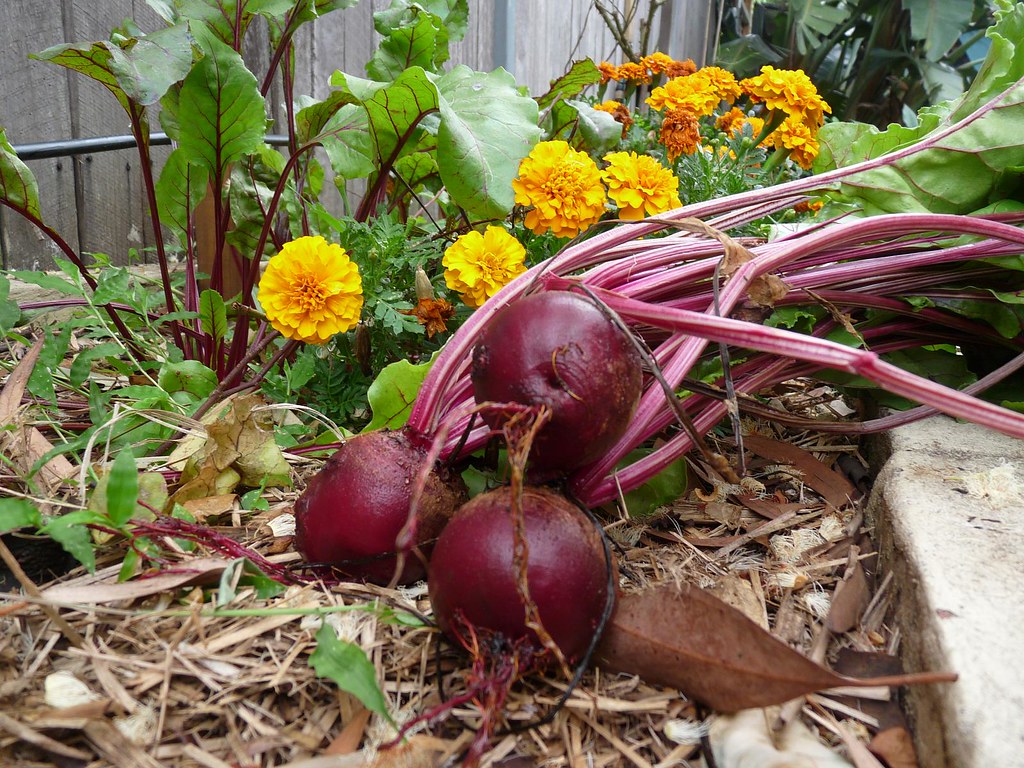
Beetroot: sowing, growing and harvesting the most generous root vegetable
Beetroot (Beta vulgaris) is one of the easiest and most generous roots in the vegetable garden: a sweet, fleshy root ready in 8 to 12 weeks, leaves that cook like spinach, and storage that lasts all winter. Classic red, golden, white or pink-and-white ringed like 'Chioggia', it comes in dozens of varieties for every season.
Its little gardener's secret: the "seed" you sow is actually a glomerule, a dry fruit containing 3 to 5 seeds. Each glomerule can produce several seedlings — which is why thinning is essential.
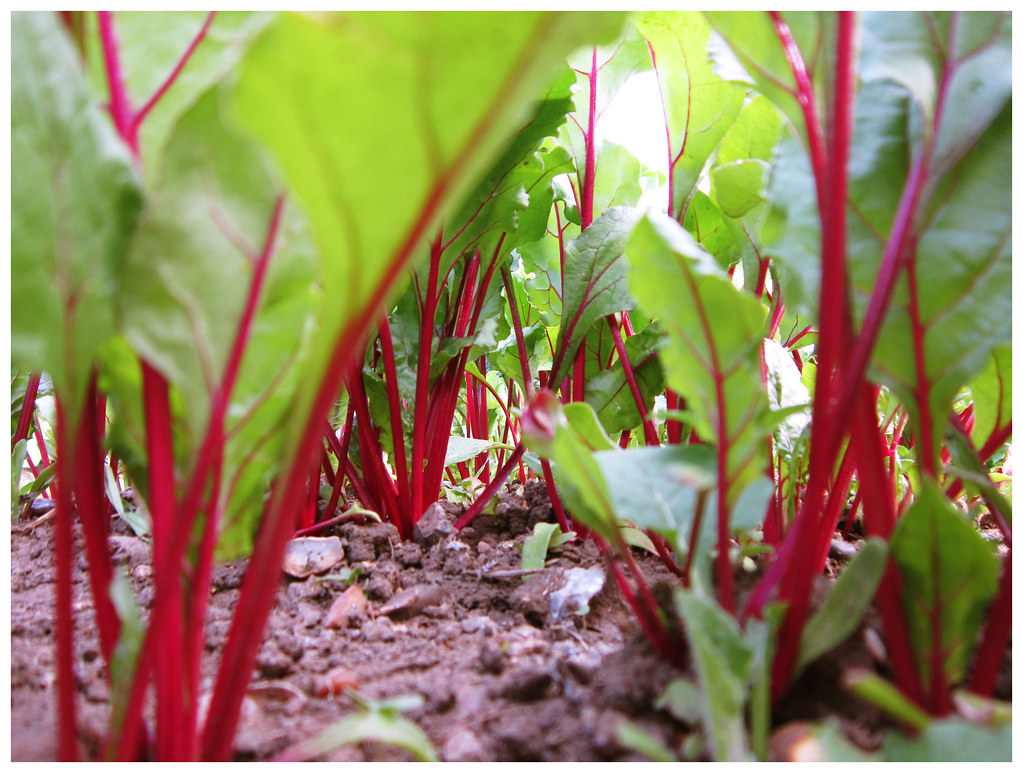
Contents
- Sowing & harvest calendar
- A bit of history
- Growing beetroot
- Sowing tips
- Growing tips
- Thinning: the game-changing step
- Beetroot varieties
- Rotation and companion plants
- Diseases and pests
- Harvesting and storing
- In the kitchen
- Precautions
- FAQ
Sowing & harvest calendar
| JAN | FEB | MAR | APR | MAY | JUN | JUL | AUG | SEP | OCT | NOV | DEC | |
|---|---|---|---|---|---|---|---|---|---|---|---|---|
| Sowing under cover / cold frame | ||||||||||||
| Direct sowing | ||||||||||||
| Harvest |
Green: main season. Yellow: possible depending on climate (very early sowing in a cold frame from February, late-August sowing for an autumn crop in mild regions). Orange: harvest from June-July (early varieties) to November (late varieties), December in mild climates. Soil must be at least 5 °C for germination — expect 8–10 days at 10 °C.
A bit of history
- Latin name: Beta vulgaris
- Family: Amaranthaceae (formerly Chenopodiaceae)
- Type: biennial grown as an annual for its root
Beetroot descends from the sea beet (Beta vulgaris ssp. maritima), a wild plant of the cliffs and shores of Western Europe and the Mediterranean. In Antiquity, the leaves were eaten first — the root was then only a thin underground stem. Selection for a fleshy root came later: from the Middle Ages to the 17th century in Europe, the round garden beet we know was born.
In the 18th century, German chemist Andreas Marggraf discovered sucrose in the root; his pupil Achard bred the first sugar varieties. Napoleon, cut off from cane sugar by the continental blockade, launched the sugar beet — a subspecies with very high sucrose content that still provides a large share of Europe's sugar. Fodder beet feeds livestock; the garden beet remains a family-garden favourite. Not to be confused with chard and perpetual spinach: same Beta vulgaris, selected for leaves rather than roots.
Growing beetroot
Quick facts
- Difficulty: easy — one of the simplest root vegetables to grow
- Life cycle: biennial (flowers in year 2)
- Height: 40–60 cm of foliage
- Exposure: sunny (light partial shade tolerated)
- Soil: loose, cool, deep, humus-rich; pH 6.5–7.5 — dislikes heavy soils and stones
- Sowing: March to July outdoors; from February in a cold frame
- Harvest: June-July to November, ~2 months after sowing for early types
- Water needs: regular, moderate watering
Sowing tips
When to sow? Outdoors as soon as the soil reaches 5 °C, generally late March to July. Under a cold frame or in mild regions, sow as early as February-March for early beets. For a staggered harvest, sow small batches every 2–3 weeks until mid-summer; a final late-August sowing gives autumn roots in mild climates.
How to sow?
- Soak the seeds overnight: their coat contains a germination inhibitor that dissolves in water — germination is noticeably faster.
- In 1–2 cm deep drills, in clusters of 4–5 glomerules spaced 20 cm apart, or broadcast with 2–5 cm between seeds.
- Rows 25–40 cm apart (40–50 cm for long or large late varieties).
- Cover with fine soil, firm lightly and water gently — germination takes 5 to 14 days depending on soil temperature.
For early sowings, fleece or a cold frame keeps the soil warm and protects seedlings from slugs, which love beet cotyledons.
Growing tips
The soil. Beetroot demands a loose, cool, deep, stone-free bed: roots hate obstacles — stones and clods make them fork. Prepare the ground in autumn with well-rotted compost or manure (never fresh manure, which makes roots fork), forked in deeply for long varieties, shallowly for round ones. A light surface pass in spring before sowing. Ideal pH: 6.5–7.5; below pH 6 roots stay small.
Water. The most sensitive point: regular, moderate moisture. Drought gives hard, woody, cracked, bland roots; watering in fits and starts worsens it. In practice: ~2.5 cm of water per week, more on sandy soil — and mulch to keep cool.
Season care. Hoe regularly to aerate the soil and remove competing weeds; earth up lightly once or twice to steady plants and protect root collars; remove yellowing leaves to limit disease. Beetroot is a heavy feeder: a potassium-rich fertiliser ("strawberry" fertiliser or a small dose of wood ash) during growth improves roots and sweetness — watch for boron, magnesium or manganese deficiencies on poor soils.
Thinning: the game-changing step
Each glomerule produces 2 to 5 seedlings: left alone, they compete and yield only tiny roots. Once seedlings carry 2–3 true leaves, thin: keep only the strongest every 7–10 cm along the row (more for large late types). In two passes if needed: first at 5 cm, then at 10 cm.
Gardener's bonus: the pulled baby plants, leaves included, are delicious in salads or sautéed like spinach — thinning is your first harvest.
Beetroot varieties
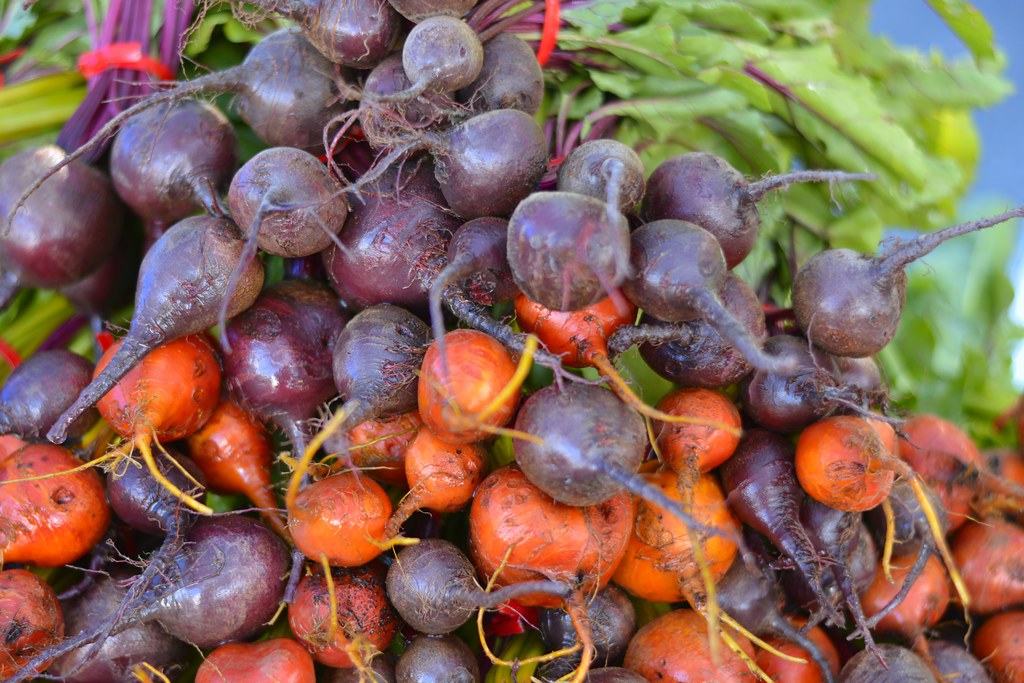
Garden beets fall into three families: round (early, spherical roots), flat (late, flattened — excellent keepers) and long (carrot-shaped roots).
- Early round: 'Detroit 2' (the dark-red benchmark), 'Boltardy' (bolt-resistant), 'Early Wonder'.
- Late flat: 'Egyptian' (dark red, excellent keeper), 'Crapaudine' (rough-skinned rustic root, very sweet, the oldest French variety).
- Long: 'Castelnaudary' (carrot shape, ~30 cm), 'Nérac', 'Cylindra' (easy to slice).
- Coloured: 'Chioggia' (pink-and-white rings when cut), 'Burpee's Golden' and 'Boldor' (yellow, mild, no staining betanine), 'Albina Vereduna' (white, sweet).
Rotation and companion plants
Rotation: don't grow beetroot (or chard or spinach, its Beta cousins) in the same spot for 3 years — this limits root diseases and soil exhaustion. It likes following a green manure or legumes.
Good neighbours: onion, lettuce, cabbage and kohlrabi (roots draw from different depths), spinach in mixed rows — a beet row flanked by two spinach lines 15 cm away, spinach cut just as roots swell —, bush beans, celery.
Avoid: mustard and charlock stunt it; carrots compete for nutrients; beware also the shade of neighbouring tomatoes or corn.
Diseases and pests
- Beet leaf miner (mangold fly): larvae bore whitish tunnels in leaves. Remove and destroy marked leaves at once — an insect net over the bed from sowing solves it.
- Flea beetles: small holes in young leaves; hoeing, watering and mulch usually suffice.
- Slugs and snails: ruthless on seedlings — ash, fine mulch, traps.
- Aphids, leafhoppers: curled leaves; water jet or black soap.
- Cercospora leaf spot: small brown spots with red halos in summer — water at the base, remove affected leaves.
- Downy mildew, powdery mildew: yellowing or powdery leaves — space well, aerate, water without wetting foliage.
- Beet scab: brown scabs on the root, favoured by very limy soils or fresh manure — keep pH > 7 if it recurs.
Harvesting and storing
Allow 55–65 days after sowing for early varieties, up to 4 months for late ones: the root is ripe beyond 5–10 cm across — bigger means woodier. Lift gently with a fork (or by hand in loose soil) in dry weather. Twist off the tops 2–3 cm from the crown — never flush with the root, which would bleed — and leave the taproot intact: it keeps badly otherwise.
Storage: in the garden, roots tolerate the first frosts — thick mulch and lift as needed. For winter: moist sand in crates, cellar at 5–8 °C, 3 months or more (up to 5 months for late 'Crapaudine' or 'Egyptian'). Grated and dried, lacto-fermented or pickled in vinegar: many more months.
In the kitchen
Everything is edible. The root, raw grated or roasted, steamed or braised — 30 to 45 minutes — stars in borscht, carpaccios, crisps and even desserts (the famous chocolate-beetroot cake). The betanine behind its colour stains dishes and hands… but not permanently. The young leaves cook like spinach or chard — rich in vitamin A and antioxidants — and the stems like cardoons.
Nutrition-wise: low in calories, rich in folates (vitamin B9), potassium, manganese and beneficial nitrates — a root as healthy as it is delicious.
Precautions
No toxicity to fear: garden beetroot is edible from root to leaves. Two notes: like spinach, its leaves are rich in oxalates — eat in moderation if prone to kidney stones; and betanine can harmlessly colour urine and stools red ("beeturia"), which surprises some eaters.
Frequently asked questions
When should you sow beetroot?
Outdoors from late March to July once soil passes 5 °C; under a cold frame or in mild regions, from February. A final late-August sowing gives an autumn crop. Sow small batches every 2–3 weeks to stagger harvests.
How deep and how far apart should you sow beetroot?
1–2 cm deep, in clusters of 4–5 seeds every 20 cm, or broadcast every 2–5 cm, in rows 25–40 cm apart. Soak seeds overnight to speed germination (5–14 days).
Why must beetroot be thinned?
Because each "seed" is a glomerule of 3–5 seeds: several seedlings emerge together and compete. Thin at the 2–3 leaf stage, keeping one plant every 7–10 cm — otherwise roots stay tiny.
How long until beetroot is ready to harvest?
8–12 weeks depending on variety: ~2 months for early round types, 3–4 months for late storage types. Harvest when the root exceeds 5–10 cm in diameter.
How do you store beetroot over winter?
Lift before hard frosts, twist off tops 2–3 cm above the crown and store in moist sand in a cellar at 5–8 °C for 3 months or more — late varieties keep up to 5 months. In the garden, heavy mulch protects from early frosts for staggered harvests.
Can you eat beetroot leaves?
Yes: young leaves cook like spinach or chard, steamed or sautéed. Take only 2–3 per plant so the root keeps growing.
What are good companion plants for beetroot?
Onion, lettuce, cabbage and kohlrabi, spinach, bush beans, celery. Avoid mustard (stunts it), carrots (root competition) and replanting beetroot in the same spot within 3 years.
Why is my beetroot bolting?
Beetroot is biennial: a cold spell followed by heat can make it believe it's in year two — especially on very early sowings exposed to cold. Choose bolt-resistant varieties ('Boltardy') and sow once the soil has warmed.
A simple, generous vegetable garden
A loose bed, pre-soaked seed, one pass of thinning: beetroot rewards three easy gestures with months of colourful harvests — roots for winter, greens for summer. For reliable germination even in early March, our germination kits provide steady warmth and light — and the Gardiscan checks in minutes that your soil has the right pH and nutrients.
Photos: © Mala Gabrielle, © gagilas, © Scott 97006 — CC BY / CC BY-SA licences, via Flickr. Many thanks to them.
By card and PayPal
For orders over €45
Our goal: 100% satisfaction
More information