
Lemon tree (Citrus limon): germinate a pip and grow it
Published by Germie in Germination the 05/11/2026 at 12:06

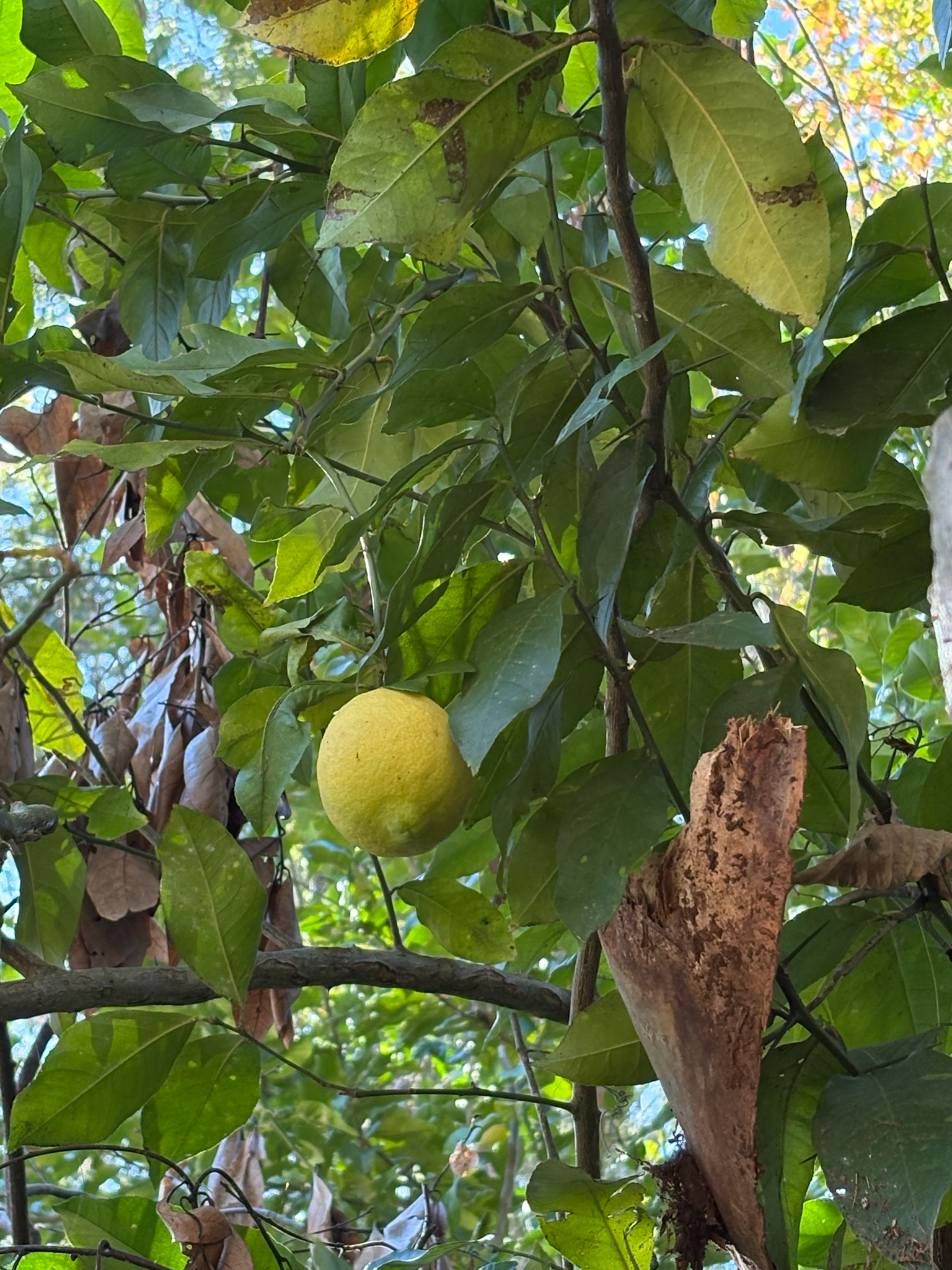
Growing a lemon tree (Citrus limon) from a pip is the great classic of indoor sowing: the pips germinate easily and produce a handsome green plant. A little history before the gestures: the lemon tree was probably born in the eastern Himalayas; it is a hybrid — citron crossed with lime, possibly a triple hybrid — that reached North Africa and Spain around 1150 with the Arab expansion. The Arabic limûn gave "limonier", then "lemonade", before "citronnier" appeared in the 14th century.
Germinating a lemon pip
- The right pips: take them from a fully ripe fruit — a lemon usually carries fewer than nine.
- Clean and peel: rinse off the juice coating them and remove the transparent film — without this hard seed coat, emergence is noticeably faster.
- Express method: place the pips in damp kitchen paper; shoots a few centimetres long appear within days. In soil, cover with about 2 cm of clean sand.
- Temperature: a steady 30 °C for about a month; ideal soaking water is 35-40 °C. Sow fresh — dried pips take almost twice as long to germinate.
- No dormancy: no citrus seed has true dormancy — germination is simply slow, held back by a barely permeable coat. Lemon sprouts slowly but it sprouts.
- One pip, several seedlings: citrus produce multi-embryo seeds, some of which are asexual clones of the parent. If two seedlings come out of one pip, keep the one most true to type — not necessarily the most vigorous, which may be an atypical sexual seedling.
- Season: classically January to March, or in spring; indoors in the warm, the window extends to the whole year.
In practice: fresh peeled pips, fine compost kept moist, a steady 30 °C — exactly the job of a seedling heating mat paired with the germination kit greenhouse. And since lemon sprouts slowly under weak winter light, the LED grow light is the difference between a leggy seedling and a stocky one.
The tree and its climate
- Rutaceae family: a small 3-6 m tree with stiff thorns (up to 5-10 m in the wild); in a generous pot it holds at 1.2-1.8 m.
- Telltale sign: young leaves emerge purple then turn green as they expand — a lemon tree gives itself away at first glance.
- The fruit carries a characteristic apical nipple and peaks at 5-8% acidity.
- Hardiness: one of the most cold-tender citrus — damage from -3 °C; the four-season lemon loses its aerial parts below -3 °C and is truly endangered below -7 °C.
- In pots: 40-50 cm diameter minimum; outside mild climates, bringing it indoors for winter is mandatory — see overwintering a potted citrus.
Planting and care
- Substrate: slightly heavy, acidic soil, pH 6.0-6.5; in pots a 3:2:1 mix of good garden soil, mature compost and gravelly sand works — always drained and fertile.
- Planting: spring, April-May, remains the best window; in open ground keep the graft point ~10 cm above soil and space 4.5 m.
- Light: indoors you need a very large south- or southwest-facing window with direct sun for more than 6 hours a day — otherwise a grow light.
- Watering: in summer count 2-4 waterings a week; in winter, one every 2-3 weeks suffices if the plant is kept cool. Never let the soil dry out nor water stagnate. In summer, mist the foliage in the morning — never while flowering.
- Pro tip: reducing watering to a minimum for 3-4 weeks in early summer, then resuming, triggers flowering (controlled water stress).
- Pruning: in pots, prune regularly to keep a compact habit, shortening each new shoot by half just above a leaf; remove suckers and rootstock shoots as they appear. Pruning during growth phases favours healing. Ventilate and avoid excess humidity, which encourages disease.
Varieties worth knowing
- Eureka / four seasons: the most widespread variety — it flowers and fruits almost all year; 'Lisbon' beats it for yield in California.
- Meyer: now classed as a C. × limon cultivar — small, the most cold-tolerant (-7 °C), very suited to pots.
- For growing under lights: 'Dwarf Meyer', 'Dwarf Meyer Improved', 'Eureka', 'Variegated Pink', 'Ponderosa'.
- Other curiosities: Malaga (large thick-skinned fruit, ideal candied), La Valette (acid green seedless fruit), Variegata (pink flesh).
Harvest and cycle
- Everbearing: the lemon flowers in two flushes in Mediterranean climates and almost continuously in cool coastal climates — several crops stagger through the year.
- Four named harvests: Primofiore (Sep-Nov), Limoni (Dec-May), Bianchetti (Apr-Jun), Verdelli (Jun-Oct).
- Flower to fruit: 9 to 11 months — and from seed to first flowering, about 7 years.
- Self-fertile: one tree is enough for a crop; indoors, a soft brush helps transfer pollen.
- Ripeness: the only way to tell a lemon is ripe is to taste it. Cut with secateurs rather than pulling, pick in dry weather and leave fruit on the tree until needed. Storage: 7-9 °C, or up to two months crated in dry sand.
Diseases, pests and troubleshooting
- Indoors: scale, whiteflies and aphids are your three main enemies.
- Yellow leaves: faulty drainage or deficiency; potted lemon is prone to chlorosis — supply iron or a citrus-specific feed.
- Mites: favoured by poor, dry soils.
- Fungal diseases: the tree is prone to fungal problems in humid climates; mal secco follows wounds — cut out affected twigs; gummosis weakens the tree against Phytophthora in poorly drained soil.
- Leaf drop: too much or too little water, air too dry (heating) or lack of light.
To start your lemon tree: pips can be sown any time of year indoors — the complete greenhouse + LED + mat kit holds the 30 °C and steady light a slow germination needs. And to follow the citrus calendar (overwintering, sowing, repotting through the seasons), sign up for the newsletter at the bottom of the page. Going further: germinate an orange pip — same gestures, same requirements.
Growing calendar
| JAN | FEB | MAR | APR | MAY | JUN | JUL | AUG | SEP | OCT | NOV | DEC | |
|---|---|---|---|---|---|---|---|---|---|---|---|---|
| Sowing | ||||||||||||
| Planting | ||||||||||||
| Harvest |
By card and PayPal
For orders over €45
Our goal: 100% satisfaction
More information