
Himalayan dogwood (Cornus capitata): planting, care and harvest
Published by Germie in Gardening tips the 05/11/2026 at 16:33

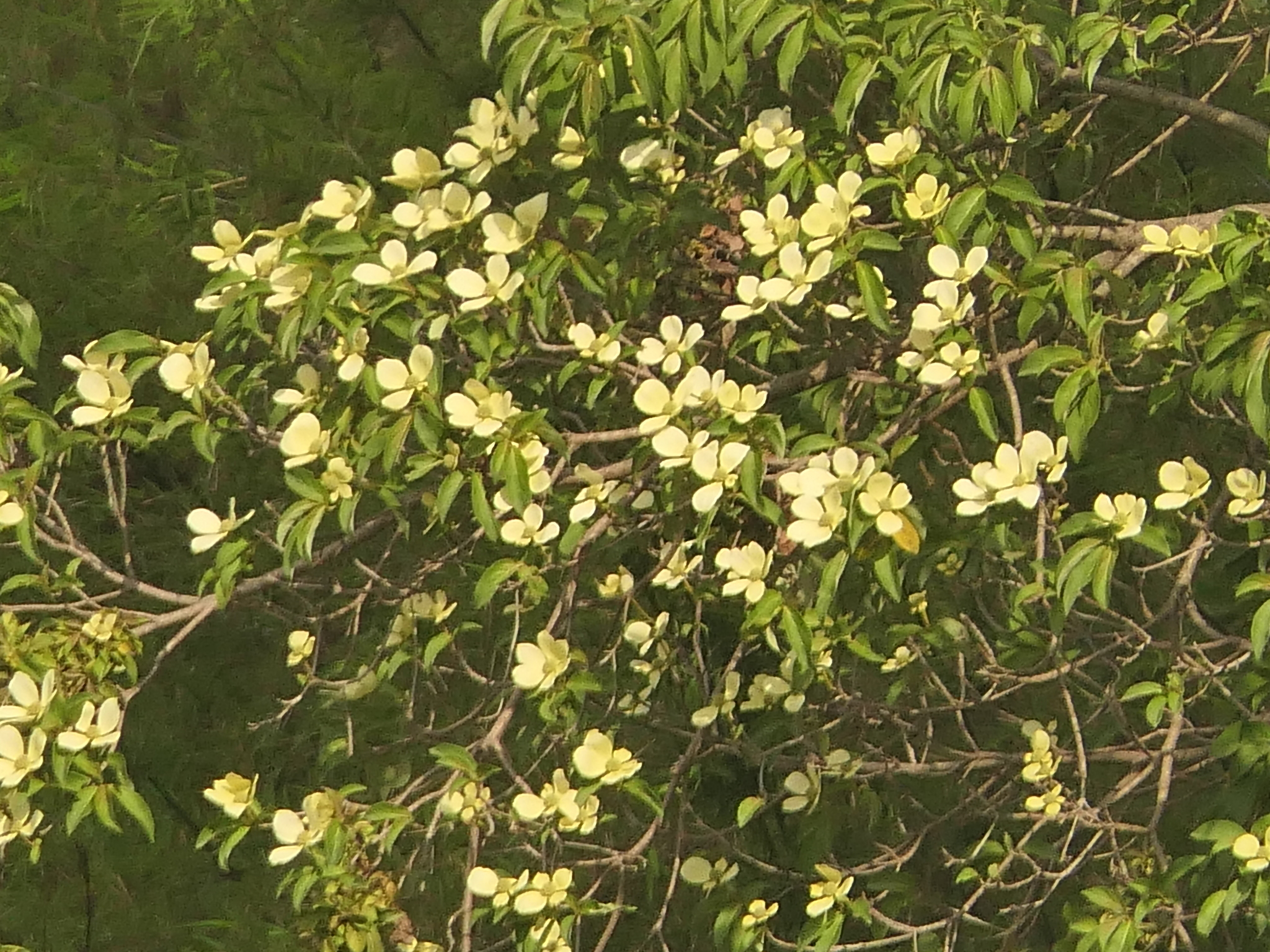
Himalayan dogwood: the Himalayan strawberry tree that deserves a place in your garden
The Himalayan dogwood (Cornus capitata), also called the evergreen dogwood or "Himalayan strawberry tree", is a shrub or small tree with two faces: a spectacular bloom of large cream-white bracts in spring, followed by strawberry-like red fruits in autumn. Native to the foothills of the Himalayas and south-west China, it keeps its foliage through winter in mild climates — a rare asset among dogwoods.
Its striking "flowers" are not really flowers: four large cream bracts surround a pompom of tiny greenish flowers, a botanical sleight of hand that lasts several weeks. The fruits that follow, 2–3 cm across, look like oversized raspberries and are edible when fully ripe.
Contents
- Sowing, planting & harvesting calendar
- A little history
- Etymology and nicknames
- The fruits: taste and edibility
- Dogwood cousins worth knowing
- How to grow the Himalayan dogwood
- Growing tips
- Successful sowing
- Sowing tips
- Care, pruning and harvest
- Diseases and pests
- Frequently asked questions
Sowing, planting & harvesting calendar
| JAN | FEB | MAR | APR | MAY | JUN | JUL | AUG | SEP | OCT | NOV | DEC | |
|---|---|---|---|---|---|---|---|---|---|---|---|---|
| Sowing | ||||||||||||
| Planting | ||||||||||||
| Flowering | ||||||||||||
| Harvest |
Green: main period. Yellow: direct outdoor sowing in autumn is possible (natural cold stratification). Purple: flowering. Orange: fruit harvest, September to October.
A little history of the Himalayan dogwood
- Latin name: Cornus capitata
- Family: Cornaceae
- Order: Cornales
- Genus: Cornus (30 to 50 species of trees, shrubs and ground-cover perennials)
Native to the foothills of the Himalayas — from India to Nepal — and to south-west China, the Himalayan dogwood grows wild in mountain forests at altitudes approaching 3,000 m. It was brought back to Europe in the 19th century, like its Japanese cousin Cornus kousa, and was at first confined to botanical collections and ornamental gardens in mild climates.
Its appeal rests on a rare combination: evergreen or semi-evergreen foliage, spectacular flowering and decorative — sometimes edible — fruits. It remains uncommon in our gardens, which makes it a true collector's specimen for enthusiasts.
Etymology and nicknames
The genus Cornus takes its name from the Latin cornu, "horn", an allusion to the hardness of its wood. The epithet capitata means "headed": its flowers are grouped into dense capitula ringed by bracts. In English it goes by Himalayan dogwood, evergreen dogwood, Himalayan strawberry tree or Bentham's cornel.
The fruits: taste and edibility
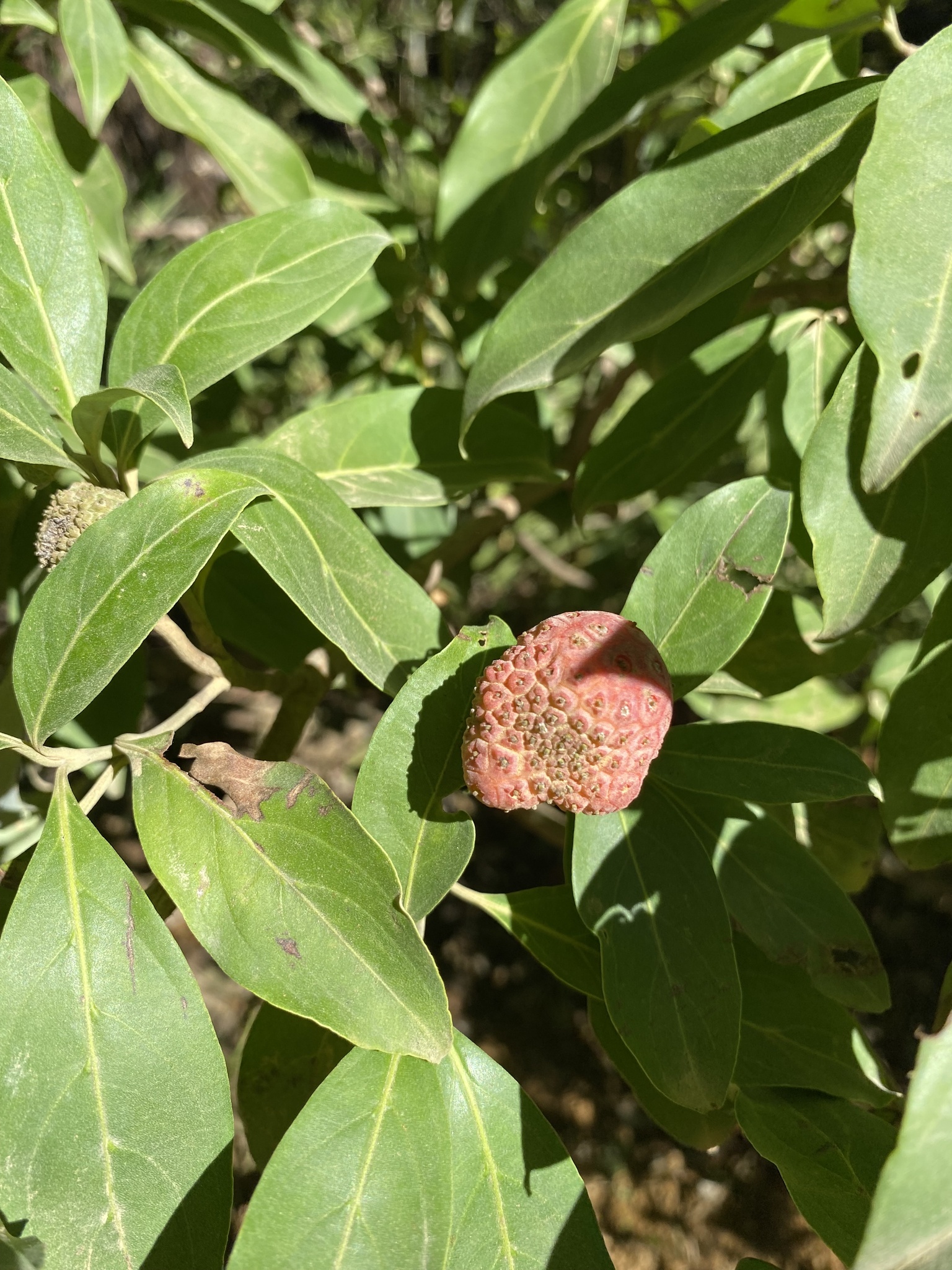
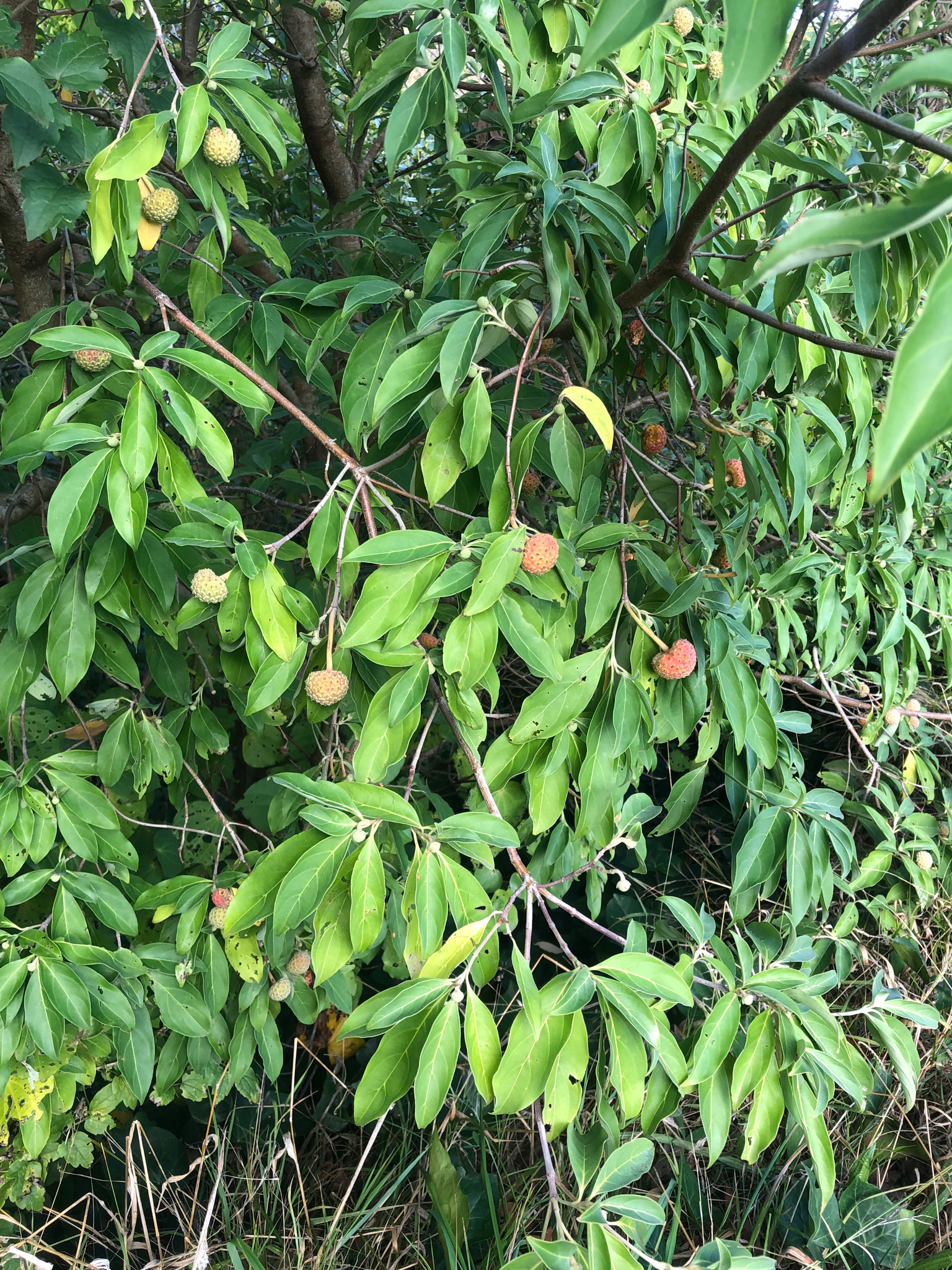
The fruits ripen in September–October: fleshy, raspberry-red when mature, about 2–3 cm across, they genuinely resemble large strawberries or shaggy lychees. They are edible when fully ripe — pick them when they are deep red, soft, and practically falling into your hand.
Let's be honest about the taste: it varies a lot from one tree to another, from sweet and pleasant to somewhat bitter or bland. The soft, slightly grainy pulp can be eaten fresh but benefits from cooking — jams, compotes, coulis. The species has never been selected for flavour: you plant it first for its looks, with the harvest as a bonus.
Did you know?
In its native range, the Himalayan dogwood was never "just" a pretty shrub: its fruits were part of the traditional foraging of mountain communities, and its evergreen foliage served as fodder. It was the flowering that carried it to Europe — the fruits were only rediscovered as a treat afterwards.
Dogwood cousins worth knowing
The genus Cornus comprises 30 to 50 species spread across Europe, Asia and America. Three groups, by use:
- Spectacular flowering dogwoods: Cornus florida (demands a genuinely acid soil), Cornus kousa and Cornus nuttallii. Large white, cream or pink bracts in spring.
- Coloured-stem dogwoods: Cornus alba, Cornus sericea, Cornus sanguinea — their red, yellow or orange shoots light up borders in winter.
- Fruiting and ground-cover dogwoods: Cornus mas, the cornelian cherry, produces edible fruits rich in vitamin C (juices, syrups, jams); Cornus canadensis carpets damp woodland floors.
The cousin most often confused with C. capitata is Cornus kousa, the Japanese dogwood: native to Japan and Korea, imported into Europe in the 19th century, it forms a small tree 3–7 m tall with a graphic habit of horizontal branches, whose white or pink bloom bursts out in June for four weeks. Its main differences: deciduous foliage that turns scarlet in autumn, far superior hardiness (down to –25 °C) and similar red fruits with no real culinary value. If your winters regularly drop below –10 °C, plant a kousa rather than a capitata.
How to grow the Himalayan dogwood
Technical information
- Difficulty: easy to moderate — limited hardiness is the only real point of attention
- Type: shrub or small tree with a rounded habit
- Life cycle: woody perennial; first fruits after 3–4 years
- Mature height: 4–8 m
- Spread: 3–5 m
- Growth rate: slow to moderate
Climate and soil
- Climate: moderately hardy, roughly –10 °C to –12 °C in good conditions. Keep it for regions with mild winters or a sheltered spot.
- Soil: moist but not wet, well-drained and preferably fertile; neutral to slightly acidic, it tolerates very slightly chalky soil. It dislikes dry or compacted ground. A Gardiscan-type soil analyzer lets you check pH and fertility before choosing the spot.
- Exposure: full sun or partial shade, away from scorching situations and drying winds; in hot regions, prefer partial shade.
Growing tips
| Exposure | Sun / partial shade |
| Watering | Moderate; regular for the first two years |
| Soil | Moist, well-drained, fertile (neutral to slightly acid) |
| Foliage | Evergreen to semi-evergreen depending on climate |
| Mature height | 4–8 m |
| Spread | 3–5 m |
| Hardiness | Down to about –10 °C |
| First fruiting | 3–4 years after planting |
How to sow Himalayan dogwood successfully
Dogwoods are most often planted as container-grown plants, but sowing is possible — provided you are patient: the hard, stony-coated seed needs a cold period before it will germinate.
- When to sow: February–March under cover, after stratification; or sow outdoors in autumn (October–November), letting winter do the work naturally.
- Stratification: essential. Mix the seeds with moist sand and refrigerate them for 3 months (2–5 °C) before spring sowing.
- Method: sow in pots or trays of well-draining seed compost, in small clusters.
- Germination temperature: 15–20 °C — a seedling kit with heating mat and LED lamp keeps conditions steady, as germination is slow and erratic.
- Depth: about 5 mm — barely covered.
- Germination time: irregular, from 3 weeks to 2–3 months; don't discard a "silent" sowing too quickly.
- Pricking out: into individual pots at the 2–3 true-leaf stage, then into the ground the following autumn once well rooted.
Alternative: summer semi-ripe cuttings and layering both produce fruiting plants sooner. And for the impatient, a container-grown plant remains the surest route — even then, expect 3–4 years before the first fruits.
Sowing tips
| Life cycle | Woody perennial (shrub) |
| Stratification | 3 months of moist cold (2–5 °C) |
| Germination time | 3 weeks to 2–3 months (erratic) |
| Germination temperature | 15–20 °C |
| Sowing method | In small clusters, in pots |
| Sowing depth | ≈ 5 mm |
| Container | Pot or tray of free-draining seed compost |
Care, pruning and harvest
- Planting: preferably in autumn (rooting before winter), or late winter to early spring, frost-free. Dig a hole twice as wide as the root ball, loosen the soil, set the collar level with the ground and water generously.
- Watering: regular for the first two years, May to September; afterwards only during dry spells. The soil should stay moist, never bone-dry.
- Mulching: essential to preserve soil moisture — renew it every spring. On chalky soil, add ericaceous compost and pine needles at planting to correct the pH.
- Feeding: mature compost each late winter is enough if the soil is poor.
- Pruning: optional, if not actually discouraged — the tree naturally develops a fine shape. Simply remove dead or misplaced wood in late winter or after flowering; avoid hard cuts.
- Harvest: September to October, when the fruits are fully red and almost ready to drop.
- Winter: at the edge of its hardiness, mulch the base thickly and protect young plants with a fleece for their first winters.
Tips and tricks
- As a specimen tree, its rounded habit and spectacular flowering have full effect; it also works beautifully in an informal hedge or at the back of a border.
- Pair it with camellias, rhododendrons and azaleas in acid soil, or underplant with moisture-loving perennials (hostas, brunneras, columbines) — avoid water-hungry plants.
- The highly decorative fruits attract birds late in the season: a slightly late harvest leaves them their share.
- Its evergreen foliage in mild climates makes it an excellent year-round screen.
Diseases and pests
The Himalayan dogwood is robust and rarely ill. The only frequent damage comes from snails and slugs, which love the young spring leaves — protect young plants for their first few years. A drained soil and good airflow through the branches prevent most problems; avoid severe pruning, which opens large wounds.
Frequently asked questions
Are Himalayan dogwood fruits edible?
Yes, when fully ripe. The red, fleshy fruits of Cornus capitata can be eaten fresh or cooked — jams, compotes, coulis. Their taste varies from tree to tree, from sweet to slightly bitter: you grow this shrub above all for its bloom and looks, the harvest being a bonus. As with any wild plant, never eat a fruit without having identified it with certainty.
What is the difference between Cornus capitata and Cornus kousa?
Two cousins often confused. Cornus capitata (Himalayan dogwood) is evergreen or semi-evergreen, flowers in spring and tolerates about –10 °C. Cornus kousa (Japanese dogwood) is deciduous (its foliage turns scarlet in autumn), flowers in June and tolerates temperatures down to –25 °C. For a garden with harsh winters, choose kousa; for green foliage all year in a mild climate, capitata.
When should I plant a dogwood?
Preferably in autumn, for good rooting before winter and vigorous regrowth in spring. Late winter to early spring also works, outside frost periods — especially in cold regions or on heavy soils. Water generously at planting and mulch the base.
Is the Himalayan dogwood frost-hardy?
It tolerates roughly –10 °C to –12 °C in good conditions (drained soil, sheltered spot). Below that, foliage and branch tips suffer. In cold regions, plant it against a wall or opt for Cornus kousa, hardy to –25 °C.
Does Himalayan dogwood keep its leaves in winter?
In regions with mild winters, yes: the foliage is evergreen. In colder climates it becomes semi-evergreen — part of the leaves drop. This is one of its great differences from the other flowering dogwoods, which are nearly all deciduous.
How long before the first fruits?
Allow 3 to 4 years after planting a young plant. From seed, expect to wait longer — sowing is a lovely adventure, but fruiting mostly rewards those who buy a formed specimen.
Can you grow dogwood from seed?
Yes, but the seed requires cold stratification: about 3 months in moist sand in the refrigerator (2–5 °C), or an autumn sowing outdoors that lets winter do the job. Germination is then slow and erratic — three weeks to two or three months. Summer cuttings or layering are faster alternatives.
What to plant with Himalayan dogwood?
In neutral to acid soil it pairs well with camellias, rhododendrons and azaleas; to dress its base, choose moisture-loving perennials (hostas, brunneras, columbines). Avoid crowding it with plants that are heavy feeders, which would compete in the moist, well-drained soil it loves.
A garden corner that changes with the seasons
Cream bracts in spring, pinkish fruits in autumn, green foliage even in winter: the Himalayan dogwood is one of those shrubs that earn their place all year round. Give it moist soil, shelter from severe cold, and it will repay you with a spectacular display. Want to start from seed? Our germination kits give demanding seeds the steady start they need.
Photos: © Sagnik Dutta Roy, © Chris Parminter, © boytouchgrass — CC BY licence, via iNaturalist.
By card and PayPal
For orders over €45
Our goal: 100% satisfaction
More information