
Brussels sprouts: the harvest that gets better after the frosts
Published by Germie in Gardening tips the 05/11/2026 at 12:02

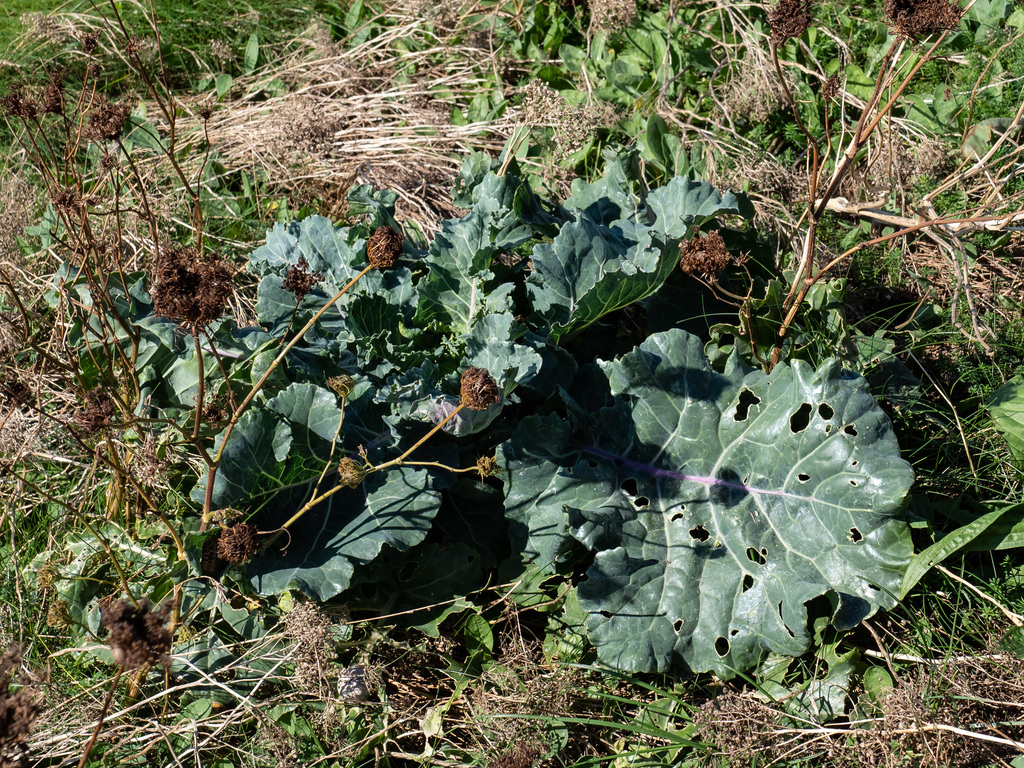
The Brussels sprout is the only garden vegetable that improves with frost: December's first frosts make its buttons "better, less strong", and the harvest can stretch until March in open ground. Sown in April-May, transplanted in summer, it now rewards whoever defoliated it at the right moment. The winter-harvest guide — staggered varieties, step by step.
The full calendar, from seed to plate
Two sowing strategies exist, by the harvest aimed at:
- March under a cold frame: for an early-autumn harvest — the crop takes 7 months.
- Late April-early May in open ground: for the winter harvest — the crop stands 10 months in place, the classic scheme.
Light sowing on rows 30 cm apart, at 6-10 mm depth; germination in 4-5 days. Transplant at 3-4 leaves (5-6 weeks after sowing), with a deep dibber, at 40-50 cm both ways — 5 plants per m², 15 plants for 3 m².
The soil: firm, and not too rich
This is the detail that separates tight buttons from loose ones: the ground is prepared at least a month ahead so it is somewhat compacted, and — a counter-intuitive rule — no organic or nitrogen fertiliser. Over-rich, over-manured market-garden soils push exuberant foliage and loose buttons. The only input: 100 g/m² of phospho-potassic fertiliser. A "leaded", firm soil at planting means a dense button at harvest.
The two paying moves: defoliation and hoeing
Late August-early September, when the buttons are well differentiated: cut at least 5 leaves from the base, at mid-petiole — defoliation is what fattens the sprouts. During the season: hoe and weed by hand at least twice, water if the soil dries (sandy or silty soils especially), and earth up to firm the anchorage. One vigilance: don't transplant blind plants — those that lost their terminal bud produce nothing.
The harvest: after the frosts, in several passes
This is where the Brussels sprout stands apart. Two families:
- Early varieties: harvest from September-October, about 7 months after sowing, when buttons reach 3 cm diameter.
- Late varieties: wait for December's first frosts — the buttons are then "better (less strong)". Harvest often continues until March, on plants left in open ground despite winter.
The move: several passes on the same plant over 1-2 months, taking the biggest buttons each time — the small ones keep growing meanwhile. Yield: 500 g per plant, or 2.5 kg/m².
Growing calendar
| JAN | FEB | MAR | APR | MAY | JUN | JUL | AUG | SEP | OCT | NOV | DEC | |
|---|---|---|---|---|---|---|---|---|---|---|---|---|
| Sowing | ||||||||||||
| Planting | ||||||||||||
| Harvest |
By card and PayPal
For orders over €45
Our goal: 100% satisfaction
More information