Salsify and scorzonera: harvesting the winter roots without breaking them
Published by Germie in Gardening tips the
05/11/2026 at 12:02
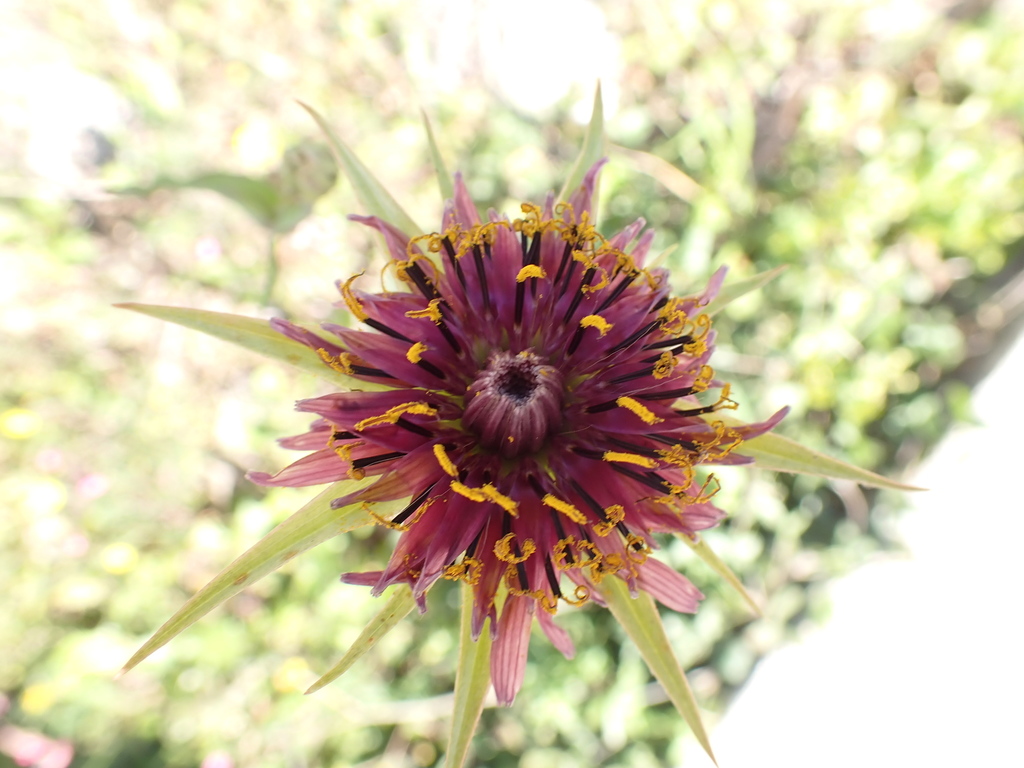
October marks the start of the great salsify and scorzonera harvest: roots sown in spring, waited on for seven to ten months, now holding in the ground down to −15 °C. The problem? These two vegetables look alike, get confused, and grow identically — except on one point that changes everything for your plate. The guide to harvesting without breaking, storing in place, and picking the right one.
Salsify or scorzonera: let's clarify first
The word "salsify" actually covers two different plants, treated together by gardeners:
- True salsify: yellowish-white root, purple or pink flowers — the less grown of the two.
- Scorzonera: black root, yellow flowers — preferred for its greater hardiness, less fibrous root and higher yield.
Same growing, same harvest — but if you only grow one, the corpus decides: scorzonera.
Sowing: in place, and not too early
Salsify is sown exclusively in place — there is no transplanting. The window: March-April, "so that there is a long growing period". A May sowing works but pushes harvest to the following spring; February under a cold frame or tunnel (removed in April) gives a late-summer harvest.
Why not earlier? Spring frosts push the plants to flower the same year — and the roots of flowering plants turn hollow or fibrous. Sowing: drills 12-15 mm deep, rows 30 cm apart, then thin to one plant every 10-12 cm at the three-leaf stage (33 plants/m²; 198 plants on 6 m² feed a family of 4-6). Germination: 8-12 days for salsify, 15-20 days for scorzonera — patience, and bird-scarers against finches and sparrows that raid the seeds.
The soil: the one real requirement
Deep, cool, manured, well loosened — and above all without stones or straw bits, which fork the roots. pH under 6.5: a slightly acid soil. The documented preparation: deep digging six months ahead to 40 cm with concentrated manure, then phospho-potassic amendment in the surface layer. And one firm rule: never on lasagna beds — like all vegetables harvested in spring or early summer of their second year.
Growing: firming, watering, flower stalks
After sowing: firm and settle the drills, water, then water every two days alternating with hoeings. Two moves make the quality: remove the scorzonera flower stalks that appear in year one; and for salsify destined for a second-year harvest, pull the roots of plants that flower in year one — they will be hollow or fibrous. Conversely, cutting the flower stalks in year two yields bigger roots for autumn.
Harvest: October to January, without breaking
The documented window: October to January, 7 to 10 months after sowing (November-March by another reading). The move is delicate: digging fork, working wide and without breaking the roots, which stay fragile. Lift progressively as needed — storage happens in place.
Yield: scorzonera wins
Salsify: 1-2 kg/m². Scorzonera: 2-3 kg/m² — a gap that adds to the black root's case.
Storage: two schools, both in the garden
- In place, on demand: the base method. Roots stand frosts down to about −15 °C when left in the ground — pick when you want, all winter.
- Clamping: if long frosts block lifting, a trench 40 cm deep, foliage removed, covered with dry leaves or straw — for drawing even in light frosts.
Cellar storage is not documented for these two species — the sand-box scheme exists for beetroot, carrot, turnip and celeriac; for salsify and scorzonera, the soil or the trench, that's all.
Varieties cited
Blue-flowered white salsifies; mammoth salsify with a big root; Russian giant black scorzonera; early giant black scorzonera of Lunéville; giant scorzonera Westlandia. The Lunéville confirms these roots grow all over France, East included.
Diseases and precautions
- White rust of Compositae: white pustules in lines parallel to the vein — no remedy, pull the first affected plants.
- Bark cracking: longitudinal cracks, brown ring under the skin, unusable roots — no treatment.
- Powdery mildew: white on foliage, to treat.
- Aphids: rare, but watch — any treatment at least 15 days before harvest.
And the crosne, its forgotten neighbour?
We are asked often. Honestly: the Japanese crosne is one of the most thinly documented vegetables in the corpus — we know it is planted by tubers like the potato, in March, and classed as a winter vegetable. Neither spacings, harvest nor storage are specified. So we say simply: same principle of tubers left in the ground as the Jerusalem artichoke, but without certified figures — try it "if your heart tells you so", as the corpus itself puts it.
Salsify and scorzonera are the unsung stars of the winter harvest: hardy, productive, and patient in the ground. Next logical reads: the parsnip, the other root that winters in the garden — then the Jerusalem artichoke to complete your trio of stay-put vegetables.
Also read: storing the winter harvest — because beetroot and turnip prefer the sand pit.
Growing calendar
| JAN | FEB | MAR | APR | MAY | JUN | JUL | AUG | SEP | OCT | NOV | DEC | |
|---|---|---|---|---|---|---|---|---|---|---|---|---|
| Sowing | ||||||||||||
| Harvest |