Red kuri squash (Cucurbita maxima): sowing, growing and harvest
Published by Germie in Vegetables the
05/11/2026 at 16:33
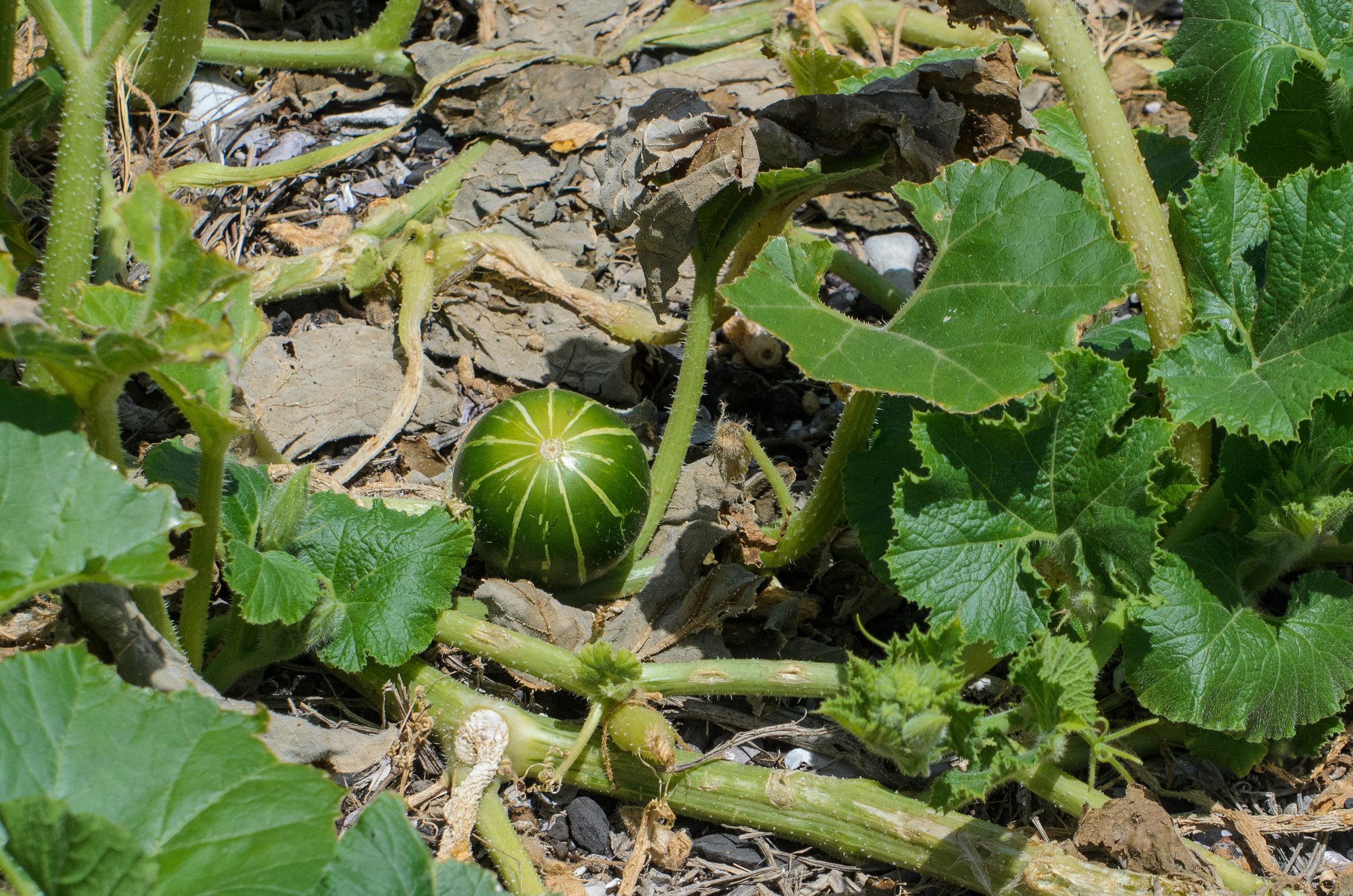
Red kuri squash: the chestnut-flavoured squash that delights all winter
The potimarron (Cucurbita maxima), also known as Hokkaido squash or Chinese squash, is the star fruit vegetable of autumn: thick, sweet flesh with an inimitable chestnut purée flavour, and storage that can reach 6 to 12 months. Easy to grow given warmth, sun and a rich soil, it produces 2 to 5 fruits per plant, weighing 1 to 3 kg on average.
Its name says it all: potimarron is a contraction of the French words for "pumpkin" and "chestnut". In the garden it is a trailing squash whose vines run 2.5 to 4 m — allow space or train it up a support.
Contents
- Sowing, planting & harvesting calendar
- A little history
- Etymology and nicknames
- How to grow red kuri squash
- Growing tips
- How to sow potimarron
- Sowing tips
- Planting, care and harvest
- Potimarron varieties
- In the kitchen
- Diseases and pests
- Frequently asked questions
- Latin name: Cucurbita maxima
- Family: Cucurbitaceae
- Type: annual fruit-vegetable
- Origin: South America (Argentina, Bolivia, Chile, Peru)
Sowing, planting & harvesting calendar
| JAN | FEB | MAR | APR | MAY | JUN | JUL | AUG | SEP | OCT | NOV | DEC | |
|---|---|---|---|---|---|---|---|---|---|---|---|---|
| Sow in pots | ||||||||||||
| Direct sowing | ||||||||||||
| Planting out | ||||||||||||
| Harvest |
Green: main period. Yellow: possible depending on climate (pot sowing from March in mild regions, direct sowing until early June). Orange: harvest before the first frosts, September to November.
A little history of the potimarron
Squashes have been cultivated for at least 8,000 years in Mexico and Guatemala, reaching Europe with Columbus's return. Cucurbita maxima — the pumpkin group — is distinguished from Cucurbita pepo (pumpkins, courgettes, pattypans) by its cylindrical stalk that turns corky at maturity and generally larger fruits. Less heat-demanding than pepo species, it is the easiest to grow in cool climates.
The potimarron itself is a variety from Japan (the island of Hokkaido — hence "Hokkaido squash"), now acclimatised in France, notably in the Sologne region: it grows almost anywhere provided the soil is well loosened and watering is regular.
Etymology and nicknames
Potimarron combines the French potiron (pumpkin) and marron (chestnut) — a nod to its chestnut-purée flavour. You will also find it as Hokkaido squash or Chinese squash, and as Red Kuri or Uchiki Kuri for the Japanese varieties (kuri means "chestnut" in Japanese). The English word "squash" itself derives from the Algonquin askutasquash, "eaten green".
How to grow red kuri squash
Key facts
- Difficulty: easy — a heavy feeder but trouble-free if the soil is rich
- Type: annual trailing squash
- Habit: 20 to 40 cm tall, trailing vines 2.5 to 4 m long (or trellised)
- Spread: allow about 2 m in all directions per plant
- Cycle: about 100 days from sowing to harvest; fruits ready 3–4 months after sowing
- Hardiness: frost-tender — it does not tolerate cold
- Yield: 2 to 5 fruits of 1 to 3 kg per plant (12 to 22 cm in diameter)
Climate and soil
- Exposure: full sun, warm, sheltered from wind.
- Soil: rich, deep, humus-rich, moist and rather heavy — good water retention without staying waterlogged. Amend generously with mature compost or well-rotted manure before planting. A Gardiscan soil analyzer helps you check fertility and moisture before choosing the spot.
Growing tips
| Exposure | Full sun |
| Watering | Moderate to regular, at the base, keeping foliage dry |
| Soil | Rich, humus-rich, moist, well loosened |
| Foliage | Deciduous (annual) |
| Vine length | 2.5 to 4 m |
| Spacing | 2 to 2.5 m in all directions (trailing varieties) |
| Hardiness | Frost-tender |
| Cycle | ≈ 100 days from sowing to harvest |
Sowing tips
| Life cycle | Annual |
| Germination time | 5 to 10 days |
| Germination temperature | 18 to 20 °C |
| Sowing method | In hills of 2–3 seeds |
| Depth | ≈ 2 cm — seed on its edge |
| Container | Pot (or direct outdoors from mid-May) |
Harvesting and storing
- When: September to November, ideally early October, before the first frosts. The fruit is ripe when the foliage withers, the skin dulls and hardens and the stalk turns corky and dry.
- How: cut close to the stem keeping as much stalk as possible (it improves storage) — never carry the fruit by its stalk: invisible micro-injuries open the door to rot.
- Curing: leave the fruits a day in the sun (or ~10 days in a sunny spot, bringing them in if frost threatens) to harden the skin.
- Storage: dry, ventilated room at 10 to 15 °C (the top of a cupboard works for a few fruits). Undamaged, a potimarron keeps 6 to 9 months — some varieties up to 12 months — and its sugar content even improves in storage. Freezing and preserving in jars are also possible.
- After harvest: destroy the remaining vegetation, which often harbours disease — don't compost diseased plants.
- Red Kuri: early, 1.5–2 kg orange-red top-shaped fruits, sweet orange flesh with chestnut flavour; keeps 4–8 months.
- Uchiki Kuri: early, productive Japanese variety, bright orange fruits of 1–1.5 kg, deep orange-red flesh rich in carotene; can even be eaten raw grated; stores well.
- Solor: very early Uchiki Kuri type, ~1 kg orange-red fruits, abundant crop, long storage.
- Doux vert d'Hokkaido: semi-early, grey-green skin, fragrant orange chestnut-flavoured flesh; 2–4 fruits of 1–4 kg per plant; keeps 10–12 months.
- Greenwich (Green Hokkaido): early, green skin, mild yellow-orange low-fibre flesh; 1–3 fruits of 1–1.5 kg; keeps 10–12 months.
- Akaguri: ribbed red-orange fruits, vines up to 3 m.
- Blue Kuri: blue-grey skinned fruits with orange flesh, long keeping.
- French potimarron: the classic strain acclimatised in Sologne, dark orange, thin tender skin, 2–5 fruits averaging 1.5 kg (up to 3 kg).
- Slugs and snails: enemy number one of young seedlings — ash, crushed eggshells, iron-phosphate pellets or traps.
- Powdery mildew: a white felty coating on the leaves, common in late summer. It usually signals the end of the cycle rather than real danger — remove affected leaves, space plants, water without wetting the foliage; preventively, nettle feed or a milk spray.
- Downy mildew: yellowish then brownish spots. Water in the morning, keep airflow, remove badly affected leaves (not in the compost).
- Aphids: black aphids on leaves, root aphids at the collar — water jet or soft (potassium) soap; a chamomile plant in the vegetable patch distracts them.
- Rodents: fond of freshly sown seeds and developing fruits.
Potimarron varieties
In the kitchen
The deep yellow-orange flesh is thick, tender, sweet and fragrant, with its incomparable chestnut taste. A great practical advantage: the thin, tender skin is edible — no peeling needed, a knife is all you need. Purée, savoury pies, gratins, loaf cakes, soups, cream soups, soufflés, fries or pan-fried; Uchiki Kuri can even be grated raw into salads. Roasted, the seeds make a good nibble for drinks.
Nutritionally, potimarron is a nutritional powerhouse: vitamins A and E, a high concentration of beta-carotene (red-orange flesh) and trace elements, with ~90% water. The seeds, rich in protein (~30%) and lipids (~45%), are traditionally reputed to expel intestinal worms.
Diseases and pests
My potimarron flowers but doesn't fruit
Two common causes. Excessive heat: the plant then bears only male flowers (female flowers are recognised by the swelling at their base, like a tiny fruit) — protect with mulch or light shading. Lack of pollinators: pollen must travel from male to female flowers via insects — sow bee-friendly flower mixes nearby, or hand-pollinate early in the morning.
Frequently asked questions
When should I sow potimarron?
In pots under cover from March to April (3 weeks before transplanting), or directly outdoors from mid-May once the soil exceeds 15–18 °C and frosts are over. Germination takes 5 to 10 days at 18–20 °C.
When and how do I harvest potimarron?
From September to November, ideally in October, always before the first frosts. The fruit is ripe when the foliage withers, the skin hardens and the stalk turns corky. Cut close to the stem keeping the stalk — and never carry the fruit by it.
How long does a potimarron keep?
6 to 9 months in a dry, ventilated room at 10–15 °C — up to 12 months for 'Doux vert d'Hokkaido' or 'Greenwich'. Its sugar and vitamin content actually increases during storage.
Can you eat potimarron skin?
Yes: unlike a regular pumpkin, potimarron skin is thin and tender and perfectly edible once cooked — no need to peel.
What spacing for potimarron plants?
Allow 2 to 2.5 m in all directions for trailing varieties (vines run 2.5–4 m), and 1 m for bush types. Short of space? Train the vines up a sturdy support.
Why isn't my potimarron setting fruit?
Most often: excessive heat suppressing female flowers (recognisable by the tiny swelling beneath the petals), or a lack of pollinating insects. Mulch, give light shade in heatwaves, and grow pollinator-friendly flowers nearby.
What to plant with potimarron?
Climbing beans, maize and cabbages: the "three sisters" guild pairs maize as a stake, beans fixing nitrogen and squash as living mulch. Keep it away from potatoes, radishes and other cucurbits.
Can potimarron tolerate frost?
Yes, it is frost-tender: never sow or plant out before all frost risk has passed, and always harvest before the first autumn frosts.
A vegetable patch that feeds you all winter
Three seeds per hill, some compost, mulch and patience: the potimarron rewards the gardener with fruits that keep until the following spring. To start your seeds warm in March–April, our germination kits provide the steady warmth and light squashes need — and the Gardiscan checks that your soil is ready to feed them.
Photos: © Pablo G. Fernández, © mikami-kun, © Sylvie — CC BY licence, via iNaturalist.