Pea (Pisum sativum): sowing and harvesting garden peas
Published by Germie in Vegetables the
07/10/2026 at 10:08
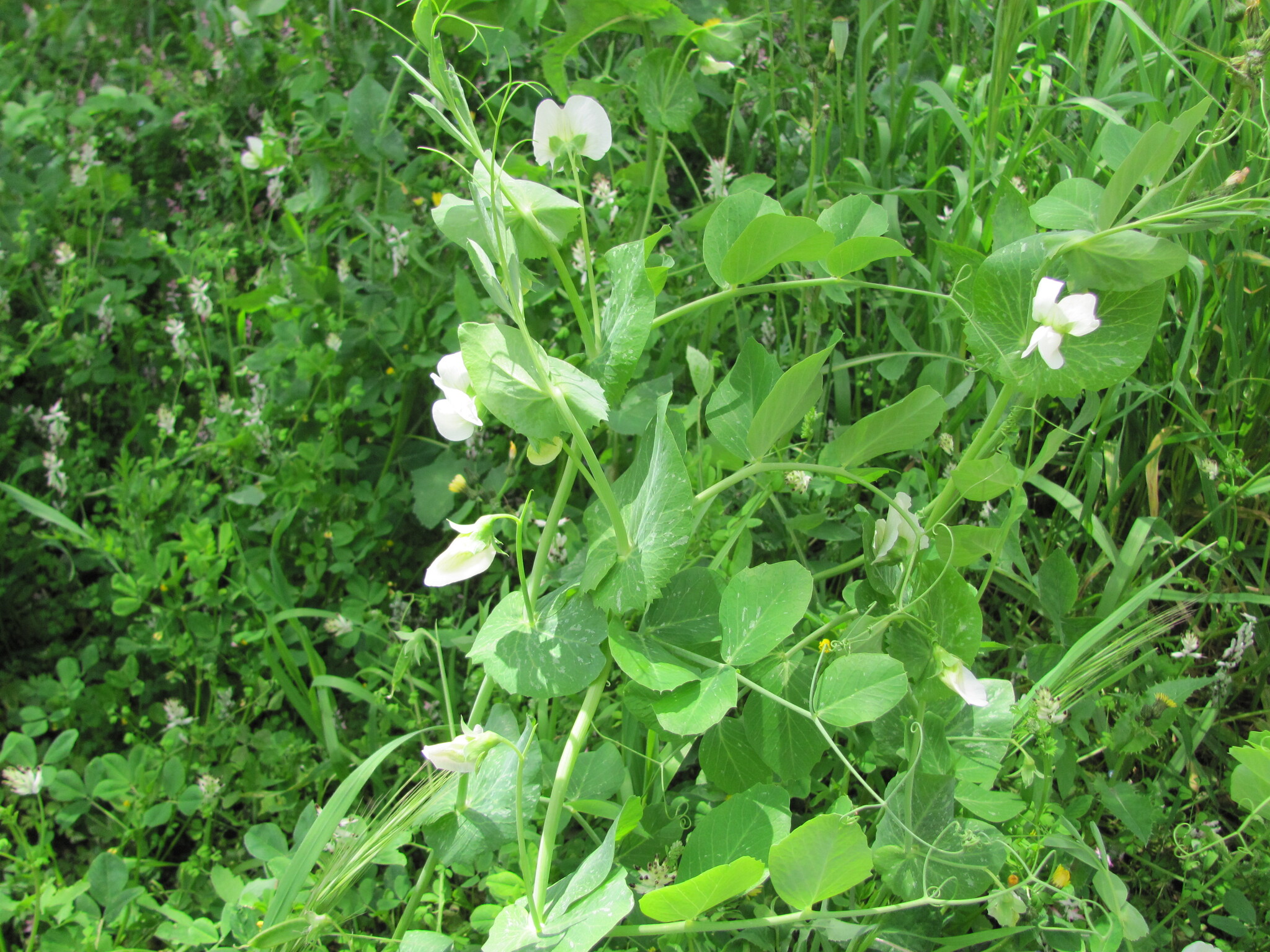
Peas (Pisum sativum): how to sow and harvest garden peas successfully
The pea (Pisum sativum) is one of the oldest cultivated vegetables in the world: it has been grown in the Near East and the eastern Mediterranean for nearly 10,000 years — long enough to become, in Gregor Mendel's hands, the plant that revealed the laws of heredity. This annual legume climbs by tendrils, bears white, pink or purple flowers, then produces pods filled with sweet peas for shelling — or for eating whole, in the case of mangetout.
It is also the impatient gardener's favourite: direct sowing from late winter, quick germination, harvest by early summer. And like all legumes, it fixes atmospheric nitrogen in its root nodules — enriching the soil instead of depleting it.
Contents
- Sowing & harvest calendar
- Identity card
- Ten thousand years of cultivation — and Mendel
- Sowing peas
- Growing tips
- Harvesting: the right stage for each type
- Shelling, mangetout or snap: the types of pea
- Saving your own seed
- In the kitchen
- Pests and diseases
- Precautions and look-alikes
- FAQ
- Latin name: Pisum sativum
- Other names: garden pea, green pea, shelling pea; mangetout, snow pea and sugar snap for the edible-podded types
- Family: Fabaceae (legumes) — the family of broad beans and runner beans
- Type: cool-season annual, climbing by tendrils
- Origin: Mediterranean basin or western Asia — cultivated for nearly 10,000 years
- Hardiness: foliage withstands light frost; flowers and pods do not — smooth-seeded varieties are the most cold-hardy
- February to April: the main window everywhere, once the soil reaches 5-7 °C. Smooth-seeded varieties (hardiest) go in from February; wrinkled, sweeter ones wait for March.
- May-June: last sowings for a late-summer crop — beyond that, heat cuts the season short.
- October-November: possible in mild climates with hardy round-seeded varieties — autumn and early-winter sowings sit tight then start in spring.
- Peas are best direct-sown: their fragile roots dislike transplanting. Late-winter sowing in pots under glass can buy a few weeks — keep the root ball intact when planting out.
- In place, in rows: one seed every 3-5 cm, or two parallel rows 10-15 cm apart; 50 cm to 1.5 m between rows depending on variety size.
- Depth 2-4 cm — deeper in light soil or late sowings.
- Cool, drained soil enriched with compost (worked in the previous autumn ideally); pH 5.5-7. Absolutely avoid fresh manure — it sets the crop back.
- Germination in 7-14 days — up to 4-5 weeks for winter sowings. Cold, waterlogged soil = rotted seed: wait until the ground dries.
- Succession sowing every 3 weeks staggers the harvest naturally.
- Exposure: full sun — partial shade is tolerated in hot regions.
- Soil: rich in organic matter, cool and well drained; hates standing water — on heavy soil, grow in raised beds.
- Water: moderate early on, then regular — never let it go short either at the start of flowering or in late growth; mulch before hot weather.
- Support: install supports at sowing time — twiggy branches, netting or a trellis for varieties over 60 cm; the tendrils attach themselves.
- Feeding: unnecessary — peas fix their own nitrogen. Too much fertiliser makes foliage at the expense of pods.
- Heat: above 30 °C the plant stops flowering — sow early to crop before heatwaves, and mulch.
- Rotation: no peas, broad beans or beans in the same spot for 3 years. At season's end, dig the vines in or compost them — they return their nitrogen to the soil.
- Good companions: carrots, turnips, radishes, cucumbers, sweetcorn, beans, potatoes and aromatic herbs. Bad company: onions and garlic — keep them apart.
- Snow peas (mangetout): pick the pods young and still flat, as soon as they reach full length but before the peas inside develop.
- Sugar snap peas: when the pods are plump but still dark green — they should snap like a bean when broken.
- Shelling peas: the perfect moment is when the pod is well filled but still tender and green, without bulges around the peas. Once it yellows, the sugar has already turned to starch — crack a pod open and taste: it should be very sweet.
- Dry peas: let the pods yellow and dry on the vine until the peas rattle inside when shaken — the crop for winter soups and for seed.
- Shelling peas (garden peas / English peas) — the leathery pod is discarded, only the peas are eaten; available as dwarf varieties (60-80 cm, no support) and tall climbers (up to 2.5 m, more productive)
- Snow peas / mangetout — thin, flat, entirely edible pods picked before the peas form
- Sugar snap peas — thick, sweet pods eaten full of peas; the modern gardener's favourite
- Aphids: pest number one — watch tangled or collapsed vines; wood ash around the rows as a traditional preventive.
- Pea weevil (bruchid) and Sitona weevil: the bruchid larva bores into the peas, the sitona notches leaf edges — early and late sowings often escape the pea moth's egg-laying, whose caterpillars eat the peas.
- Mice and slugs: they dig up or cut down young autumn and early-spring sowings — protect seedlings, pigeon netting if needed.
- Powdery mildew: the classic white bloom, mostly late season on dry soil — space rows for airflow.
- Downy mildew: a real problem in northern Europe in cool, wet weather; root rots and damping-off on waterlogged soil — drainage remains the best prevention.
- Fusarium wilt, ascochyta, grey mould: minimum 3-year rotation and destroy diseased residues.
Sowing & harvest calendar
| JAN | FEB | MAR | APR | MAY | JUN | JUL | AUG | SEP | OCT | NOV | DEC | |
|---|---|---|---|---|---|---|---|---|---|---|---|---|
| Outdoor sowing | ||||||||||||
| Flowering | ||||||||||||
| Pea / mangetout harvest |
Green: February to June — smooth-seeded varieties from February, wrinkled ones (sweeter) from March to June; pale yellow: October-November sowing possible in mild climates with hardy varieties. Blue: flowering April-July. Orange: harvest 10 to 12 weeks after sowing, May to August; pale yellow: June sowings still crop in September.
Identity card
The plant. An annual climbing herb with a hollow stem, from 60-80 cm in dwarf varieties to 2.5 m in tall climbers. The alternate, pinnate leaves end in tendrils that latch onto anything they touch — string, netting, neighbouring plants. The papilionaceous white, pink or purplish flowers, self-pollinating, bloom in pairs at the leaf axils, then give a pod holding 2 to 10 seeds, smooth or wrinkled, green, grey or brownish.
Smooth or wrinkled — the detail that matters. Smooth-seeded varieties are the hardiest: sow them early, from February, even in autumn. Wrinkled-seeded ones — the "marrow" peas of old catalogues — are less cold-hardy but sweeter and less starchy: they are what make modern garden peas taste so good.
Ten thousand years of cultivation — and Mendel
The pea is among the oldest cultivated vegetables: it appears in Near Eastern and eastern Mediterranean farming as early as 7,800 BC. Amusing detail: for centuries it was grown only for its dry seeds — green, undried peas were thought poisonous! It was only in the Renaissance that Europe discovered the pleasure of the fresh garden pea, a fashion the French court took to its height.
The English then raised pea growing to an art: most old American garden varieties trace back to British selections — Prince Albert (1842, named for Queen Victoria's husband), Tom Thumb (1850s, dwarf), the Prussian peas of the 18th century which Thomas Jefferson grew at Monticello in 1809, and the Carling Pea, a strain possibly surviving from Elizabethan times, tied to the medieval Carling Sunday feast of north-east England. In France, Gloire de Quimper and Plein le Panier — instantly popular under the name "Laxton" — illustrate this shared history. And it was on peas that the monk Gregor Mendel demonstrated, in the mid-19th century, the laws of inheritance — making this humble vegetable the founding father of genetics.
Sowing peas: the early-spring legume
When to sow?
How to sow?
Growing tips
Harvesting: the right stage for each type
Pick every day, in the morning while the pods are cool — regular picking keeps plants productive. Like sweetcorn, peas lose their sweetness within hours: eat them straight after picking — that is the whole point of growing your own.
Shelling, mangetout or snap: the types of pea
Garden varieties fall into three families of use:
Names to know: for recent types, Sugar Snap (climber, 62 days), Sugar Ann (dwarf, 52 days), Oregon Sugar Pod II and Oregon Giant (snow peas). For heirlooms: Tom Thumb (historic 1850s dwarf), Prince Albert (1842), Carling Pea (the oldest known English strain), Gloire de Quimper and Plein le Panier (the French classics), Golden Sweet (purple-flowered, heat-tolerant snow pea with a spicy aftertaste).
Saving your own seed
One of the easiest seeds to save: the pea is self-pollinating — fertilisation happens before the flower even opens, so cross-pollination is rare. In theory varieties are isolated by 20-50 m; in a home garden, one variety per season or a few dozen metres is enough.
Let the pods brown and dry on the vine until the peas rattle, harvest in dry weather, thresh and winnow. The seed, with "orthodox" storage behaviour, keeps its germination for 2 to 3 years dry — no dormancy to break.
In the kitchen: from fresh peas to pea flour
Everything is edible in the pea: the seeds fresh or dried, the pods of mangetout and snap peas, and even the young shoots and tendrils — "pea shoots", a delicacy of spring salads and microgreens.
Fresh peas are at their best raw, straight from the pod — the sweetness is unmatched — or poached for a few minutes: peas with carrots, peas with pearl onions, split pea soup for the dried version. Mangetout go into stir-fries or are eaten raw; faded dry-pea pods simmer into a tasty pod stock with leek and bay. The dried pea cooks like a dried bean or grinds into pea flour for flatbreads — and split peas make the legendary soup of English and Nordic kitchens.
Two storage tips: keep fresh peas cold and eat them quickly (the sugar turns to starch), and date your dried-pea packets — beyond a year or two they cook hard and lose nutritional value.
Pests and diseases
Bottom line: the pea is easy-going but demanding on one point — a healthy, drained soil. Most diseases disappear with good rotation and ground that doesn't stay wet.
Precautions and look-alikes
⚠️ The confusion that matters. The sweet pea (Lathyrus odoratus), the ornamental climber of flower gardens, is not edible — its seeds are toxic despite their resemblance. In the vegetable patch and the flower bed alike, only eat pods from a formally identified Pisum sativum plant: never eat a plant you have not identified with certainty.
The wild cousins. The wild pea (Pisum sativum subsp. elatius), with darker pink-violet flowers, is the spontaneous ancestor of the garden pea — edible, but rare in France. Vetchlings (Lathyrus spp.) and vetches (Vicia spp.) share tendrils and papilionaceous flowers — none is a vegetable: the giveaway is the pod, plump and edible only on the garden pea.
FAQ
When should I sow peas?
From February to April for an early-summer crop (smooth seeds first, wrinkled next), until June for autumn — and in October-November in mild climates with hardy varieties. Sow once the soil reaches 5-7 °C.
Do peas need support?
Only varieties over 60 cm: install twigs, netting or a trellis at sowing time — the tendrils attach themselves. Dwarf varieties manage without.
When do I harvest peas?
10 to 12 weeks after sowing, May to August depending on sowing date. Shelling peas: pod full but still green and tender. Mangetout: young and flat. Snap peas: plump and dark green. Pick daily in the morning.
Why aren't my peas sweet?
Almost always a late harvest: once the pod yellows, sugar becomes starch. Taste a sample pea — very sweet = perfect, bland = too late. Same rule after picking: eat them straight away.
Can you eat pea leaves and shoots?
Yes — tender young shoots and tendrils (pea shoots) are a delicacy in salads or as microgreens. Just don't strip too many tips from plants meant for podding.
What's the difference between mangetout and sugar snap?
Mangetout (snow peas) are picked young, the flat pod lacking a tough lining, before the peas form. Sugar snaps are picked with full, plump pods — you crunch peas and pod together.
Planning your late-winter sowings? At Germie, our germination kits support your most demanding vegetables — and to pinpoint your soil's exact needs before a big spring crop, Gardiscan analyses your earth in depth.