Orange tree (Citrus × sinensis): germinate a pip and grow it
Published by Germie in Germination the
05/11/2026 at 12:06
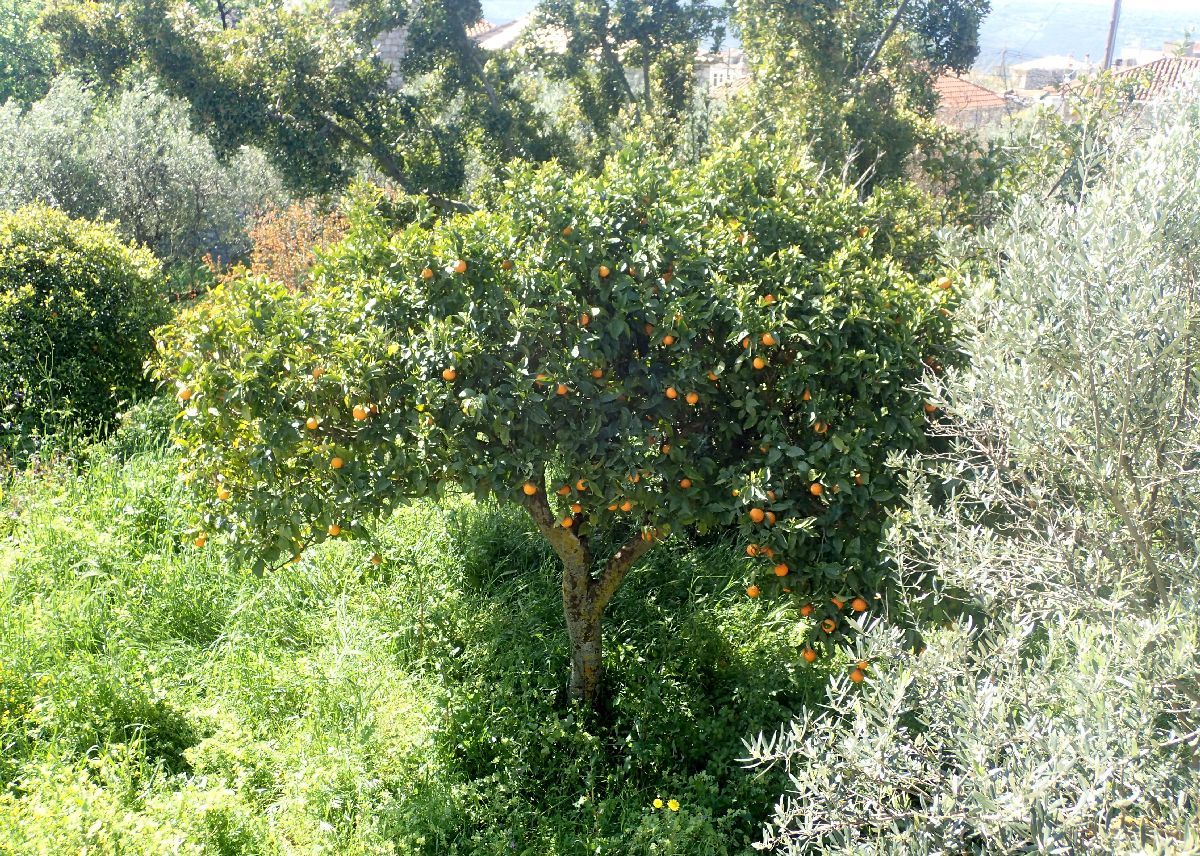
Growing an orange tree (Citrus × sinensis) from a simple pip is one of the most rewarding sowing adventures — and it is an indoor crop you can start any time of year. The starting point to know: orange seed is recalcitrant, it is sown fresh, and it germinates slowly. Here is the complete sheet.
Germinating an orange pip: the protocol
- Collecting: take the pips from a fully ripe fruit picked from the tree; remove rind and flesh, extract the seeds by hand, rinse and sow fresh.
- Never let them dry: a dried pip is damaged — and drying stretches germination to almost twice the time a fresh pip needs.
- Temperature: sweet orange germinates across a broad range, 15 to 37 °C.
- No dormancy, just slowness: no citrus seed has true dormancy — emergence is simply very slow, held back by a barely permeable seed coat.
- Timing: allow up to a month at 30 °C — don't lose patience.
- Curiosity: the seeds are white, few to many per fruit, and polyembryonic — a single pip can yield several plantlets, some of them clones of the mother.
In practice: fresh pips from an organic orange, a light draining substrate kept moist but not wet, and steady warmth — the 25-30 °C band is exactly what a seedling heating mat delivers. The germination kit greenhouse preserves the moisture a recalcitrant seed demands, and the LED grow light gives the young plant the light a winter windowsill lacks.
The plant: a medium evergreen tree
- In open ground the orange is a medium tree that can reach 12 m, usually 4.5-6 m; in a pot, size is easily contained.
- Foliage: oval, dark-green, leathery leaves with narrowly winged petioles.
- Flowers: white, axillary, single or clustered — intensely fragrant: the orange blossom of perfumers.
The key question: winter
- Like all citrus, the orange is not frost-hardy: in temperate zones it does best in a greenhouse or conservatory, unless the garden is particularly sheltered.
- An often-missed nuance: the orange likes winters that are cold, dry and sunny. Cold, dry and bright — yes; frost and stagnant damp — no.
- It is a subtropical fruit: warmth and shelter are its baseline requirements.
Practical translation: overwinter in a cold greenhouse or a bright interior — precisely the moment (October-November) when supplemental lighting earns its keep for a young plant.
Planting and care
- Soil: light and sandy, imperatively draining and not chalky — orange hates waterlogging.
- pH: slightly acid conditions, between 6.0 and 6.5.
- On heavy soil: raise the planting area at least 45 cm above the surrounding ground.
- Exposure: a warm spot, as sunny as possible, sheltered from wind and draughts which make the flowers drop.
- Feeding: young citrus roots are easily scorched by excess fertilizer — prefer manure mulches; failing that, one handful of blood-fish-and-bone meal per square metre in early spring, repeated in summer, well watered in.
- Watering: roots want plenty of water, especially in the first years.
- Pruning: thin out branches if the tree becomes crowded; after harvest, shorten each fruit-bearing shoot to 10 cm.
Varieties worth knowing
- Recommended sweet oranges: Jaffa, Sanguinelli, Valencia Late, Washington, Navel.
- Navels have the best flavour: seedless, with the characteristic navel formation at one end.
- Blood oranges: the pulp's colour, from blood-red to dark red, comes from anthocyanins.
- Cultivar calendar: Hamlin is usually an early-season crop, Valencia and Natal late ones.
Cycle and harvest: patience rewarded
- In a subtropical climate, early cultivars mature 6-9 months after full bloom, mid-season ones in 9-12 months and late ones beyond 12 months.
- In the northern hemisphere the fruit generally matures from February to October — and holds very well on the tree with no serious loss of quality; in temperate regions oranges ripen November to March.
- Pick when the fruit is fully coloured, twisting it gently off: oranges can stay on the tree up to six months — the tree is its own larder.
- The only way to know a citrus is ripe is to taste it: if it tastes good, it's ready.
And the fruit of a seedling?
Let's be honest: sweet orange is propagated commercially by vegetative means, grafted onto rootstocks with straight roots and shoots. A pip-grown orange will take years to fruit — but thanks to polyembryony, part of the seedlings are genetically identical to the parent. And even without a crop, it is a superb evergreen shrub for indoors or a conservatory, with fragrant blossom.
A little history
- Native to southern China (possibly northeastern India and central China), sweet orange became a major fruit crop.
- It may have travelled a route similar to the citron's and been introduced to Europe by the Romans, then reintroduced around 1425 through Genoese trade routes.
- The Portuguese brought superior sweet-orange selections from China around 1500.
- The great families of the Italian city-states — the Medici first — kept vast collections of lemon and orange trees.
In the kitchen
- The flowers flavour teas and tisanes; zest and juice perfume stews, duck and desserts.
- Thinly sliced and seeded, sweet orange accompanies black olives, raw fennel, purple onion and radishes under a mild vinaigrette.
- It is the base of sauce maltaise, its juice colours pastries — not to mention winter mulled wine and summer sangria.
To start your orange tree: pips can be sown any time of year indoors — the complete greenhouse + LED + mat kit gives it the 25-30 °C and light that make the difference between a pip that sprouts and one that rots. And to follow the citrus calendar (overwintering, sowing, repotting through the seasons), sign up for the newsletter at the bottom of the page.
Growing calendar
| JAN | FEB | MAR | APR | MAY | JUN | JUL | AUG | SEP | OCT | NOV | DEC | |
|---|---|---|---|---|---|---|---|---|---|---|---|---|
| Sowing | ||||||||||||
| Planting | ||||||||||||
| Harvest |